The Foundation of Lasting Recovery Embarking on the path of recovery is a profound act of courage. It is a decision to move away from a life that has become unmanageable and toward a future filled with hope, health, and purpose. This journey is not about restriction; it is about rediscovery. It is a process of reconnecting with oneself and, just as importantly, with others. The isolation that so often accompanies addiction is one of its most challenging aspects, creating a cycle that can feel impossible to break. Lasting recovery is built on the opposite principle: connection. At the heart…
The Foundation of Lasting Recovery
Embarking on the path of recovery is a profound act of courage. It is a decision to move away from a life that has become unmanageable and toward a future filled with hope, health, and purpose. This journey is not about restriction; it is about rediscovery. It is a process of reconnecting with oneself and, just as importantly, with others. The isolation that so often accompanies addiction is one of its most challenging aspects, creating a cycle that can feel impossible to break. Lasting recovery is built on the opposite principle: connection.
At the heart of this connection is the “sober network.” This is far more than a list of emergency contacts; it is a lifeline and a safety net, a community of people who understand the commitment to a sober life. This network can include friends, family members, mentors, therapists, and peers who are also on the path of recovery. Building this supportive community is one of the most critical, evidence-backed actions a person can take to ensure long-term, sustainable sobriety. Research has repeatedly found that individuals with stronger social support networks not only remain in treatment longer but also experience better recovery outcomes, with a significantly decreased likelihood of returning to substance use.
The transition from active addiction to recovery represents a fundamental shift in one’s entire environment. Addiction often thrives in secrecy and loneliness, while recovery flourishes in the light of shared experience and mutual support. Therefore, the act of building a sober network is not just a helpful supplement to recovery—it is the very process of dismantling the environment of addiction and constructing the environment of recovery in its place. It is the active, intentional creation of a new life built on a foundation of community and shared strength.

Your Sober Network: A Lifeline for Mind, Body, and Spirit
The profound impact of a sober support system is not merely anecdotal; it is a well-documented phenomenon. Scientific studies consistently highlight that the quality of a person’s social network is a powerful predictor of their success in recovery. It is not the size of the network that matters most, but rather the quality of the relationships and whether they support abstinence. A strong, sober network provides a multifaceted defense against relapse and a powerful catalyst for personal growth, benefiting the whole person—mind, body, and spirit.
Core Benefits of a Sober Support System
- Combating Isolation and Fostering Belonging: Substance use is often an isolating experience, creating a painful cycle where loneliness acts as both a cause and an effect. A sober network directly shatters this cycle. By connecting with others who share similar experiences, individuals find a community of understanding that alleviates the deep-seated feelings of shame and despair that often accompany addiction. This sense of belonging fulfills an innate human need and is a crucial component of emotional and psychological healing.
- Building Emotional Resilience and Coping Skills: The journey of early recovery can be an “emotional rollercoaster,” filled with challenges and triumphs. A support network provides a safe, non-judgmental space to discuss these challenges, validate personal experiences, and learn practical coping skills. Hearing from peers who have successfully navigated triggers, cravings, and difficult emotions offers invaluable wisdom and tangible strategies that can be applied to one’s own life.
- Providing Accountability and Motivation: One of the most vital functions of a sober network is providing gentle, supportive accountability. Regular check-ins with sponsors, peers, or mentors serve as a consistent reminder of one’s recovery goals and encourage responsible behaviors. Knowing that there is a community of people who genuinely care about one’s well-being can be an incredibly powerful motivator, especially during moments of doubt or temptation.
- A Powerful Tool for Relapse Prevention: Common triggers for relapse include a lack of healthy coping skills, negative social pressure, and unaddressed mental health issues like anxiety and depression. A sober network acts as a direct countermeasure to these risks. It provides positive social influence, emotional support during times of stress, and practical advice for managing triggers before they escalate. This supportive shield is a cornerstone of any effective relapse prevention plan.
- Improving Overall Well-Being: The benefits of strong social connections extend far beyond sobriety alone. Research confirms that positive social support reduces stress, anxiety, and depression—conditions that are often deeply intertwined with substance use disorders. This improvement in mental health contributes to a higher quality of life and even better physical health, creating a holistic foundation for lasting wellness.
These benefits do not exist in isolation; they create a powerful, self-reinforcing positive feedback loop. An individual takes the first step to connect with a sober peer, which immediately begins to chip away at feelings of isolation. This reduction in loneliness improves their mental state, making them more receptive to learning new coping skills from the group. As their coping skills improve and they feel a sense of accountability to their new community, their risk of relapse decreases. This success, in turn, boosts their self-esteem and sense of purpose, making it even more rewarding to engage with their network. This upward spiral of connection and growth stands in stark contrast to the downward spiral of addiction and isolation.
For this reason, a critical strategic shift is required in early recovery. The focus must move beyond simply avoiding negative influences to proactively building positive ones. While it is true that maintaining relationships with former using associates is a strong predictor of relapse, research also shows that simply reducing one’s social circle can negatively impact well-being. This highlights a crucial point: the act of
supplanting lost social connections with new, healthy ones is as important as the act of severing unhealthy ties. Recovery, therefore, demands a two-pronged social strategy: establishing firm boundaries with people and places that threaten sobriety while simultaneously and intentionally cultivating a rich network of new, supportive relationships.
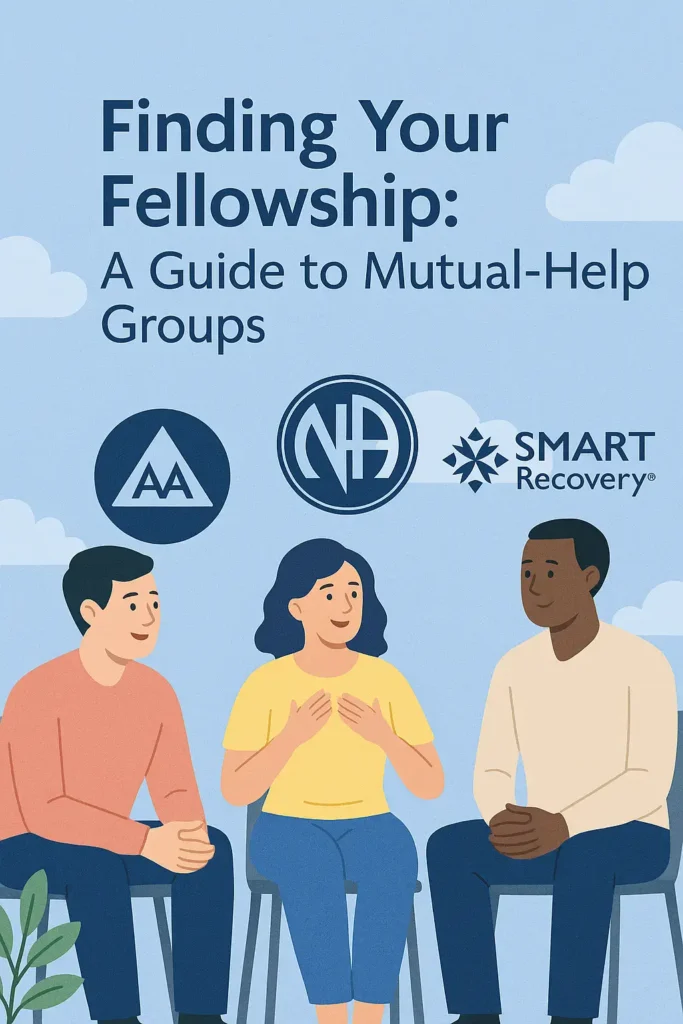
Finding Your Fellowship: A Guide to Mutual-Help Groups
For decades, mutual-help groups have been a cornerstone of addiction recovery, offering free, accessible, and consistent support to millions around the world. The modern recovery landscape is wonderfully diverse, offering several distinct paths to suit different personalities, beliefs, and needs. There is no single “right” program for everyone; the goal is to find a community where one feels understood, accepted, and empowered. This guide explores three of the most prominent options: Alcoholics Anonymous (AA), Narcotics Anonymous (NA), and SMART Recovery.
Alcoholics Anonymous (AA) — A Spiritual Path to Sobriety
- Core Philosophy: Founded in the 1930s, Alcoholics Anonymous is the original 12-Step fellowship. Its program for recovery is outlined in the “12 Steps” and its organizational principles are found in the “12 Traditions”. The core philosophy of AA is that alcoholism is a threefold disease—physical, mental, and spiritual. The solution, therefore, is a spiritual one. The program begins with an admission of powerlessness over alcohol and involves a decision to turn one’s life over to the care of a “Higher Power as we understood Him”. The ultimate goal of working the steps is to have a “spiritual awakening” that removes the obsession to drink.
- What to Expect at a Meeting: AA meetings are peer-led and typically follow a simple structure, including an opening, the reading of AA literature (like the 12 Steps), and a period for members to share their “experience, strength, and hope”. A few key concepts are central to the AA experience.
Anonymity is a foundational spiritual principle, ensuring that what is said in a meeting stays there and that members are free to share without fear of exposure. A
sponsor is a more experienced member who guides a newcomer through the 12 Steps, offering personal support and guidance. Finally, AA is fully self-supporting and non-professional; there are no dues or fees, and the only requirement for membership is a desire to stop drinking. - Finding a Meeting: Locating a meeting is straightforward. The official Alcoholics Anonymous website hosts comprehensive directories of local in-person meetings as well as a vast number of online and virtual meetings, making support accessible from anywhere in the world.
Narcotics Anonymous (NA) — A Broader Fellowship for Addiction
- Core Philosophy: Founded in 1953, Narcotics Anonymous grew out of the principles of AA but was established to welcome individuals struggling with addiction to any substance, not just alcohol. NA uses the exact same 12-Step and 12-Tradition framework as AA, adapting it for a broader audience. The only requirement for membership is a desire to stop using drugs.
- Key Distinctions from AA: While the structure is nearly identical, there are subtle but important philosophical distinctions. The most significant is in the language of the First Step. Where AA members admit they are “powerless over alcohol,” NA members admit they are “powerless over our addiction”. This reflects a core belief in NA that the
disease of addiction is the fundamental problem, regardless of the specific drug or drugs used. Members identify as “addicts,” and the fellowship focuses on recovery from this underlying disease. While both programs are spiritual, some find that NA places a slightly stronger emphasis on personal accountability in conjunction with spiritual principles. - Finding a Meeting: Similar to AA, the official Narcotics Anonymous website is the best resource for finding local meetings through regional directories, as well as accessing a wide array of virtual meetings.
SMART Recovery — A Scientific Approach to Self-Empowerment
- Core Philosophy: SMART Recovery, which stands for Self-Management and Recovery Training, was established in 1994 as a secular and science-based alternative to 12-Step programs. Its approach is not spiritual but is instead grounded in evidence-based psychological therapies, primarily Cognitive Behavioral Therapy (CBT), Rational Emotive Behavior Therapy (REBT), and motivational interviewing. The core philosophy of SMART Recovery is one of self-empowerment. It posits that individuals have the power to change their addictive behaviors by learning to manage their thoughts, feelings, and actions.
- The 4-Point Program & Tools: Instead of sequential steps, SMART Recovery uses a flexible 4-Point Program, and participants can work on the points in any order they choose. The four points are:
- Building and Maintaining Motivation
- Coping with Urges
- Managing Thoughts, Feelings, and Behaviors
- Living a Balanced Life Meetings are interactive and involve learning and practicing specific psychological tools. These include exercises like the “ABC Model” to identify and dispute irrational beliefs that lead to substance use, and the “Cost-Benefit Analysis” to strengthen motivation for change.
- What to Expect at a Meeting: A SMART Recovery meeting feels different from a 12-Step meeting. They are not peer-sharing circles but are structured, working meetings led by a trained facilitator. The focus is on active problem-solving and skill-building. Participants are encouraged to engage in open discussion and “cross-talk,” offering feedback and helping each other apply the SMART tools to real-life challenges.
- Finding a Meeting: The SMART Recovery website provides an extensive and easy-to-use search tool for finding both in-person and online meetings, which are available daily around the globe.
The evolution from AA to NA and then to SMART Recovery reflects a broader, positive trend in health and wellness: the move toward personalization and choice. This diversification of the recovery landscape signifies a growing understanding that there is no “one-size-fits-all” solution to addiction. The availability of these distinct paths—one rooted in spirituality, the other in science—means that more people than ever can find a framework that resonates with their personal belief system.
At their core, the 12-Step and SMART models differ in their view of the “locus of control”—the agent of change. 12-Step programs advocate for an external locus of control, where strength is found by surrendering to a Higher Power. SMART Recovery promotes an internal locus of control, where strength is found by developing one’s own psychological skills. Understanding this fundamental distinction can help an individual make an informed choice. The key question becomes: “Do I find more strength in faith and surrender, or in self-reliance and cognitive tools?” Answering this can make the path forward feel much clearer.
Comparing the Paths to Recovery
To help clarify the differences between these powerful programs, the table below offers a side-by-side comparison of their core features. This can serve as a quick guide to help individuals identify which approach might best align with their personal worldview and recovery needs.
| Feature | Alcoholics Anonymous (AA) / Narcotics Anonymous (NA) | SMART Recovery |
| Core Philosophy | A spiritual disease requiring surrender and a spiritual awakening. | A maladaptive behavior that can be changed through learning new skills. |
| Underlying Method | The 12 Steps and 12 Traditions. | The 4-Point Program and cognitive-behavioral tools. |
| View of Relapse | Often seen as a setback in one’s spiritual path, requiring a return to the steps. | A learning opportunity to analyze triggers and refine coping strategies. |
| Role of Spirituality | Central. Relies on a “Higher Power” as the individual understands it. | Secular. No spiritual or religious components. Focus is on science and psychology. |
| Meeting Style | Peer-led. Members share personal stories and experiences. | Facilitator-led. Structured discussions and skill-building exercises. Cross-talk is encouraged. |
| Self-Identification | Members identify as an “alcoholic” or “addict” for life. | Labels are avoided. Focus is on “people with addictive behaviors.” |
| Key Principle | Surrender & Acceptance: Admitting powerlessness over the addiction. | Self-Empowerment: Believing in one’s own ability to change. |
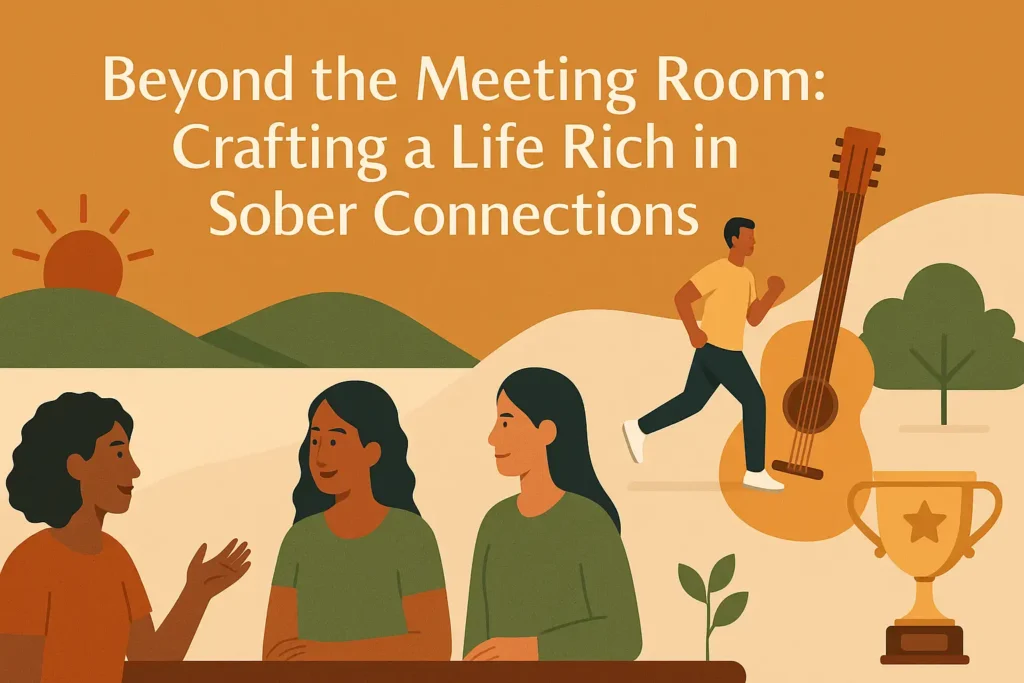
Beyond the Meeting Room: Crafting a Life Rich in Sober Connections
While mutual-help groups provide an essential framework for recovery, they are just one part of a larger picture. True, lasting recovery involves building a fulfilling sober life—a life so rich and rewarding that returning to substance use becomes unthinkable. This is the joyful, creative part of the journey, where old, destructive patterns are replaced with new, life-affirming activities and connections.
Rediscovering Joy: The Power of Sober Hobbies
Hobbies are not merely a way to pass the time; they are a vital therapeutic tool in recovery. They provide a healthy, natural source of pleasure and dopamine, reduce stress, build self-esteem, and, crucially, create organic opportunities to meet new people with shared interests. Exploring new hobbies helps to rebuild an identity that is not defined by addiction but by passion, curiosity, and growth.
- Connect with Nature: Activities like hiking, gardening, swimming, or simply walking on a beach can be incredibly grounding and healing. Spending time in nature is proven to reduce levels of the stress hormone cortisol, lower anxiety, and provide a sense of peace and perspective that is highly beneficial in recovery.
- Engage Your Creativity: Painting, writing, learning a musical instrument, or taking a cooking class can be powerful outlets for processing the complex emotions that arise in sobriety. These activities offer a non-verbal way to express feelings, improve cognitive functions like concentration and memory, and provide a tangible sense of accomplishment.
- Practice Mindfulness: Yoga, meditation, and martial arts are excellent hobbies for recovery because they integrate the mind and body. These practices are shown to improve mental clarity, promote emotional balance, and provide a healthy, effective way to manage cravings and urges by teaching individuals to observe their thoughts without judgment.
- Build Community: Actively seeking out social hobbies is a direct way to build a new sober network. Joining a recreational sports league, volunteering for a cause one cares about, taking a class at a community college, or joining a book club immediately creates a new social circle based on a shared positive interest, rather than on substance use.
Strengthening Your Foundation: The Role of Treatment and Aftercare
For many, the safest and most effective place to begin building a sober network is within a professional treatment program. A high-quality treatment center provides a structured, immersive, and supportive environment where every peer is committed to the same goal of recovery. The bonds formed during this time can become the bedrock of a person’s long-term support system. Furthermore, treatment center alumni programs serve as an invaluable bridge from the protective environment of rehab back to the complexities of daily life, offering ongoing support, sober social events, and a way to maintain the critical relationships forged in treatment.
A truly robust recovery plan incorporates three intertwined pillars: professional treatment provides the initial stabilization and therapeutic foundation; mutual-help groups offer the long-term, accessible framework for accountability; and sober hobbies fill that framework with joy, purpose, and new relationships. Leading treatment centers understand this symbiotic relationship and design their programs to support all three pillars.
At a center like Costa Rica Treatment Center, the community itself is a core therapeutic tool. The philosophy is holistic, focused on healing the mind, body, and spirit in unison. The intentionally low occupancy creates an intimate environment where clients can form deep, authentic bonds. This process is facilitated through group therapy sessions and shared adventure activities, such as jungle hiking, beach trips, and exploring the stunning natural beauty of Costa Rica. These experiences are intentionally designed to help clients connect with their peers in a healthy, joyful, and supportive way, all within a serene and healing environment. This approach ensures that when a person completes the program, they leave not just with the tools for sobriety, but with the tangible beginnings of the very sober network that is essential for long-term success. Comprehensive aftercare planning and a focus on real-world reintegration, including connecting clients with local 12-step meetings, further solidifies this foundation for a lasting recovery.
Your Journey, Your Community, Your Future
The path of recovery is a journey away from isolation and toward connection. It is a process of rebuilding a life that is not just free from substances, but is also rich in purpose, joy, and meaningful relationships. Building a sober network is the single most powerful action one can take to secure this future. It is an active, ongoing, and deeply rewarding process that transforms a life of mere abstinence into one of genuine fulfillment.
Whether through the spiritual fellowship of a 12-Step program, the scientific empowerment of SMART Recovery, or the shared joy of a new hobby, the message is the same: help is available, and no one has to do this alone. The journey begins with a single step. That step might be looking up a local meeting, calling a supportive friend, or researching a new activity. For many, the most effective first step is seeking professional help.
A center like Costa Rica Treatment Center, with its evidence-based, holistic philosophy, compassionate staff, and tranquil, nature-filled setting, offers more than just treatment for addiction. It provides the ideal environment to heal, to reconnect with oneself, and to begin building the strong, supportive community that is the undeniable foundation of a joyful and lasting recovery.