For any member of the LGBTQ+ community, the decision to seek help for addiction is an act of profound courage. It requires confronting not only the personal challenges of a substance use disorder but also a deeply ingrained and justified fear: the fear that the very place meant to be a sanctuary for healing will instead become another source of the judgment, discrimination, and misunderstanding that permeates so much of daily life. This is not an unfounded anxiety; it is a reality born from countless negative interactions with healthcare systems that have failed to see, understand, and protect their most…
For any member of the LGBTQ+ community, the decision to seek help for addiction is an act of profound courage. It requires confronting not only the personal challenges of a substance use disorder but also a deeply ingrained and justified fear: the fear that the very place meant to be a sanctuary for healing will instead become another source of the judgment, discrimination, and misunderstanding that permeates so much of daily life. This is not an unfounded anxiety; it is a reality born from countless negative interactions with healthcare systems that have failed to see, understand, and protect their most vulnerable patients. The search for help is therefore not just a search for sobriety, but a search for safety.
The hard truth is that for many LGBTQ+ individuals, standard, one-size-fits-all rehabilitation programs are not merely ineffective-they can be actively harmful. These programs often fail because they operate on a flawed premise, treating addiction as a uniform disease with a uniform solution. They ignore the fundamental driver of disproportionately high rates of substance abuse in the LGBTQ+ community: a chronic, pervasive, and psychologically damaging force known as minority stress.
This is where LGBTQ+-affirming care emerges not as a niche specialty or a progressive luxury, but as the essential, evidence-based clinical standard required for genuine, lasting recovery. Affirming care is a model built on the understanding that healing from addiction is impossible without first addressing the underlying trauma of living in a non-affirming world. It is an approach that validates identity, dismantles shame, and creates the safety necessary for the real work of recovery to begin, leading to profoundly better outcomes. This article will explore the deep connection between minority stress and addiction, expose the dangers of non-affirming treatment, and provide a clear blueprint for what truly effective, life-saving care looks like-and where to find it.
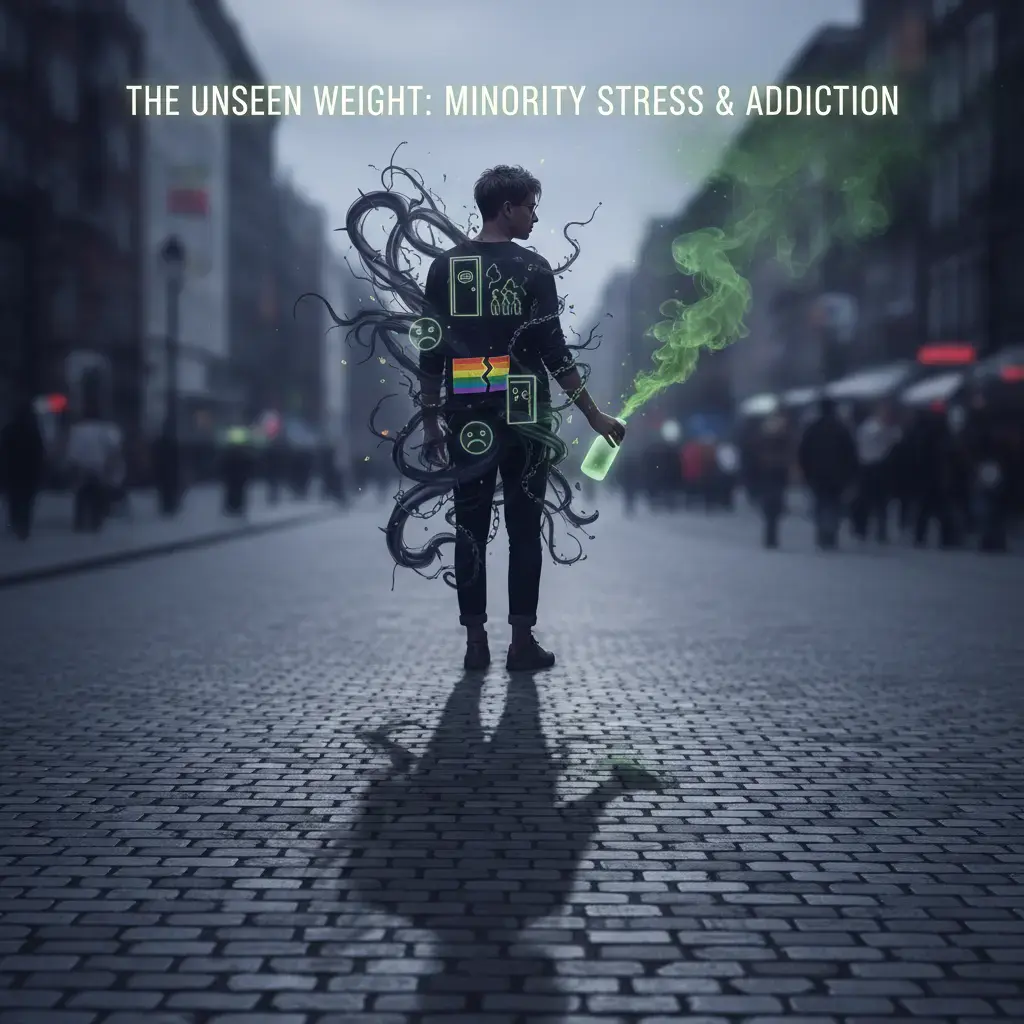
The Unseen Weight: How Minority Stress Fuels Addiction
To understand why substance use disorders (SUDs) affect the LGBTQ+ community at rates two to three times higher than the general population, one must look beyond the substances themselves and examine the environment in which they are used. The answer lies in the psychological concept of the Minority Stress Model, a framework that explains how the unique, chronic stressors faced by marginalized groups lead to significant health disparities.
A. Defining Minority Stress: More Than Just a Bad Day
The Minority Stress Model, pioneered by researchers like Ilan Meyer, posits that the higher rates of mental health and substance use issues among LGBTQ+ individuals are not caused by their sexual orientation or gender identity itself, but are a direct result of the social environment they are forced to navigate. Minority stress is fundamentally different from the general stressors that all people face, such as financial worries or job loss. It is unique, chronic, and socially based, stemming directly from the stigma, prejudice, and discrimination associated with having a marginalized identity.
Its chronicity is the most critical factor. This is not the stress of a single traumatic event but a constant, low-grade “undercurrent of stress” that individuals deal with every day. This relentless pressure creates a state of sustained physiological arousal. The body’s stress-response system, the hypothalamic-pituitary-adrenal (HPA) axis, becomes dysregulated from constant activation. Over time, this leads to what scientists call “allostatic overload”-the cumulative wear and tear on the body and brain from being in a perpetual state of high alert. This physiological exhaustion depletes the psychological resources needed for healthy emotional regulation and coping, making the immediate, albeit temporary, relief offered by substances a far more compelling option for managing overwhelming feelings.
B. The Pathway from Prejudice to Substance Use: A Vicious Cycle
The Minority Stress Model outlines a clear pathway from societal prejudice to an individual’s internal experience and, ultimately, to their coping behaviors. This process involves two types of stressors: distal and proximal.
Distal Stressors: The External World Distal stressors are the objective, external events of prejudice and discrimination that an individual experiences. These are not abstract concepts; they are concrete, painful life events that communicate a message of rejection and threat. Examples are pervasive and well-documented:
- Workplace Discrimination: 43% of gay people and an astonishing 90% of transgender people report experiencing harassment or discrimination on the job.
- Family Rejection: The pain of being disowned or shamed by family after coming out is a profound trauma for many, particularly youth.
- Harassment and Violence: The spectrum of aggression ranges from homophobic jokes and slurs to bullying, threats, and physical hate crimes.
- Discriminatory Systems: Navigating laws and institutions that fail to recognize one’s relationships or protect one’s basic rights creates a constant state of insecurity.
Proximal Stressors: The Internal Experience Proximal stressors are the internal, subjective processes that occur as an individual interprets and responds to these external threats. This is where the external world’s prejudice becomes an internal burden.
- Expectation of Rejection and Hypervigilance: After repeated exposure to negative reactions, an individual naturally begins to expect them. This leads to a state of hypervigilance-an exhausting, mentally taxing process of constantly scanning one’s environment for threats, monitoring one‘s own behavior, and anticipating negative outcomes. As one individual in a qualitative study described this feeling, “Sometimes I am scared when I think about it. ‘Shit, this is going to be my whole life. You’ll be scared your whole life.’ Really. Meeting people, what will they think of you, will you get a job, will people you need like you”.
- Identity Concealment: To avoid rejection and harm, many LGBTQ+ individuals are forced to actively hide their true selves. This “closeting” is not a passive state but a cognitively draining effort of managing information, changing speech or mannerisms, and avoiding topics that might reveal one’s identity. This concealment prevents the formation of authentic social support networks and leads to profound loneliness and isolation.
- Internalized Stigma: Perhaps the most insidious aspect of minority stress is when an individual absorbs the negative messages and stereotypes from society and turns them inward. This internalized homophobia or transphobia manifests as deep-seated feelings of shame, self-hatred, worthlessness, and the belief that one is inherently flawed.
Faced with this internal landscape of constant anxiety, fear, isolation, and shame, substance use becomes a predictable, if maladaptive, coping strategy. Alcohol, stimulants, or opioids are used to self-medicate the pain, numb the anxiety of hypervigilance, lower social inhibitions to feel a sense of connection, or simply find a temporary escape from the crushing weight of internalized shame.
C. The Statistical Reality: A Community in Crisis
These psychological processes are not theoretical; they produce clear, measurable, and devastating consequences. The statistical disparities in substance use are not a reflection of a flaw within the LGBTQ+ community, but rather the predictable outcome of the immense and inequitable burden of minority stress.
| Substance | LGBTQ+ Population Rate | General Population Rate |
| Overall Substance Abuse/SUD | 20% – 30% | ~9% |
| Alcohol Abuse | 25% | 5% – 10% |
| Tobacco Use | Up to 200% higher | (Baseline) |
| Marijuana Use | Men who have sex with men are 3.5x more likely | (Baseline) |
| Stimulant Use (Amphetamines) | Men who have sex with men are 12.2x more likely | (Baseline) |
| Opioid Use (Heroin) | LGBTQ+ individuals are 9.5x more likely | (Baseline) |
While all rates are elevated, the exponentially higher rates of stimulant and opioid use are particularly telling. This disparity is not arbitrary. These specific substances are often chosen because they provide a targeted, albeit dangerous, solution to the specific psychological wounds inflicted by minority stress. Stimulants like amphetamines can temporarily grant the user a feeling of confidence, energy, and sociability, directly counteracting the crippling social anxiety and internalized shame that make everyday interactions feel threatening. For someone living in a state of hypervigilance, stimulants can feel like a chemical shield.
Similarly, opioids like heroin are powerful emotional analgesics. For individuals contending with the profound psychological pain of trauma, family rejection, and deep-seated self-hatred, the potent numbing effect of opioids offers a more complete and immediate escape than other substances. The choice of drug is often a desperate attempt to medicate a specific and unbearable internal state. Any effective treatment must therefore go beyond addressing the substance itself and heal the underlying wound that the substance was being used to treat.
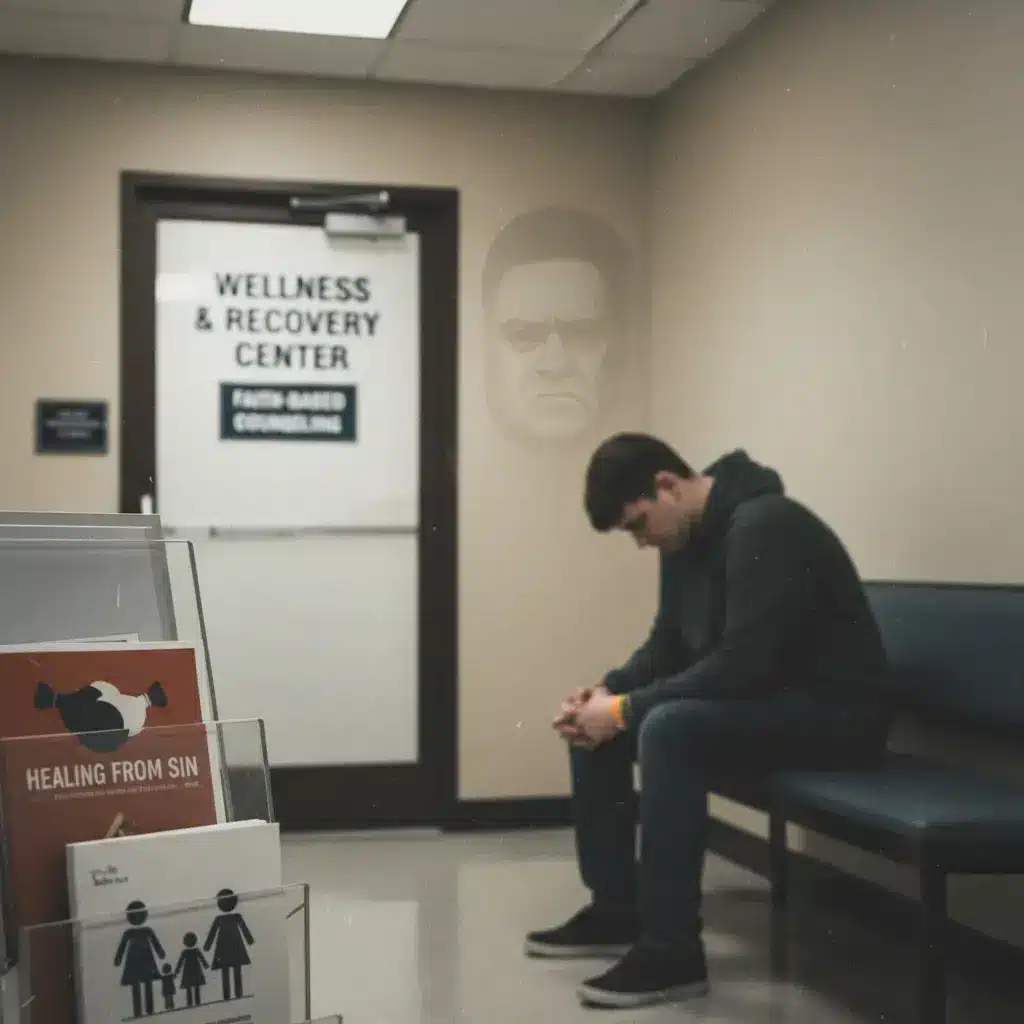
When ‘Help’ Actively Harms: The Dangers of Non-Affirming Treatment
Given the clear link between societal stigma and substance abuse, it is logical to assume that a treatment center would be the one place an LGBTQ+ individual could find refuge. Tragically, the opposite is often true. For many, the prospect of entering rehab is fraught with the fear that they will encounter the same prejudice inside its walls as they do outside, a fear that is all too often realized.
A. A Revolving Door of Fear and Mistrust
The fear of discrimination is a primary barrier to care. Research shows that LGBTQ+ individuals are 2.5 times more likely to delay seeking treatment specifically because they anticipate being treated poorly. This hesitation is born from a history of negative experiences within the broader healthcare system, where a lack of cultural competency can lead to everything from subtle invalidation to outright refusal of care.
This problem is compounded by a massive trust deficit in the addiction treatment industry itself. Many facilities advertise themselves as “LGBTQ-friendly” to attract clients, but this claim often proves to be hollow. One study found that of the hundreds of programs listed in a national directory as having specialized services for LGBTQ+ individuals, only 7.3% could confirm these services actually existed upon follow-up. A more recent study examining facilities that claimed to offer both medication for opioid use disorder and LGBTQ-specific groups found that less than 30% actually provided the specialized groups they advertised. This gap between marketing and reality leaves individuals feeling deceived and further isolates them from the help they need.
B. The Trauma of Treatment: How Non-Affirming Rehabs Cause Harm
When an LGBTQ+ person does enter a non-affirming program, the experience can be more than just unhelpful-it can be iatrogenic, a medical term for when the treatment itself causes harm. Instead of being a place of healing, these environments actively recreate the exact conditions of minority stress that fuel addiction in the first place. The “cure” becomes a concentrated dose of the poison.
This re-traumatization occurs in several documented ways:
- Overt Discrimination and Bullying: Participants in studies have reported horrific experiences, including being the target of homophobic and transphobic slurs from both peers and staff, being intentionally and repeatedly misgendered, and facing threats of physical and sexual violence. When these incidents occur, staff often fail to intervene, sometimes even blaming the LGBTQ+ client for the conflict and suggesting they leave the program.
- Institutional Invalidation: The very structure of many rehabs is built on a rigid gender binary that erases the existence of transgender and nonbinary people. Gender-segregated housing, bathrooms, and group therapy sessions force individuals into boxes that do not align with their identity. Being assigned to a room based on one’s sex assigned at birth rather than one’s gender identity is a profound act of invalidation that communicates that one’s true self is not recognized or respected.
- Clinical Incompetence and Ignorance: Even in the absence of overt malice, a lack of training can be deeply damaging. Staff may ask invasive and inappropriate questions about a person’s body or relationships, offer unsolicited and harmful opinions, or simply fail to understand the central role that minority stress plays in the client’s addiction.
In such an environment, healing is impossible. The client is forced back into a survival mindset, reactivating the same psychological defenses that therapy is meant to dismantle. They must once again become hypervigilant to protect themselves from harm, conceal their identity to avoid conflict, and are left to internalize the shame of being treated as “the problem.” This experience not only fails to treat the addiction but actively inflames its root causes, making relapse upon leaving not just a risk, but a near certainty.

The Blueprint for True Healing: What “LGBTQ+-Affirming” Really Means
To counteract the profound harm of non-affirming care, a new standard must be embraced. True healing requires an environment that is not just “friendly” or “tolerant,” but actively and clinically “affirming.” The distinction is critical. Tolerance is a passive stance of not causing harm. Affirmation is an active, evidence-based commitment to creating an environment and providing therapies that validate a person’s identity and integrate it as a source of strength in their recovery. An authentically affirming program is built upon three non-negotiable pillars.
A. Pillar 1: An Unbreachable Foundation of Safety and Respect
Safety is the absolute prerequisite for the vulnerability that therapy demands. This foundation is built with tangible policies, a thoughtful physical environment, and a systemic commitment to respectful language.
- Policies and Procedures: This begins with explicit, publicly visible non-discrimination policies that include sexual orientation and gender identity. Intake forms must be designed to be inclusive, moving beyond binary gender options and allowing individuals to state their chosen name and pronouns from the very first point of contact.
- Physical Environment: The space itself must signal safety and inclusion. This includes providing easily accessible gender-neutral bathrooms and offering housing arrangements based on a person’s gender identity, not their sex assigned at birth. Simple visual cues, such as rainbow flags or posters from LGBTQ+ advocacy groups, can also communicate to a new client that they are in a welcoming space.
- Inclusive Language: All staff must be trained to use a person’s chosen name and pronouns consistently and correctly. This is not a matter of political correctness; it is a fundamental act of respect that validates a person’s existence and builds the trust necessary for a therapeutic alliance.
B. Pillar 2: Culturally Competent and Compassionate Expertise
A safe environment is necessary but not sufficient. It must be paired with a clinical team that possesses the specialized knowledge to treat the unique challenges faced by the LGBTQ+ community.
- Comprehensive Staff Training: Cultural competency cannot be optional or limited to a single seminar. All staff members-from the lead therapist to the admissions coordinator to the support staff-must receive rigorous, ongoing training in LGBTQ+ issues.
- Specialized Knowledge: This training must equip the team with a deep understanding of the Minority Stress Model, the dynamics of internalized homophobia and transphobia, the challenges of the coming-out process, the impact of family rejection, and the specific health concerns prevalent in the community.
- Representation: One of the most powerful ways to build trust and rapport is through representation. Actively hiring qualified staff who are themselves members of the LGBTQ+ community ensures that clients can see their own lived experiences reflected in those providing their care.
C. Pillar 3: Therapy That Heals the Core Wound
With safety established and expertise in place, the therapeutic work can begin. Affirming care utilizes evidence-based modalities that are specifically suited to address the root causes of addiction in this population.
- Trauma-Informed Care: This is the cornerstone of affirming therapy. It recognizes that the chronic experience of minority stress is a form of complex trauma. Treatment must therefore employ therapies proven to heal trauma, such as Cognitive Behavioral Therapy (CBT), Dialectical Behavior Therapy (DBT), and Eye Movement Desensitization and Reprocessing (EMDR). These approaches help individuals reprocess painful experiences, challenge negative self-beliefs born from stigma, and develop healthy coping skills to replace substance use.
- Integrated Dual-Diagnosis Treatment: Substance use disorders in the LGBTQ+ community rarely exist in a vacuum. They are frequently co-occurring with mental health conditions like major depression, generalized anxiety disorder, and PTSD. An affirming program must have the clinical capacity to treat both the SUD and the underlying mental health condition concurrently, as they are inextricably linked.
- Specialized Peer Support: Isolation is a key component of minority stress. Therefore, connection is a key component of healing. Dedicated group therapy sessions exclusively for LGBTQ+ clients provide a powerful antidote to isolation. In these groups, individuals can share their experiences openly without fear of judgment, receive validation from others who truly understand, and begin to build a sober, supportive community that can sustain them long after they leave treatment.
D. The Proven Results: Why Affirming Care Saves Lives
The benefits of this affirming model are not merely anecdotal; they are backed by a growing body of research. When LGBTQ+ individuals are placed in supportive, affirming environments, their mental health outcomes improve dramatically. Studies consistently show significant reductions in depression, anxiety, and, most critically, suicidality. This improved mental health provides the stable foundation upon which lasting sobriety can be built.
Consequently, success rates for addiction treatment are substantially higher in specialized programs. While general rehab programs report long-term success rates between 30% and 50%, studies of LGBTQ+-affirming programs show success rates of 60% to 70% or higher. This dramatic improvement is the direct result of a clinical model that follows a logical and powerful sequence: creating safety allows for honesty; honesty allows for the processing of trauma; processing trauma leads to deep healing; and deep healing makes lasting sobriety not just possible, but a natural outcome.
Finding Your Sanctuary in Costa Rica: The CRTC Commitment to Affirming Recovery
Understanding the critical need for affirming care is the first step. The next is finding a center that doesn’t just pay lip service to the concept but has built its entire philosophy and clinical model around it. At the Costa Rica Treatment Center (CRTC), we recognize that for our LGBTQ+ clients, “standard rehab often fails because it doesn’t address the root cause: minority stress”. Our programs are designed from the ground up to provide the safety, expertise, and individualized healing that are essential for this community to thrive in recovery.
A. We Don’t Just Tolerate You; We Are Built for You
There is a vast clinical difference between a facility that is a “gay friendly addiction treatment” center and one that is truly LGBTQ+-affirming. The former implies tolerance; the latter signifies a deep clinical commitment to understanding and treating the specific issues, like minority stress and trauma, that LGBTQ+ people face. At CRTC, we are unequivocally in the latter category. We have built our programs on the core principles of safety, respect, and individualized healing that constitute the gold standard of affirming care.
B. How CRTC Embodies the Pillars of Affirming Care
Our commitment to the LGBTQ+ community is woven into every aspect of our program, directly reflecting the three pillars of authentic affirmation.
Our Foundation of Safety: We understand that healing cannot begin until a person feels fundamentally safe. We ensure this through:
- Explicit Policies and Inclusive Practices: Our center operates under explicit non-discrimination policies. From the moment of first contact, our intake forms are designed to respectfully acknowledge a full spectrum of gender identities and sexual orientations.
- A True Sanctuary Environment: Our location in the serene mountains of Atenas, Costa Rica, provides more than just a beautiful backdrop. It is a private, secure sanctuary that offers physical and emotional distance from the daily environments and social triggers that cause stress and trauma. Every client is given a private room, ensuring a personal space for reflection, dignity, and security.
Our Clinical Expertise: Our team is not just compassionate; they are clinically competent.
- Ongoing Cultural Competency Training: The entire CRTC clinical team, from our doctors and therapists to our support staff, receives ongoing, specialized training in LGBTQ+ issues. Our staff understands the complex dynamics of minority stress, internalized stigma, and the importance of consistently using correct names and pronouns as a baseline for respectful care.
Our Therapeutic Approach: Our treatment philosophy is perfectly aligned with the needs of the LGBTQ+ community because it is designed to heal the underlying causes of addiction.
- Fundamentally Trauma-Informed: We recognize that minority stress is a form of trauma. Our core clinical model utilizes evidence-based therapies such as Cognitive Behavioral Therapy (CBT), Dialectical Behavior Therapy (DBT), and EMDR to go beyond symptom management and heal the underlying psychological wounds that drive substance use.
- Radically Individualized and Holistic: We reject the one-size-fits-all model. Every client at CRTC receives a personalized, holistic treatment plan developed after a thorough assessment. Through intensive one-on-one counseling, we work to uncover and heal the unique and specific ways that a person’s life experiences have contributed to their addiction.
- Fostering Community and Connection: Our intentionally small and intimate program size fosters a powerful sense of community and peer support. In this close-knit environment, the isolation that is so central to the experience of minority stress begins to dissolve, replaced by genuine connection with others on a shared journey of healing.
C. The CRTC Difference: Healing the Whole Person
The unique power of the Costa Rica Treatment Center lies in the synergy between our location and our clinical model. By removing an individual from their stressful home environment and placing them in a true “external sanctuary,” we quiet the noise of the outside world. This physical and psychological distance minimizes triggers and distractions, allowing the client to fully engage in the deep internal work of recovery. When this external sanctuary is combined with the “internal sanctuary” of our clinically affirming program, the conditions for profound, transformative healing are optimized in a way that few other programs can offer. The location is not a luxury; it is a core therapeutic tool. Our goal is not simply to help clients achieve sobriety, but to guide them toward a renewed sense of self-worth, improved mental health, and the freedom to live a joyful, authentic life.
Reclaiming Your Life, Whole and Authentic
The evidence is undeniable: addiction within the LGBTQ+ community is inextricably linked to the deep psychological wound of minority stress. Effective treatment, therefore, cannot be a matter of mere abstinence. It must be a process of profound healing that takes place in an environment of unwavering safety, is guided by specialized clinical expertise, and is rooted in the radical affirmation of a person’s true self.
Lasting recovery is not only possible; it is a reality for the thousands who have found their way to programs that honor their identity as a source of strength. It begins with finding a place where it is safe to be fully and unapologetically yourself, perhaps for the very first time. It is in that space of acceptance that the shame of addiction can be transformed into the pride of recovery.
You have carried the weight of minority stress for long enough. You deserve a place where you can finally set it down and heal. Contact the Costa Rica Treatment Center today to speak confidentially with an admissions specialist who understands. Your journey to authentic recovery starts here.
Contact Us:
- Toll-Free (USA & Canada): +1 888-981-9092 or +1 800-708-3656
- Email: info@costaricatreatmentcenter.com
- Or visit our Contact Page for more options. All conversations are 100% confidential.