Why Are Social Media and Gaming So Hard for Teens to Resist? As a parent, you have likely felt a growing sense of unease. You see your child glued to a screen, disappearing for hours into a world you don’t fully understand, and you feel a nagging worry that this is more than just a phase. Your intuition is correct. The magnetic pull of social media and video games is not a sign of your teen’s weak willpower or a failure in your parenting; it is the result of a sophisticated and intentional design. These platforms are engineered for maximum…
TL;DR
For the parent navigating the turbulent waters of a teen’s digital world, here is what you need to know now:
- The Problem is Real: Social media and gaming addictions are powerful behavioral addictions. While “social media addiction” is not yet an official diagnosis in the Diagnostic and Statistical Manual of Mental Disorders, Fifth Edition (DSM-5), its damaging effects are well-documented. In contrast, “Gaming Disorder” is officially recognized by the World Health Organization (WHO), confirming the clinical reality of this condition. These platforms are engineered to create powerful psychological and neurological reward cycles that are difficult to break.
- Key Warning Signs: The issue goes far beyond the number of hours your child spends online. The true red flags are functional impairments. Watch for a consistent neglect of responsibilities (school, chores), withdrawal from family and real-world friends, extreme irritability when offline, a decline in personal hygiene, and a noticeable drop in academic performance.
- Your First Steps: Open, non-judgmental communication is the foundation for change. The goal is to work with your teen, not against them. Collaborate on a family media plan, establish sacred tech-free zones like the dinner table and bedrooms at night, and actively encourage engaging offline hobbies.
- The Root Cause: In many severe cases, a digital addiction is a symptom of a deeper struggle. It is often a coping mechanism for underlying mental health challenges like depression, anxiety, or ADHD. Lasting recovery requires healing these core issues, not just confiscating the device.
- Finding Help: When the problem is deeply entrenched, an immersive treatment environment that removes digital triggers is essential. This approach provides the space for intensive therapy focused on co-occurring disorders, offering the most effective path to sustainable healing.
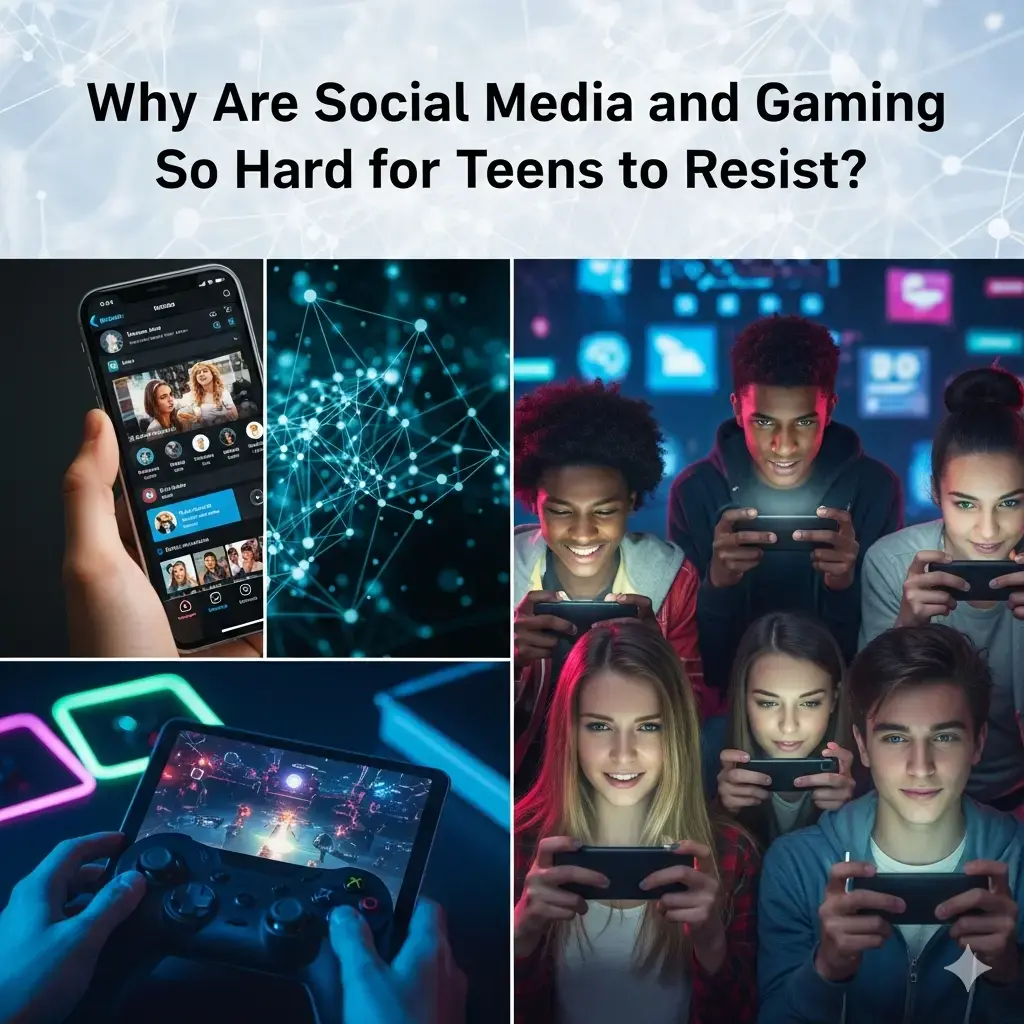
Why Are Social Media and Gaming So Hard for Teens to Resist?
As a parent, you have likely felt a growing sense of unease. You see your child glued to a screen, disappearing for hours into a world you don’t fully understand, and you feel a nagging worry that this is more than just a phase. Your intuition is correct. The magnetic pull of social media and video games is not a sign of your teen’s weak willpower or a failure in your parenting; it is the result of a sophisticated and intentional design. These platforms are engineered for maximum engagement, leveraging the very core of human psychology and neurobiology to keep users hooked.
Defining the Terms: Problematic Use vs. Clinical Disorder
It is crucial to understand the landscape of what experts are seeing. On one hand, there is Problematic Social Media Use (PSMU). While this is not yet a formal diagnosis in the DSM-5, leading authorities, including the director of the National Institute on Drug Abuse (NIDA), confirm that PSMU shares key characteristics with substance use disorders. Brain imaging studies support this, showing that functional abnormalities in the brains of those with PSMU overlap with patterns seen in drug addiction. PSMU is not defined by a specific number of hours online but by a compulsive pattern of use that disrupts daily life and well-being.
On the other hand, Gaming Disorder (GD) has been officially recognized as a clinical condition in the World Health Organization’s 11th Revision of the International Classification of Diseases (ICD-11). This gives the issue significant clinical weight. For a diagnosis, a person must show a pattern of behavior characterized by three key features for at least 12 months:
- Impaired control over gaming (e.g., frequency, duration, intensity).
- Increasing priority given to gaming to the extent that it takes precedence over other interests and daily activities.
- Continuation or escalation of gaming despite the occurrence of negative consequences.
The official recognition of Gaming Disorder validates what so many parents have observed: for a vulnerable minority, this recreational activity can become a devastating behavioral addiction. And while the medical community continues to debate the classification of social media addiction, the evidence of its harm and the neurological parallels to recognized addictions are undeniable. For a parent, the functional impairment you see in your child’s life is more important than any diagnostic label.
The Science of “Just One More Minute”
The reason your teen struggles to log off is rooted in a powerful biological loop, meticulously exploited by app and game designers.
- The Dopamine Loop: Every “like,” notification, new follower, or in-game reward triggers a small release of dopamine, the brain’s primary pleasure and motivation chemical. This creates a feeling of satisfaction and reinforces the behavior, making your teen want to repeat it. Over time, this hijacks the brain’s reward system in a way that is remarkably similar to how it responds to online gambling or substance use.
- Algorithmic Reinforcement: Today’s platforms are powered by sophisticated algorithms that learn your teen’s preferences with frightening accuracy. They curate an endless, personalized stream of content-be it TikTok videos or YouTube shorts-ensuring a constant supply of novel and engaging information. This endless novelty keeps the dopamine flowing and maintains user engagement for hours on end.
- Social & Psychological Hooks: These platforms tap into fundamental adolescent needs. The Fear Of Missing Out (FOMO) creates an urgent need to stay constantly connected. The desire for peer validation makes “likes” and comments feel like essential measures of self-worth. For teens struggling with real-world stressors like social anxiety or depression, the digital world offers a potent form of
escapism-a place to avoid adverse moods or difficult realities.
The mechanisms driving both gaming and social media addiction-intermittent rewards, mood modification, and craving for escape-are identical to those found in classic substance and gambling addictions. This parallel is critical for parents to grasp. Your child isn’t just forming a “bad habit”; their brain is caught in a powerful, biologically reinforced cycle that makes it incredibly difficult to “just stop.”
The Scope of the Problem
This is not an isolated issue affecting just a few families. The statistics paint a stark picture of a generation immersed in the digital world. Up to 95% of teens report using a social media platform, and a full one-third admit to using it “almost constantly”. A 2023 survey found that American teenagers spend an average of 4.8 hours on social media
every single day. Meanwhile, the WHO reports that 12% of all adolescents are at risk for developing problematic gaming behaviors. Your family is not alone in this struggle.

Beyond “Too Much Screen Time”: Recognizing the True Signs of Addiction
One of the biggest mistakes a parent can make is focusing solely on the clock. Addiction is not defined by a specific number of hours spent on a screen; it is defined by the negative consequences and loss of control that result from that use. A teen who spends six hours gaming but is also a straight-A student, a star athlete, and has a healthy social life is in a very different situation than a teen who spends three hours gaming while their grades plummet, they quit the soccer team, and they stop seeing their friends.
To help you distinguish between passionate hobby and problematic dependency, here is a comprehensive checklist of warning signs, broken down into observable categories.
The Checklist of Warning Signs
The signs of digital addiction can be subtle at first but often grow more pronounced over time. They almost perfectly mirror the diagnostic criteria for substance use disorders, including tolerance (needing more to get the same effect), withdrawal (distress when not using), and continuation despite harm. Recognizing this parallel helps frame the issue with the seriousness it deserves.
| Preoccupation & Loss of Control: Constantly talking or thinking about the game/app when not using it; making unsuccessful attempts to cut back or stop. | Mood Swings & Withdrawal: Becoming intensely irritable, anxious, angry, or sad when unable to get online or when use is restricted. | Poor Personal Hygiene: Neglecting basic self-care like showering, changing clothes, or brushing teeth in favor of more screen time. |
| Neglecting Responsibilities: A noticeable decline in grades, skipping homework, poor performance at a part-time job, or failing to do household chores. | Using it as an Escape: Turning to social media or gaming as the primary way to cope with or relieve negative feelings like stress, guilt, loneliness, or hopelessness. | Sleep Disruption: Staying up late to scroll or play, leading to chronic fatigue, difficulty waking up, and insomnia. The blue light from screens can also interfere with natural sleep patterns. |
| Loss of Interest in Other Activities: Abandoning hobbies, sports, and other activities they once enjoyed; preferring screen time over in-person time with friends and family. | Increased Anxiety & Depression: Research consistently shows a strong link between excessive digital use and worsening symptoms of anxiety and depression. | Physical Ailments: Frequent headaches or migraines from eye strain, chronic neck and back pain from poor posture, and repetitive stress injuries like carpal tunnel syndrome. |
| Deception & Hiding Use: Lying about the amount of time spent online, hiding their use, or becoming defensive when questioned about it. | Heightened Social Comparison: For social media users, constantly comparing their lives, bodies, or accomplishments to curated online personas, leading to low self-esteem. | Changes in Weight: A sedentary lifestyle combined with mindless snacking while online can contribute to significant weight gain or, in some cases, weight loss from forgetting to eat. |
| Social Isolation: Progressively withdrawing from family activities and in-person friendships to spend more and more time alone with their devices. |
If you find yourself checking off multiple items on this list, it is a clear signal that your child’s digital habits have crossed the line from entertainment into a pattern that is causing significant harm.
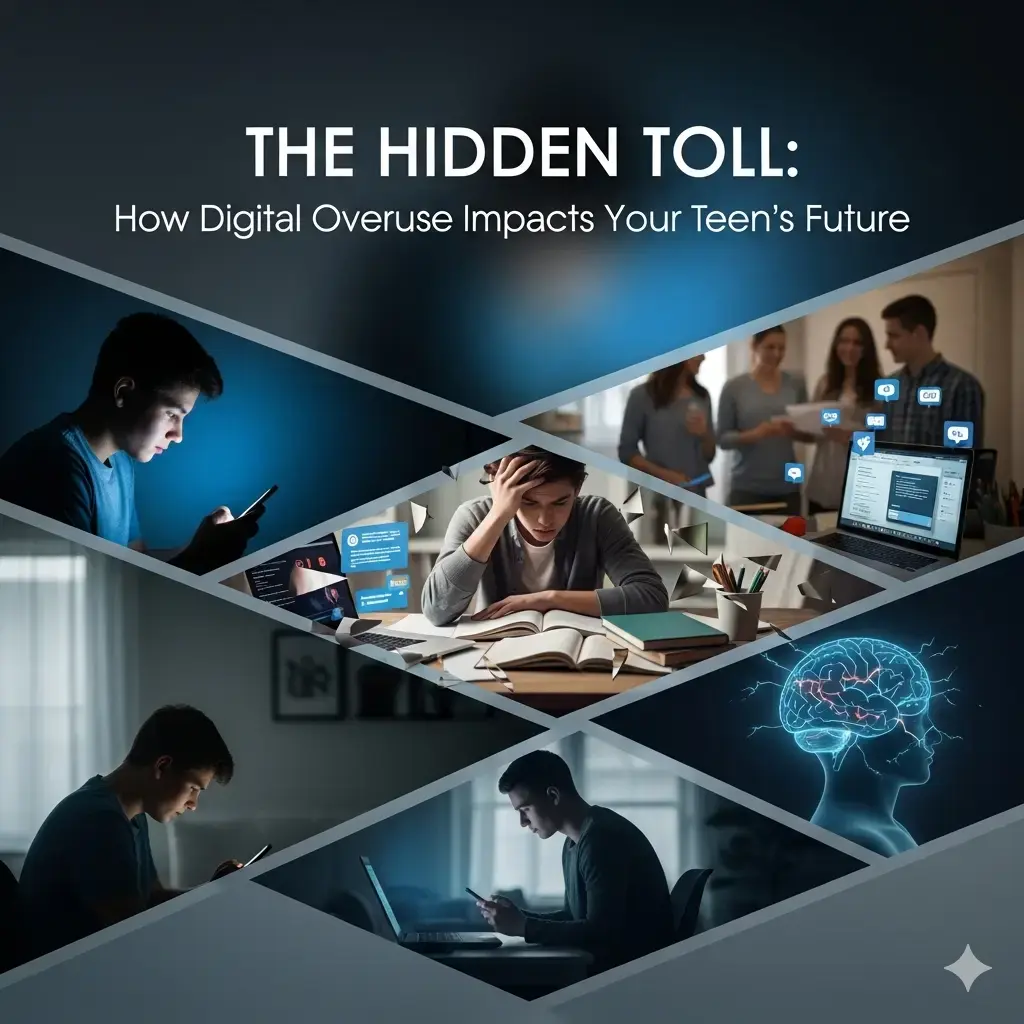
How Digital Overuse Impacts Your Teen’s Future
The immediate frustrations of a messy room or a missed homework assignment are only the surface of the problem. When left unaddressed, a severe digital addiction can inflict a profound and lasting toll on a young person’s development, jeopardizing their mental, physical, and social well-being long into the future. The most insidious aspect of this problem is that it often creates a self-perpetuating downward spiral: the negative consequences of the addiction feed the very emotional distress that drives the teen back to the screen for escape.
Mental & Emotional Health Crisis
The link between excessive screen time and poor mental health is undeniable. Teens who spend more than three hours a day on social media face double the risk of experiencing mental health problems, including symptoms of depression and anxiety. For many, especially teenage girls, platforms like Instagram become a breeding ground for toxic social comparison and negative body image, with nearly half of adolescents reporting that social media makes them feel worse about their bodies. This constant exposure to curated, unrealistic perfection can fuel feelings of inadequacy, loneliness, and hopelessness. In the most tragic cases, addictive patterns of social media use have been shown to predict a two to three times increase in suicidal ideation and behaviors.
Academic & Cognitive Decline
The classroom is often one of the first places the damage becomes visible. Excessive gaming and scrolling directly correlate with poor academic performance, missed assignments, and declining grades. But the impact is deeper than just neglected homework. The hyper-stimulating, fast-paced nature of modern digital media can fundamentally alter a developing brain’s ability to focus. This can impair crucial cognitive functions like sustained attention, concentration, and memory, making traditional learning environments feel boring and difficult. Alarming research from a National Institutes of Health study found that children with more than seven hours of daily screen time showed a premature thinning of the brain’s cortex-the area responsible for critical thinking and reasoning.
Social Development & Relationships
While multiplayer games and social media feeds can create a sense of community, they are a poor substitute for the complexities of real-world interaction. An over-reliance on digital communication can displace the development of essential face-to-face social skills, such as reading body language, navigating conflict, and building deep, empathetic connections. This can lead to profound social isolation and loneliness, even when a teen is “connected” to hundreds of people online. At home, the addiction fuels conflict, deception, and emotional withdrawal, straining the parent-child relationship to its breaking point.
Long-Term Physical Health Risks
The physical toll of a sedentary, screen-based life is severe. Beyond the immediate issues of poor posture and chronic pain, a lifestyle devoid of physical activity dramatically increases the risk of obesity. More concerning is the emerging research on long-term cardiometabolic health. A recent study published in the
Journal of the American Heart Association found that excessive screen time in youth is significantly associated with higher risks for high blood pressure, high cholesterol, and insulin resistance-all precursors to heart disease, stroke, and type 2 diabetes later in life. The hours spent in a chair today are borrowing against your child’s physical health tomorrow.

Reconnecting Your Family: A 5-Step Action Plan for Parents
Seeing the warning signs and understanding the risks can feel overwhelming, but you are not powerless. Taking proactive, constructive steps at home can begin the process of healing and reconnection. The key is to approach this as a collaborative plan aimed at restoring balance, not as a battle to be won. The most successful interventions shift the focus away from simply restricting what your teen cannot do, and toward replacing that behavior with healthier, more fulfilling alternatives.
Step 1: Start the Conversation (Without Starting a Fight)
The way you begin this conversation will set the tone for everything that follows. Wait for a time when you and your teen are both calm and not in the middle of a conflict over screen time.
- Focus on Empathy, Not Accusation: Use “I” statements to express your concern without putting them on the defensive. Instead of, “You’re always on that game and your grades are terrible,” try, “I’m worried because I’ve noticed you seem really stressed lately, and I want to understand what’s going on”. Avoid shaming language like “You’re addicted!” or “You have no self-control,” as this will only cause them to shut down.
- Listen to Understand: Ask open-ended questions to learn why they are so drawn to the digital world. Is it their main source of social connection? Does it help them escape from anxiety? Do they feel a sense of achievement there that they don’t feel elsewhere? Understanding the underlying need is the first step to helping them find a healthier way to meet it.
Step 2: Co-Create a Family Media Plan
Instead of imposing rules from on high, involve your teen in creating them. This sense of ownership dramatically increases their willingness to comply. The American Academy of Pediatrics (AAP) strongly recommends this collaborative approach.
- Make it a Team Effort: Sit down together and frame it as a negotiation. Acknowledge that you, as the parent, will also be bound by these rules. This transforms it from a punishment into a family-wide commitment to healthier habits.
- The Plan Should Cover:
- Time: Agree on reasonable daily or weekly time limits for recreational screen use.
- Content: Discuss what types of games, apps, and sites are appropriate.
- Context: Define when and where screens are not allowed.
- Consequences: Clearly outline what happens when the rules are broken.
Step 3: Establish Tech-Free Zones and Times
Protecting key moments of family life and sleep is non-negotiable for restoring balance.
- The Sacred Spaces: The two most critical screen-free zones are the dinner table and all bedrooms at night.
- Explain the “Why”: Connect these boundaries to tangible benefits. Undistracted meals foster genuine conversation and connection. Removing devices from the bedroom an hour before sleep is crucial for improving sleep quality, as the blue light from screens interferes with the brain’s production of melatonin. A central charging station in the kitchen or living room for all family devices overnight is an excellent practical strategy.
Step 4: Encourage and Facilitate Offline Fulfillment
Simply taking away the phone or console is not a solution; it creates a vacuum. That time and emotional energy must be redirected into meaningful, real-world activities.
- Fill the Void: Your teen is trying to meet a real need online-for connection, achievement, or escape. The goal is to find healthier outlets for those same needs.
- Brainstorm Together: Help your teen rediscover old hobbies or explore new ones. This could be anything from joining a sports team, taking an art class, learning a musical instrument, or finding a volunteer opportunity. The goal is to help them experience the deep satisfaction that comes from real-world accomplishment and connection.
Step 5: Model the Behavior You Want to See
Your actions speak louder than any lecture. If you tell your teen to put their phone away at dinner while you scroll through your own emails, your rules will be seen as hypocritical and will be dismissed.
- Lead by Example: Abide by the family media plan yourself. Put your phone on silent and give your teen your undivided attention during conversations. Show them through your own behavior that you value face-to-face connection over digital distraction. This builds respect and demonstrates that a balanced digital life is a core family value, not just a restriction being imposed upon them.
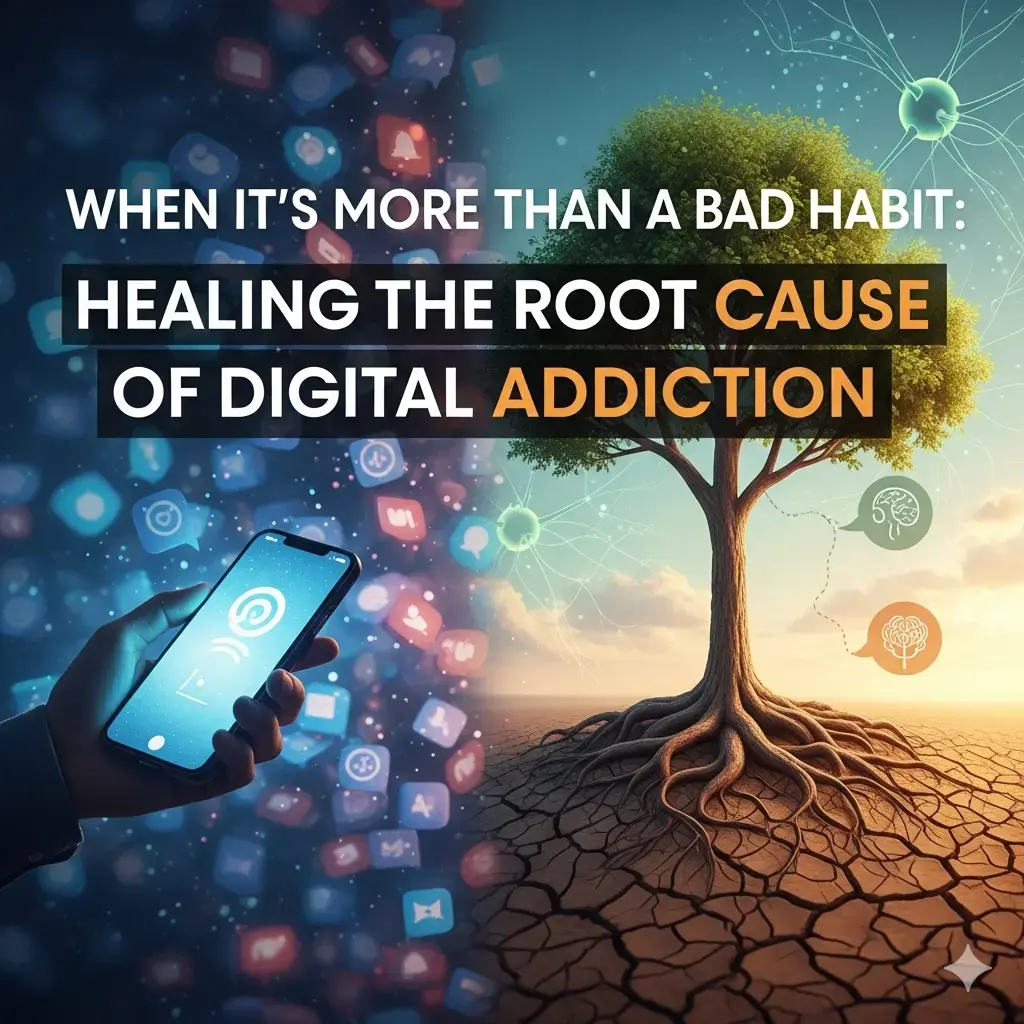
When It’s More Than a Bad Habit: Healing the Root Cause of Digital Addiction
You have had the tough conversations, created a family media plan, and tried to encourage new hobbies, but the pull of the screen remains too strong. Your teen is still isolating, their mental health is deteriorating, and every day feels like a battle. If this sounds familiar, it is time to acknowledge that you may be dealing with more than a bad habit. You are likely facing a problem deeply intertwined with your child’s underlying mental health.
Knowing When to Seek Professional Help
Parental efforts are essential, but they are not always enough. It is time to seek professional help if you observe:
- Severe withdrawal symptoms, including intense rage, deep depression, or panic when devices are removed.
- A complete withdrawal from all social and family life.
- Failing or dropping out of school, or losing a job.
- Significant, worsening symptoms of depression or anxiety.
- Any mention of self-harm or suicidal thoughts.
The Symptom vs. The Cause
This is the most critical concept for parents of a struggling teen to understand: for many, excessive digital use is not the primary problem; it is a coping mechanism. It is a symptom of a deeper, underlying mental health condition, known as a co-occurring disorder. Your teen may be escaping into a virtual world to numb the pain of major depression, to quiet the racing thoughts of an anxiety disorder, or to find the constant stimulation their brain craves due to Attention-Deficit/Hyperactivity Disorder (ADHD).
This is why simply “detoxing” at home often fails in the long run. You can take away the device, but you cannot take away the underlying pain. As soon as the phone or console is returned, if the depression or anxiety remains untreated, your teen will inevitably relapse into the same escapist behavior because the root cause was never addressed.
The Costa Rica Treatment Center Solution: A Path to True Healing
For these complex cases, a more comprehensive and immersive approach is required. This is where the Costa Rica Treatment Center offers a uniquely powerful path to recovery. We are not a “gaming rehab” or a “social media detox camp.” We are a premier clinical facility that specializes in treating the adolescent mental health crises-like depression, anxiety, and trauma-that so often drive digital addiction.
Our approach is built on a dual-action strategy that is nearly impossible to replicate at home or with traditional outpatient care:
- Removing the Stimulus in a Healing Environment: By bringing your teen to our beautiful campus in Costa Rica, we provide a complete and natural “digital detox.” Removed from the constant triggers of their home environment, their nervous system can reset. This separation breaks the cycle of compulsive use and creates the mental space necessary for deep therapeutic work to begin. The immersive nature of this change is a powerful catalyst for healing.
- Treating the Root Cause with Expert Care: While your teen is naturally disconnected from screens, our multidisciplinary team of clinicians gets to work on the real issue. Using evidence-based therapies like Cognitive Behavioral Therapy (CBT), we help your teen heal the underlying emotional pain, develop healthy coping skills, and build genuine self-esteem. We address the “why” behind their screen use, not just the “what.”
Our holistic program integrates nature as a core therapeutic tool. Our adventure trips-exploring world-class beaches, hiking through lush landscapes-are not just recreational. They are designed to help teens reconnect with the real world, challenge themselves, build resilience, and discover that true fulfillment and excitement cannot be found through a screen.
The goal at the Costa Rica Treatment Center is not just temporary abstinence from technology. It is a profound, lasting recovery. We equip your child with the emotional regulation skills, coping strategies, and sense of self-worth they need so they no longer need to escape into a digital world. We help them find their way back to a life of genuine connection, purpose, and well-being.
Frequently Asked Questions from Concerned Parents
Q1: How many hours of gaming or social media is officially an “addiction“? A: There is no magic number of hours that defines addiction. The diagnosis is based on the loss of control and the negative impact the behavior has on major life areas like school, relationships, and physical and mental health. A teen can be addicted at three hours a day if their life is falling apart, while another might play for six hours with no negative consequences. That said, research clearly indicates that risk increases with time; teens who spend more than three hours per day on social media are at double the risk for mental health problems.
Q2: Is social media addiction a real, medically recognized diagnosis? A: This is an important distinction. “Gaming Disorder” is an officially recognized diagnosis in the WHO’s ICD-11. “Social Media Addiction,” while not yet a formal diagnosis in the American DSM-5, is widely recognized by addiction experts and neuroscientists as a legitimate behavioral addiction. Brain imaging studies show that it impacts the brain’s reward circuitry in ways that are strikingly similar to substance use disorders. For parents, the label is less important than the observable harm.
Q3: My teen is mostly on YouTube and TikTok. Can they be addicted to those? A: Absolutely. Addiction can form around any platform or activity that utilizes a powerful reward loop. Both TikTok and YouTube are driven by sophisticated algorithms designed to deliver an endless stream of short, highly engaging videos, creating a potent dopamine feedback cycle. In fact, based on average daily use time, TikTok and YouTube are considered two of the most addictive platforms available today. The core principles of addiction-preoccupation, loss of control, and negative consequences-apply just as much to passive video consumption as they do to interactive gaming.
Q4: How do I handle my teen’s extreme anger and anxiety when I take away their phone or console? A: This intense emotional reaction is a classic sign of withdrawal, and it indicates a significant level of dependence. The most important thing you can do in the moment is to remain calm and not escalate the conflict. Validate their feeling (“I understand that this is incredibly frustrating for you”) without giving in to their demands. Firmly but lovingly enforce the boundaries that you have already agreed upon in your family media plan. An extreme reaction is a very strong signal that the problem has moved beyond your ability to manage at home and that professional intervention is necessary to help your teen learn healthier emotional regulation skills.
Q5: What is Cognitive Behavioral Therapy (CBT) and how does it help with digital addiction? A: Cognitive Behavioral Therapy, or CBT, is a highly effective, evidence-based form of talk therapy that is a cornerstone of modern addiction treatment. For digital addiction, a therapist using CBT helps a teen to: 1) Identify the specific thoughts, feelings, and situations that trigger their compulsive urge to use screens. 2) Challenge and reframe the distorted thought patterns that justify the overuse (e.g., “I have to get online or I’ll miss something important”). 3) Develop and practice new, healthier coping strategies to manage those triggers without resorting to a screen. It is a practical, skills-based approach that empowers teens to regain control over their behavior.
Q6: Why would a treatment center in Costa Rica be the right choice for this problem? A: For severe cases of digital addiction, especially when co-occurring with significant depression or anxiety, a destination treatment center like ours offers a unique and powerful advantage. The approach is twofold: First, by physically removing your teen from their technology-saturated home environment, we provide a complete “digital reset” that allows their brain and nervous system to begin healing. Second, and more importantly, our expert clinical team uses this time to provide intensive, evidence-based therapy to address the root psychological cause of the addiction. This immersive model, set in a healing, natural environment, allows for deeper and more focused work than is often possible with outpatient therapy at home, leading to more sustainable, long-term recovery.