The Fine Line Between Helping and Hurting Loving someone who is struggling with addiction is a journey marked by a complex mix of emotions: profound love, deep-seated fear, persistent hope, and overwhelming exhaustion. Family members often find themselves on the front lines, navigating sleepless nights and constant worry, driven by a powerful instinct to protect the person they care about from harm. However, a painful paradox can emerge from this love. The very actions taken to help—to soften the blows, to manage the chaos, to keep the peace—can sometimes, unintentionally, become the very things that allow the addiction to continue…
The Fine Line Between Helping and Hurting
Loving someone who is struggling with addiction is a journey marked by a complex mix of emotions: profound love, deep-seated fear, persistent hope, and overwhelming exhaustion. Family members often find themselves on the front lines, navigating sleepless nights and constant worry, driven by a powerful instinct to protect the person they care about from harm. However, a painful paradox can emerge from this love. The very actions taken to help—to soften the blows, to manage the chaos, to keep the peace—can sometimes, unintentionally, become the very things that allow the addiction to continue its destructive course. This creates a confusing and heartbreaking reality where acts of love and support do not lead to healing but instead seem to deepen the crisis.
The central conflict for many families is distinguishing between supportive help and harmful enabling. This article serves as a compassionate guide to navigate this difficult terrain. The purpose here is not to assign blame or judgment but to provide clarity and empowerment. By understanding the nature of enabling behavior and its well-intentioned roots, families can begin to shift their approach. This post will offer a clear, actionable framework for setting healthy boundaries—limits that are not born from anger or a desire to punish, but from a place of profound love and respect for both the self and the person struggling. These boundaries are essential for creating a stable, predictable environment where genuine, lasting recovery can finally begin for everyone involved.

The Loving Trap: Understanding Enabling Behavior
When a loved one is caught in the cycle of addiction, the family system is thrown into turmoil. The natural response is to do whatever it takes to restore a sense of normalcy and safety. This response, however, can lead to a pattern of behaviors known as enabling, which, despite being motivated by love, can inadvertently become a significant obstacle to recovery.
What is Enabling? A Clear Definition
Enabling is defined as the process by which a person’s actions, often with the best of intentions, contribute to the continuation of another person’s self-destructive or compulsive behavior. Instead of helping the individual confront their addiction, an enabler inadvertently promotes or permits their loved one’s continued substance misuse by shielding them from the natural consequences of their actions.
The American Psychological Association elaborates on this, defining an enabler as someone who permits, encourages, or contributes to another’s maladaptive behaviors. This can refer to patterns within close relationships that support any harmful or problematic behavior, making it easier for that behavior to persist. It is critical to understand that enabling does not mean a person
supports the addiction itself. Rather, it means that certain well-intentioned behaviors inadvertently sustain the environment in which the addiction can thrive.
The Psychology of Good Intentions: Why We Enable
Enabling behavior is not a character flaw; it is a deeply human response to an incredibly painful and frightening situation. Families of individuals with addiction are often in a state of profound emotional distress, grappling with a constant barrage of fear, anxiety, guilt, and shame. This emotional pain is not merely a side effect of the addiction; it is a primary catalyst for enabling behaviors. The intense fear of a loved one overdosing, getting arrested, becoming homeless, or the fear of triggering a conflict or being abandoned drives family members to try and “fix” immediate problems.
This dynamic creates a vicious cycle. The fear of a crisis prompts a “rescuing” action—paying the rent they cannot afford, lying to their employer about their absence, or bailing them out of legal trouble. These actions, which are classic signs of enabling, provide a cushion that prevents the individual from experiencing the full, natural consequences of their substance use. It is often these very consequences that serve as the most powerful motivation for a person to recognize the severity of their problem and seek help. By removing this motivation, the enabling behavior allows the addiction to continue, and often worsen. This, in turn, leads to more crises, more chaos, and more emotional distress for the family, thus feeding back into the cycle and prompting even more desperate attempts to enable. The behavior born from fear ultimately creates more of the very situations the family member was trying to prevent.
Common Signs of Enabling (A Self-Assessment)
Recognizing enabling behaviors in oneself can be difficult because they are so often disguised as acts of love and support. The following list, framed as a gentle self-assessment, can help bring clarity to these patterns.
- Denial and Minimization: This includes ignoring the true extent of the substance use, believing the person can control it if they just try harder, minimizing the severity of the consequences, or even accepting blame for their behavior.
- Justification and Excuses: This involves making excuses for their actions (“He’s just under a lot of stress at work”) or covering for them by lying to employers, friends, or other family members to hide the consequences of their substance use.
- Taking Over Responsibilities: Family members may find themselves paying their loved one’s bills, cleaning their home, managing their childcare, or completing other essential tasks that the individual is neglecting due to their addiction.
- Financial Support and Bailouts: This is one of the most common forms of enabling and includes giving them money for rent, food, or other necessities with the suspicion that it will be used for substances, or bailing them out of jail and paying for legal fees related to their use.
- Protecting and Controlling: Some may try to protect their loved one by hiding or downplaying their behavior from others. In some cases, a person might even use substances with their loved one in an attempt to “monitor” or limit their intake, a misguided effort to control an uncontrollable situation.
- Ignoring Personal Needs: A consistent pattern of sacrificing one’s own emotional, financial, and physical well-being to manage the chaos created by the loved one’s addiction is a clear sign of enabling.
The Critical Difference: Helping vs. Enabling
The line between helping and enabling can feel blurry in the moment, but the distinction is crucial for long-term recovery. True help empowers an individual and promotes healthy, pro-social, and substance-free behaviors. It fosters accountability and encourages the person to take responsibility for their own life and recovery. Enabling, in contrast, provides a short-term fix that allows the destructive behavior to continue by removing accountability. Helping is about empowering someone to solve their own problems; enabling is about attempting to solve their problems for them. The following table provides concrete examples to illustrate this vital difference.
Helping vs. Enabling: A Quick Guide
| Enabling Action (Short-Term Fix) | Helping Action (Long-Term Support) |
| Giving them cash for rent or bills. | Offering to pay the landlord or utility company directly. |
| Lying to their employer about why they missed work. | Stating, “I am not comfortable lying for you. You will have to speak to your boss yourself”. |
| Cleaning up their messes (physical or metaphorical). | Allowing them to experience the natural consequences of their actions (e.g., a messy home, a missed appointment). |
| Bailing them out of jail or paying their legal fees. | Supporting them in finding legal aid or telling them they must face the legal consequences themselves. |
| Ignoring or minimizing their substance use to avoid a fight. | Expressing your concern clearly and calmly, and offering to help them find professional treatment. |
| Taking over their childcare or other family duties. | Offering to help with childcare only so they can attend a therapy session or a support group meeting. |
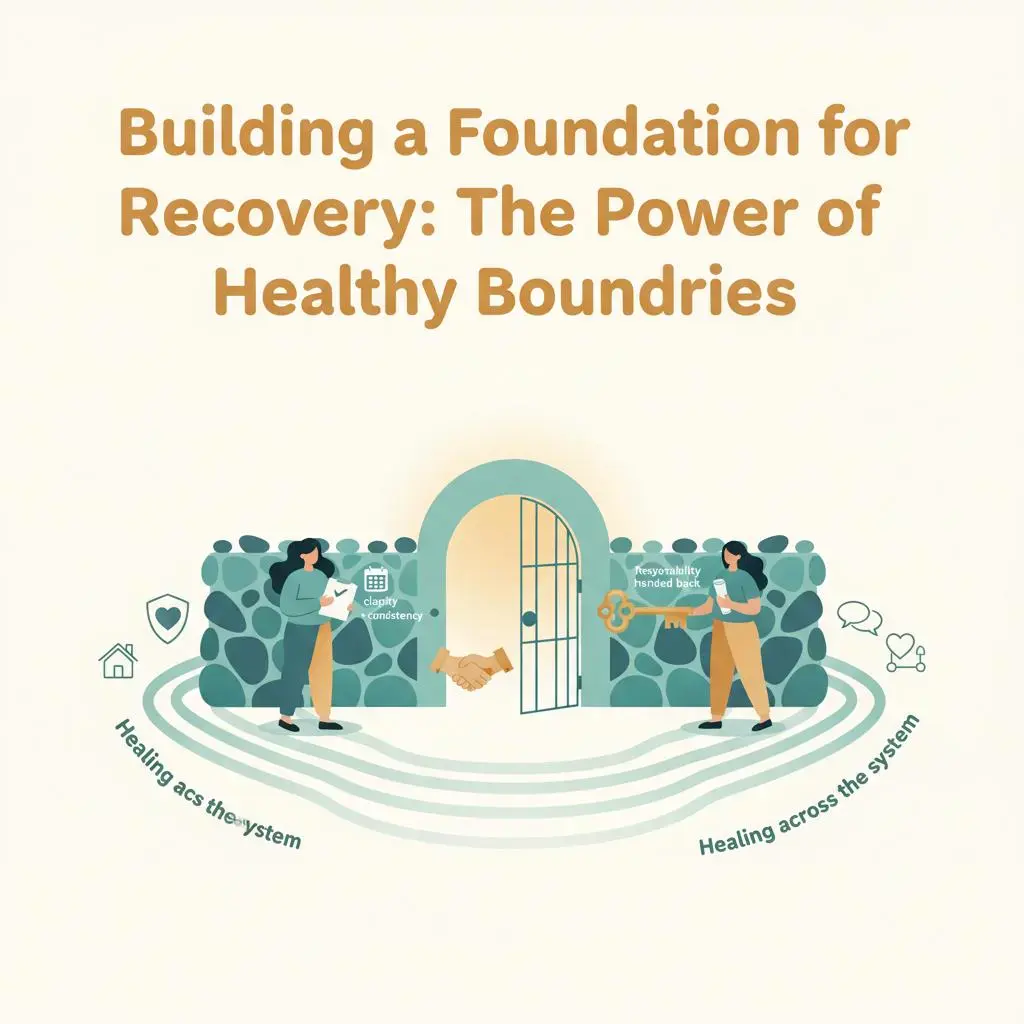
Building a Foundation for Recovery: The Power of Healthy Boundaries
Once a family member recognizes the patterns of enabling, the next step is to replace those behaviors with a new, healthier structure. This structure is built on the foundation of clear, consistent, and loving boundaries. Far from being an act of punishment, establishing boundaries is one of the most powerful and supportive actions a person can take.
What Are Boundaries, and Why Do They Matter?
Boundaries are the clear limits and rules that individuals set for themselves within relationships to protect their physical, emotional, and mental well-being. In the context of addiction, they are the essential guidelines that guard a family against the manipulation, harm, and chaos that the disease often creates. They define what behavior is acceptable and what is not, creating a predictable and safe environment.
It is essential to reframe the purpose of boundary-setting. While these limits are indeed crucial for creating an environment where the person with an addiction is more likely to seek help, they serve an equally important function for the person setting them. Addiction is often called a “family disease” because it causes significant trauma, stress, and emotional exhaustion for everyone it touches. Therefore, family members are not just passive supporters in someone else’s recovery; they are on their own parallel journey of healing from the effects of the addiction.
Setting boundaries is a profound act of self-respect and self-care. It marks a shift from being a reactive caretaker, constantly trying to manage crises, to becoming a proactive individual who is reclaiming their own well-being. This act of prioritizing one’s own needs is not selfish; it is a necessary act of survival. It is only by replenishing their own emotional and mental strength that a family member can have the resilience to offer genuine, healthy, and sustainable support for the long road of recovery ahead.
The Ripple Effect: How Boundaries Heal the Entire Family
Addiction thrives in an environment of chaos, unpredictability, and blurred lines, whereas recovery requires structure, stability, and clear expectations. Healthy boundaries provide this essential structure. When the unwritten rules of the family shift from enabling to accountability, several transformative effects begin to ripple through the family system.
First, boundaries directly interrupt the enabling cycle. When the financial bailouts stop, when excuses are no longer made, and when responsibilities are handed back to the individual, the protective cushion is removed. This allows the person with the addiction to feel the full weight of their choices, which can become a powerful motivator for them to finally acknowledge the need for change.
Second, while it may seem counterintuitive, boundaries are a crucial tool for rebuilding trust. Addiction systematically erodes trust through a pattern of broken promises, deception, and erratic behavior. Initially, the introduction of new boundaries may cause conflict. However, when they are held consistently over time, they create a new kind of predictability. The loved one learns that “no” means no, and that consequences are real. This consistency is the very foundation upon which trust can be slowly and carefully rebuilt. The family dynamic begins to shift from one of crisis management and emotional turmoil to one of mutual respect and clear communication.
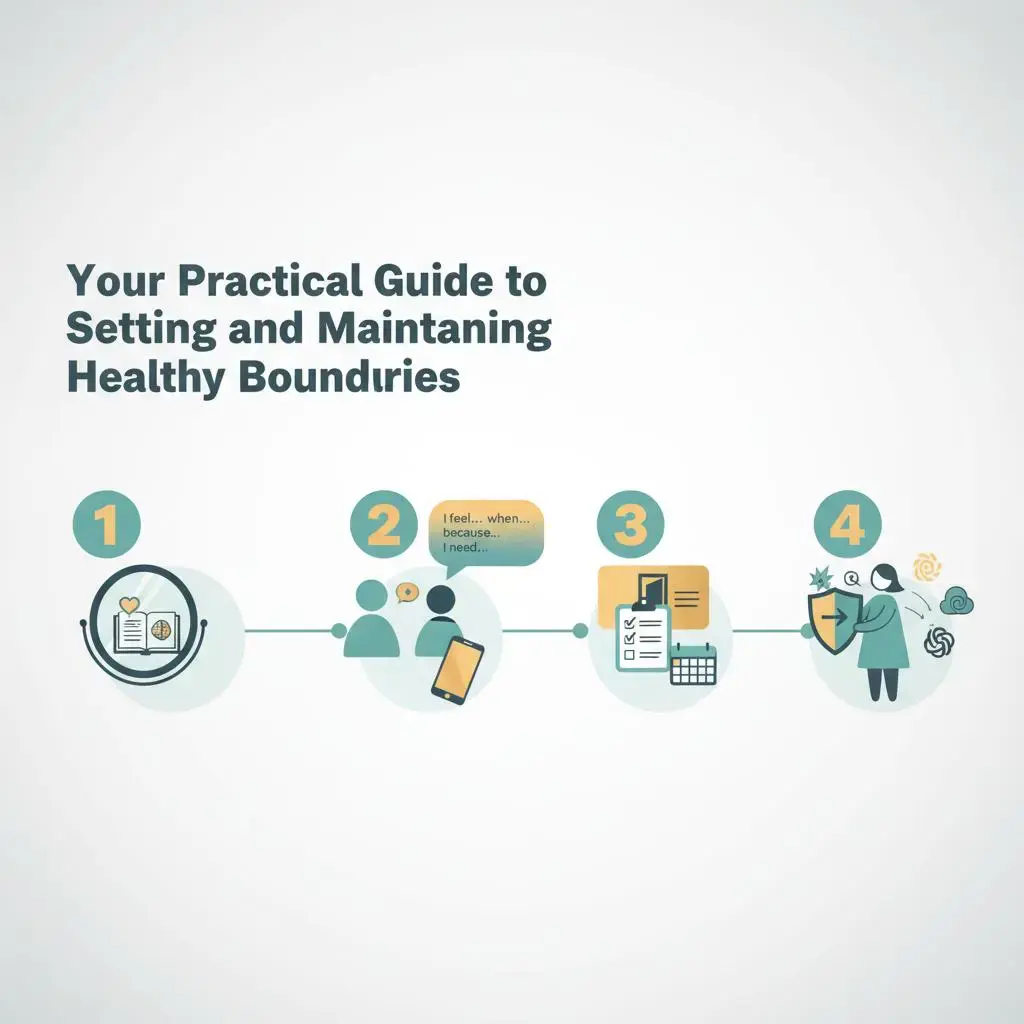
Your Practical Guide to Setting and Maintaining Healthy Boundaries
Understanding the importance of boundaries is the first step; implementing them is the challenge. This process requires introspection, courage, and a commitment to consistency. The following steps provide a practical roadmap for setting and maintaining these new, healthy limits.
Step 1: Look Inward – Identify Your Limits and Needs
Before a boundary can be communicated, it must be clearly defined. This requires a period of honest self-reflection. Family members can benefit from taking time to think or journal about their experiences to identify their personal limits. Key questions to consider include:
- What specific behaviors am I no longer willing to tolerate?
- What situations or interactions consistently make me feel anxious, angry, resentful, or depleted?
- What are my non-negotiable needs for my own safety and mental well-being?
Boundaries can be set in many areas of life. It is helpful to consider the different types:
- Physical Boundaries: These relate to personal space and the home environment. Examples include: “No drugs or alcohol are allowed in my house,” or “I need you to respect my personal space and not get physically aggressive”.
- Emotional Boundaries: These protect a person’s emotional well-being. Examples include: “I will not be blamed for your choices or feelings,” or “I will end the conversation if you start yelling or being verbally abusive”.
- Financial Boundaries: These are often the most critical and difficult to set. Examples include: “I will no longer give you cash for any reason,” or “I will not pay for any legal fees or debts that result from your substance use”.
- Time Boundaries: These protect a person’s time and energy. Examples include: “I will not spend time with you when you are under the influence,” or “I need to protect my evenings for my own self-care and will not be available to deal with crises”.
Step 2: Communicate with Clarity and Compassion
Communicating a new boundary is often the most intimidating part of the process. This is because addiction systematically breaks down healthy communication, creating an environment of secrecy, conflict, and emotional chaos. Therefore, family members are being asked to use a tool—clear, assertive communication—that has likely been damaged by the addiction itself. Acknowledging this difficulty is important. This conversation will feel unnatural and uncomfortable, which is why using structured communication techniques is so vital.
The most effective tool for this conversation is the “I” statement. This technique allows a person to express their feelings and needs without blaming or accusing their loved one, which helps to reduce defensiveness and keep the conversation as productive as possible. A simple and effective formula is:
“I feel [your emotion] when [the specific behavior occurs] because [the impact it has on you]. What I need is [the new boundary].”
Here are some practical scripts using this model:
- Instead of: “You can’t come over here drunk again! You always ruin everything!”
- Try: “I feel anxious and unsafe when you are here under the influence because our conversations often become hostile. What I need is for you to be sober if you want to visit my home. If you arrive intoxicated, I will not be able to let you in”.
- Instead of: “You are so irresponsible! You’re always hitting me up for money!”
- Try: “I feel hurt and taken advantage of when you ask me for money, and I worry that I am harming you by giving it to you. I love you, but for my own well-being and yours, I can no longer give you any cash”.
When having this conversation, it is best to plan it for a time when the loved one is as sober and calm as possible. The message should be delivered respectfully, kept brief and to the point, and should not be over-explained or justified. The boundary is a statement of need, not a point for negotiation.
Step 3: Define the Consequences – And Mean It
A boundary without a clear and consistently enforced consequence is merely a suggestion. The consequence is what gives the boundary its meaning and power. It is the action that will be taken to protect oneself if the boundary is violated.
Crucially, the consequence must be something that is entirely within the family member’s control. For example, a consequence cannot be “You will stop yelling,” because that is an attempt to control another’s behavior. A more effective consequence would be, “If you start yelling, I will leave the room.” The focus is on the action the person setting the boundary will take to protect themselves, not on punishing the other person.
Consistency is the most critical element of this step. If a boundary is set but the consequence is not enforced, it teaches the loved one that the new rules are not serious and can be ignored. This will be the most difficult part of the process, requiring immense resolve and a commitment to follow through, even when it is emotionally painful.
Step 4: Stay Strong – Navigating Pushback and Guilt
It is almost certain that new boundaries will be met with resistance. The loved one may react with anger, blame, manipulation (“If you loved me, you would…”), or sudden promises to change, all of which are designed to test the resolve behind the new limit.
It is important to be prepared for this pushback. Strategies for these moments include calmly repeating the boundary like a broken record (“As I said, I am not able to give you money”) and refusing to be drawn into a circular argument or debate.
Perhaps the most powerful internal challenge will be the family member’s own feelings of guilt. The addiction may have created a dynamic where the family member feels responsible for their loved one’s happiness and well-being. It is essential to continually remember that they are not responsible for their loved one’s choices or their emotional reactions. Remind oneself that setting a firm, loving boundary is not an act of abandonment; it is the most compassionate and supportive action one can take to encourage genuine, long-term recovery.
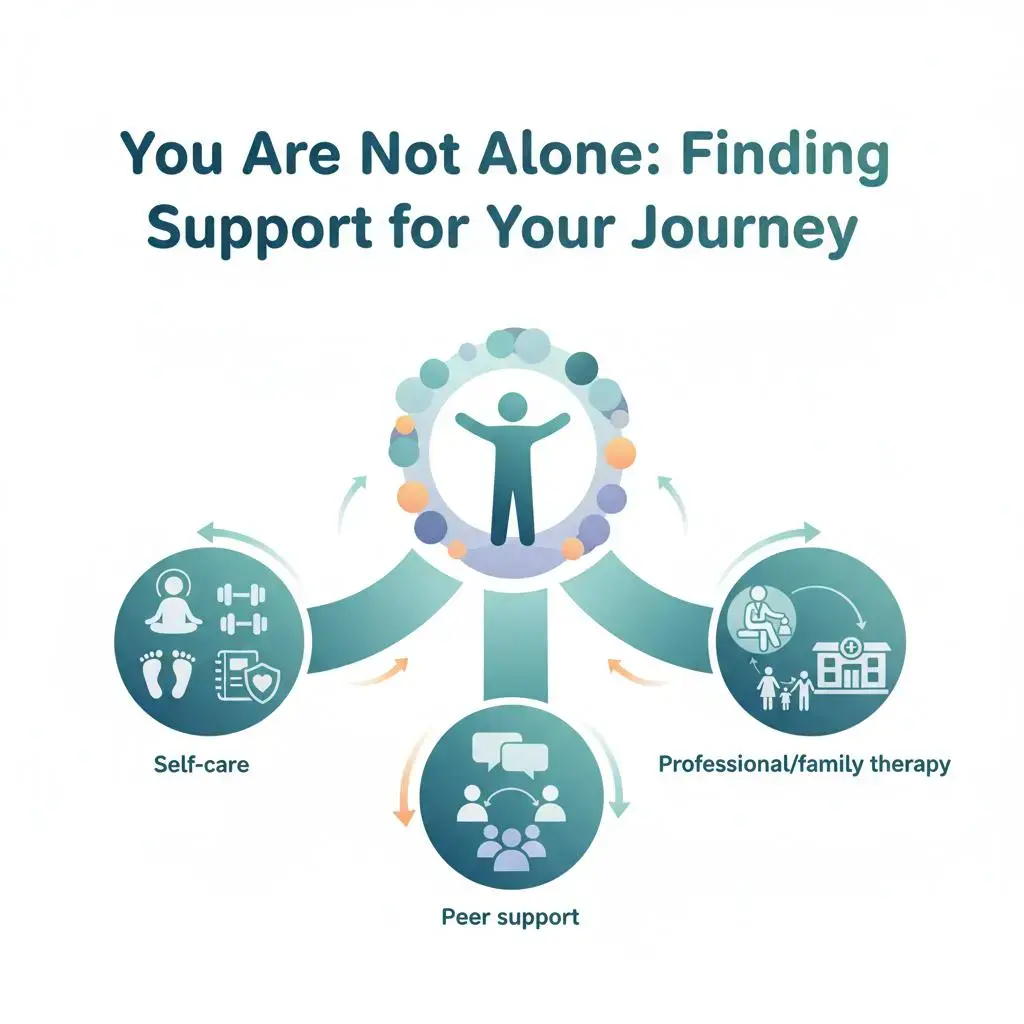
You Are Not Alone: Finding Support for Your Journey
The path of loving someone with an addiction can be incredibly isolating. Setting and maintaining boundaries is a demanding process that requires significant emotional strength. It is a journey that should not be undertaken alone. Building a robust support system is not a luxury; it is a necessity for both the family member and their loved one.
Prioritizing Your Own Well-being
The principle of self-care must be elevated from an afterthought to a top priority. It is not selfish; it is the essential practice of ensuring one has the physical and emotional resources to navigate this challenge effectively. Simple, practical self-care activities can make a significant difference, such as scheduling time for exercise, practicing mindfulness or meditation, journaling to process emotions, or making a conscious effort to connect with supportive friends.
In addition, peer support groups like Al-Anon and Nar-Anon can be invaluable resources. These groups provide a safe, non-judgmental community of people who have shared experiences. Hearing from others who truly understand the situation can reduce feelings of isolation, provide practical advice, and offer the encouragement needed to stay strong and consistent with new boundaries.
The Role of Professional Guidance
The concept of addiction as a “family disease” provides a powerful, non-stigmatizing framework for understanding its impact. This perspective shifts the focus from blaming an individual to recognizing a dysfunctional system in which every member has adapted, often in unhealthy ways, to the presence of addiction. If the problem is systemic, then the solution must also be systemic. This provides a clear and logical rationale for why professional family involvement is a critical component of effective addiction treatment. The goal is not just to “fix” the person with the addiction; it is to heal the entire family unit.
Just as the loved one needs professional guidance to learn new coping skills and behaviors to overcome substance use, the family also benefits immensely from professional support. Therapy can help family members unlearn deep-seated patterns of enabling and codependency while teaching them new, effective skills for setting boundaries and communicating in a healthy manner. Leading, holistic treatment centers recognize this essential family dynamic. They do not treat the individual in isolation but instead incorporate family therapy and education directly into their treatment programs. At a place like
Costa Rica Treatment Center, the therapeutic process is understood to extend to the family. With specialists like on-staff family therapists, the program is designed to help rebuild trust, teach healthy communication strategies, and guide every member of the family in establishing and maintaining the very boundaries discussed in this article, ensuring a more comprehensive and sustainable recovery for all.
A New Path Forward, Paved with Love and Respect
The journey from the confusion of enabling to the clarity of healthy boundaries is challenging, but it is a journey toward hope. It requires courage to confront painful realities and the strength to hold firm in the face of resistance. However, it is crucial to remember that this shift is not an act of abandonment. On the contrary, choosing to set firm, respectful boundaries is one of the most profound and effective expressions of love and support a person can offer a loved one struggling with addiction. It is a declaration that while the love is unconditional, the participation in a destructive cycle is not.
This new path replaces short-term, anxiety-driven fixes with the long-term, stable structure that genuine recovery requires. It is a difficult road, but it leads to a destination of greater peace, mutual respect, and the potential for a healthier, more serene future for the entire family. Change is possible, not just for the individual with the addiction, but for everyone who loves them. By taking these steps, family members can begin to reclaim their own well-being and, in doing so, create the best possible environment for their loved one’s healing to begin.
If you and your family are ready to begin this healing journey together, learning more about a comprehensive treatment approach that includes the whole family can be the first step toward lasting recovery.