For veterans battling PTSD and addiction after military service, integrated treatment is the most effective path to lasting recovery. Costa Rica Treatment Center offers a specialized, holistic program that addresses both trauma and substance use simultaneously, providing the best option in 2025 for veterans to reclaim their lives in a supportive, healing environment. Why Do So Many Veterans Struggle with PTSD and Alcohol? Returning to civilian life after military service is a mission in itself. For many, the experiences of deployment, combat, or other service-related trauma leave invisible wounds. Two of the most common and challenging of these wounds are…
For veterans battling PTSD and addiction after military service, integrated treatment is the most effective path to lasting recovery. Costa Rica Treatment Center offers a specialized, holistic program that addresses both trauma and substance use simultaneously, providing the best option in 2025 for veterans to reclaim their lives in a supportive, healing environment.

Why Do So Many Veterans Struggle with PTSD and Alcohol?
Returning to civilian life after military service is a mission in itself. For many, the experiences of deployment, combat, or other service-related trauma leave invisible wounds. Two of the most common and challenging of these wounds are Post-Traumatic Stress Disorder (PTSD) and Substance Use Disorder (SUD). The connection between them is not a coincidence; it is a well-documented pattern that affects a significant number of veterans. Understanding why these conditions so often appear together is the first step toward finding a path to healing.
The link is deeply rooted in the attempt to cope with the overwhelming symptoms of trauma. After experiencing life-threatening events, the mind and body can remain in a state of high alert, making it difficult to relax, sleep, or connect with others. In an effort to manage this internal turmoil, many veterans turn to alcohol or other substances. This is often called “self-medication.” It’s an attempt to numb painful memories, quiet a racing mind, or simply get through the night. Research confirms this connection, with an overwhelming majority of veterans-over 94% in one study-recognizing that their PTSD symptoms and substance use are related.
This isn’t an issue of personal weakness or a lack of discipline. The consistently high rates of co-occurring PTSD and SUD across different generations of veterans, from Vietnam to Iraq and Afghanistan, show that this is a predictable and systemic outcome of military trauma, not an individual failing. It is a common response to an uncommon set of experiences. The very nature of military service, which trains individuals to endure extreme stress, can make it difficult to process the psychological aftermath without the right support.
The Numbers: PTSD and Substance Abuse After Service
Statistics paint a clear picture of how widespread this challenge is within the veteran community. The numbers show that if you are a veteran struggling with both PTSD and substance use, you are far from alone.
- More than 20% of veterans diagnosed with PTSD also struggle with a substance use disorder.
- Conversely, nearly one-third of all veterans who seek treatment for a substance use disorder also have PTSD.
- For veterans who served in Iraq and Afghanistan and have a SUD, the rate of co-occurring PTSD is exceptionally high, at 63%.
- Alcohol is by far the most common substance used. Among veterans with a SUD, more than 80% report abusing alcohol.
- Compared to the general population, veterans with lifetime PTSD are twice as likely to develop an alcohol use disorder and three times as likely to develop a drug use disorder.
These figures highlight a critical reality: for a large portion of the veteran population, PTSD and addiction are two sides of the same coin. They are intertwined challenges that must be understood and treated together.
How Self-Medication Creates a Vicious Cycle
The initial relief that alcohol or drugs seem to provide is a trap. While a few drinks might temporarily quiet the anxiety or help a veteran fall asleep, this strategy quickly backfires and creates a dangerous, self-perpetuating cycle. The problem is that substance use doesn’t just mask PTSD symptoms; it actively makes them worse over time.
Consider this common scenario: a veteran has a nightmare and wakes up in a cold sweat. To calm down and get back to sleep, they have a drink. It might work for a night. But alcohol disrupts the natural sleep cycle, leading to poorer quality rest and making future nightmares more likely. Soon, they need more alcohol to get the same numbing effect.
This pattern extends to other symptoms. Alcohol is a depressant, so using it to cope with feelings of sadness or numbness can lead to more severe depressive episodes. It can lower inhibitions, contributing to the angry outbursts or reckless behavior associated with PTSD’s hyperarousal symptoms. The temporary escape gives way to a deeper problem. The PTSD symptoms trigger the substance use, and the substance use then intensifies the PTSD symptoms. This feedback loop is why treating only the addiction or only the trauma is often ineffective. Without addressing the underlying trauma, the primary trigger for substance use remains, making relapse almost inevitable.
Takeaway: Military trauma often leads to a cycle of PTSD and substance use, as veterans try to manage their symptoms on their own.
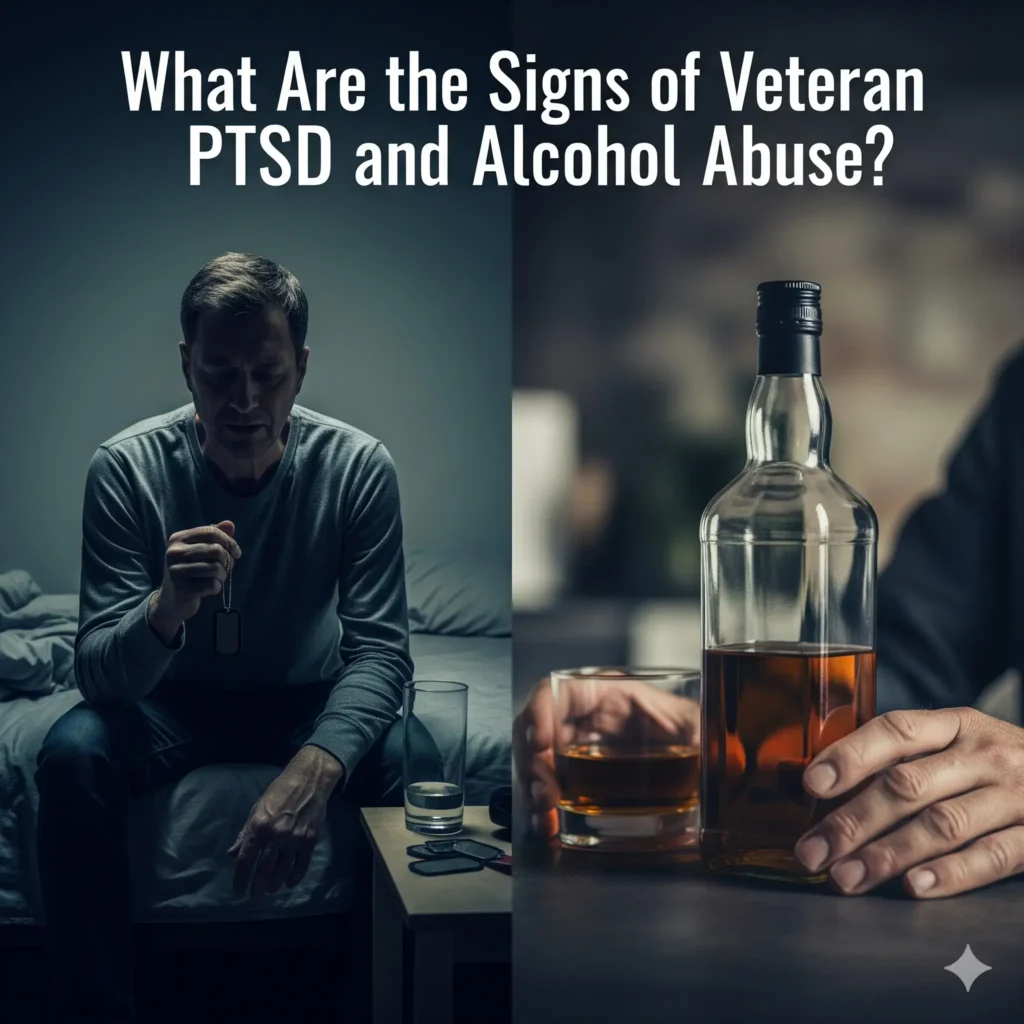
What Are the Signs of Veteran PTSD and Alcohol Abuse?
For veterans and their families, recognizing the signs of co-occurring PTSD and substance abuse is the first critical step toward getting help. These symptoms often overlap and can be confusing, making it hard to see the full picture. PTSD isn’t just about flashbacks; it’s a collection of symptoms that can change how a person thinks, feels, and interacts with the world. When combined with substance use, these signs can become more pronounced and destructive.
The symptoms of PTSD are typically grouped into four main categories: re-experiencing the trauma, avoiding reminders of it, negative changes in thoughts and mood, and being in a constant state of high alert or “hyperarousal”. A veteran may not have every symptom, but a pattern of them interfering with daily life is a clear signal that something is wrong. Family members are often the first to notice these changes, seeing a loved one become more distant, irritable, or withdrawn. This can create a form of “secondary trauma” for the family, as they navigate the emotional distance, financial strain, and instability that these co-occurring disorders can cause.
Recognizing PTSD Symptoms You Can’t Ignore
Understanding these symptoms in plain language can help you or a loved one identify the need for support. They often manifest as changes in behavior and personality that are noticeable to those closest to the veteran.
- Always on Alert (Hypervigilance): This is the feeling of being constantly “on guard,” as if danger is always present. It can look like always sitting with your back to the wall in a restaurant, constantly scanning crowds for threats, or being easily startled by everyday noises like a car backfiring. This state of constant tension is physically and mentally exhausting.
- Reliving the Past (Re-experiencing): This is one of the most well-known symptoms. It includes having intrusive, unwanted memories of the trauma, distressing nightmares, or vivid flashbacks where it feels like the event is happening all over again.
- Feeling Numb and Disconnected (Negative Mood): Many veterans with PTSD report difficulty feeling positive emotions like joy or love. They may feel emotionally numb or detached from family and friends, leading to a sense of isolation and deep-seated guilt or shame about the traumatic event.
- Avoiding the World (Avoidance): To cope with the distress, a veteran may go to great lengths to avoid anything that reminds them of the trauma. This can mean avoiding people, places, conversations, or situations. While it seems like a protective measure, this avoidance is what truly shrinks a person’s world, cutting them off from support systems and creating the perfect environment for addiction to thrive in isolation.
How Drinking and Drug Use Make Trauma Worse
Substance use is often an attempt to manage the symptoms listed above, but it is a solution that creates a bigger problem. The interaction between PTSD and substances is not just additive; it’s a multiplier that makes both conditions more severe.
For instance, a veteran might drink to quiet their mind from intrusive memories. But heavy alcohol use can impair cognitive function, making it harder to process trauma in a healthy way. It can also lead to impulsive decisions and increase feelings of depression and anxiety once the initial effects wear off. Similarly, using drugs to stay numb can prevent a person from ever engaging with the emotions necessary for healing, keeping them stuck in the trauma.
This combination also takes a heavy toll on relationships. The emotional numbing of PTSD, compounded by the effects of substance use, can make it nearly impossible for a veteran to connect with their spouse or children. The irritability and anger from hypervigilance can be amplified by alcohol, leading to conflict and breaking down the family support system that is so crucial for recovery.
Takeaway: Using alcohol or drugs provides temporary relief but ultimately worsens PTSD symptoms, making recovery harder.

Why Is It So Hard for Veterans to Ask for Help?
Despite the clear and urgent need, a majority of veterans struggling with mental health and substance use issues never seek professional help. Studies show that roughly 60% of military personnel with mental health problems do not get treatment, and for veterans specifically, over half with a mental illness and a staggering 90% with a substance use disorder did not receive care in the past year. This isn’t due to a lack of courage or desire to get better. It’s often because of a powerful, invisible barrier: stigma.
Military culture is built on a foundation of strength, self-reliance, and resilience. Service members are trained to handle immense pressure, to put the mission first, and to drive on no matter the obstacle. While these traits are essential for survival in a combat zone, they can become significant roadblocks to healing back home. The idea of admitting to a struggle and asking for help can feel like a betrayal of that core identity. It can feel like admitting weakness.
This internal conflict is often fueled by specific fears about the consequences of seeking treatment. Veterans worry that they will be treated differently by their peers or former leadership, that their careers could be jeopardized, or that they will be seen as fundamentally broken. These fears are so common that they have been identified in numerous studies as the most frequently cited reasons for avoiding care. This can lead to what is known as “self-stigma,” where a veteran internalizes these negative beliefs and begins to see themselves as flawed, which only deepens feelings of shame and hopelessness.
Breaking the Silence on Military Mental Health Stigma
The stigma surrounding mental health in the military is a complex cultural issue. The very ethos of the warrior-to be tough, to protect others, to endure-can make it incredibly difficult to acknowledge one’s own vulnerability. Seeking help for an invisible wound like PTSD can feel foreign and counterintuitive to someone trained to “suck it up and drive on.”
This creates a dangerous paradox. A veteran may be suffering from debilitating symptoms but feels compelled by their training and cultural identity to handle it alone. They may try to manage their PTSD with alcohol, isolate themselves from loved ones, and suffer in silence, all to avoid the perceived shame of asking for help. This isolation only makes the underlying conditions worse, deepening the cycle of trauma and addiction. It’s crucial to reframe this narrative. True strength isn’t about never struggling; it’s about having the courage to face a challenge and take action to overcome it.
Common Fears About Going to Rehab (and the Truth)
Addressing the fears associated with seeking treatment is essential to breaking down the wall of stigma. Many of these fears are based on myths or misperceptions that can be dismantled with facts.
- Fear: “I’ll be seen as weak.”
- Truth: This is perhaps the most pervasive fear, yet it’s fundamentally a misinterpretation of strength. It takes immense courage to confront the memories of trauma and the grip of addiction. Mental health professionals and, more importantly, fellow veterans who have walked this path, see asking for help as one of the bravest things a person can do. It is not a sign of weakness; it is an act of taking command of your own life.
- Fear: “My peers will judge me.”
- Truth: Research reveals a powerful disconnect here. While many veterans fear being judged by their peers, studies have found that the vast majority of service members would not view a fellow veteran negatively for seeking mental health care. The harshest critic is almost always oneself. The brotherhood and sisterhood forged in service often translates into a deep well of support for those who are struggling, but you have to be willing to reach out.
- Fear: “It will hurt my career.”
- Truth: For active-duty members, this is a significant concern. However, the opposite is often true. Untreated PTSD and addiction are far more likely to harm a career through poor performance, disciplinary actions, or a crisis that forces a command-directed intervention. Seeking help proactively is the best way to protect your career and future by addressing the problem before it leads to irreversible consequences.
- Fear: “Treatment won’t work anyway.”
- Truth: This belief can lead to a sense of hopelessness that prevents veterans from even trying. But it is factually incorrect. Decades of research have led to the development of highly effective, evidence-based treatments for both PTSD and addiction. As will be detailed below, therapies like Cognitive Processing Therapy (CPT) and Prolonged Exposure (PE) have proven success rates and have helped countless veterans reclaim their lives. Recovery is not just possible; it is a predictable outcome for those who engage in the right kind of treatment.
Takeaway: The pressure to be strong often stops veterans from seeking help, but true strength lies in taking the first step toward healing.
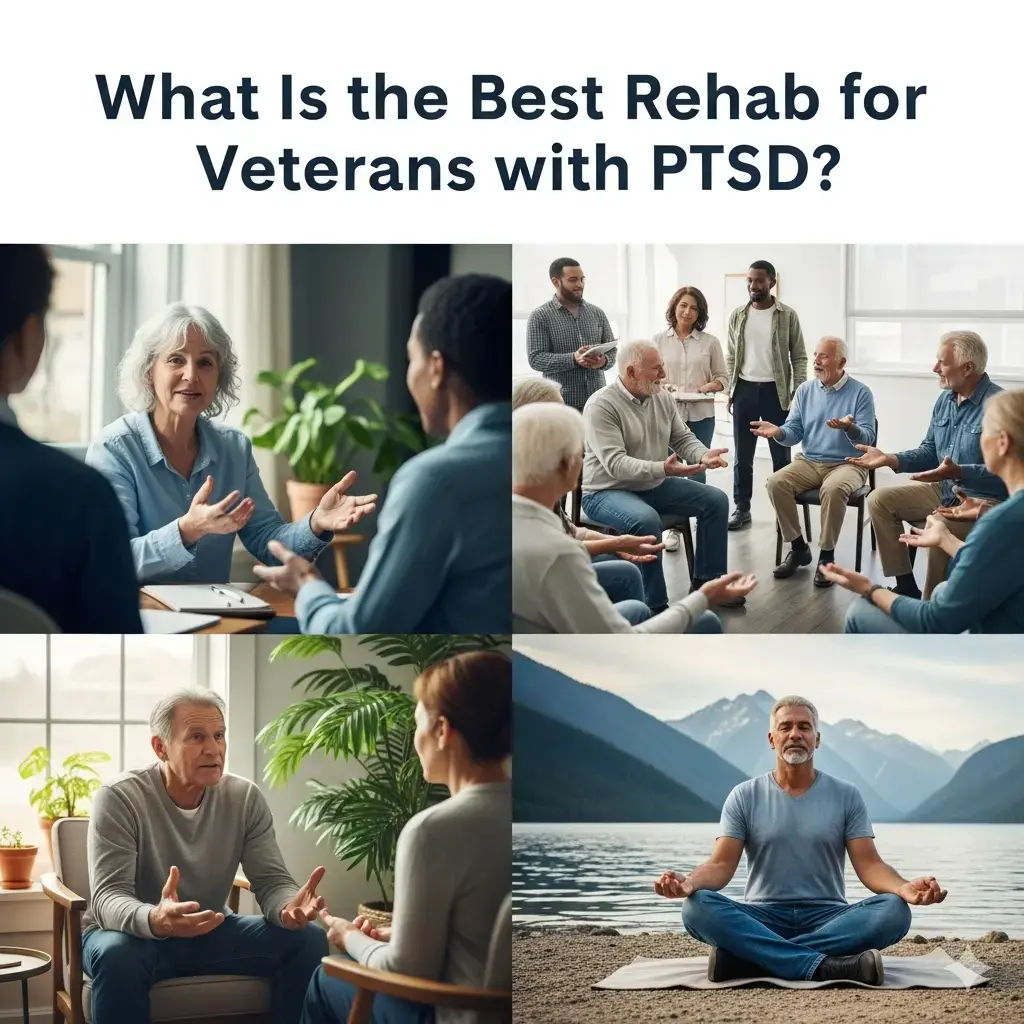
What Is the Best Rehab for Veterans with PTSD?
When it comes to treating the co-occurring challenges of PTSD and addiction in veterans, not all rehab programs are created equal. The most critical factor for success is finding a program that offers an integrated approach, meaning it treats both the PTSD and the substance use disorder at the same time, with the same clinical team. Older, sequential models of treatment-where a person is told to get sober first and then deal with their trauma later-have been shown to be far less effective and lead to higher rates of relapse.
The reason for this is simple and goes back to the vicious cycle of self-medication. If you treat the addiction but ignore the underlying trauma, you are only treating a symptom, not the cause. The nightmares, the anxiety, and the intrusive memories will still be there, and without the coping mechanism of substance use, they can feel even more overwhelming. This makes returning to alcohol or drugs highly likely. Research consistently shows that reductions in PTSD symptoms lead to significant and lasting reductions in substance use, but simply stopping substance use does not automatically resolve the trauma. Therefore, the best rehab for veterans is one that makes healing the trauma a central part of the recovery process.
Why You Must Treat PTSD and Addiction Together
An integrated, dual-diagnosis program recognizes that PTSD and addiction are not two separate problems but are deeply intertwined. This understanding shapes the entire treatment philosophy. Instead of seeing a veteran as an “addict” with a “trauma problem,” this approach sees a whole person whose substance use is a coping mechanism for their trauma. This non-judgmental and comprehensive view is essential for effective healing.
The following table breaks down the fundamental differences between a standard, sequential approach and the integrated model used at Costa Rica Treatment Center. For a veteran or family member seeking clear answers in a time of crisis, this comparison highlights why the integrated model offers a more effective and sustainable path to recovery.
| Focus | Treats addiction first, PTSD later (or separately). | Treats both conditions simultaneously as interconnected. |
| Effectiveness | Higher risk of relapse as underlying trauma is not addressed. | Better long-term outcomes by healing the root cause. |
| Process | Can feel disjointed; requires multiple providers or programs. | A single, cohesive team works on all aspects of recovery. |
| Outcome | Often leaves the veteran vulnerable to trauma triggers. | Builds resilience against triggers for both PTSD and substance use. |
Therapies That Work for Veterans: CPT, PE, and Holistic Care
Effective integrated treatment is built on a foundation of Evidence-Based Therapies (EBTs). These are specific therapeutic models that have been rigorously studied and proven to be effective for treating trauma. The two leading EBTs for veterans with PTSD are:
- Cognitive Processing Therapy (CPT): This therapy focuses on helping veterans identify and challenge the unhelpful and often distorted beliefs that can get “stuck” after a trauma. For example, a veteran might be stuck on thoughts of guilt (“I should have done more”) or see the entire world as a dangerous place. CPT provides the skills to evaluate these thoughts and develop a more balanced and healthy perspective.
- Prolonged Exposure (PE): This therapy helps veterans gradually confront the traumatic memories, feelings, and situations they have been avoiding. In a safe and controlled therapeutic environment, the veteran recounts the traumatic memory and engages in real-world activities they have been avoiding. This process helps them learn that the memories and reminders are not dangerous and that they can manage the associated distress, which reduces the power the trauma holds over them.
At Costa Rica Treatment Center, we utilize these proven, trauma-focused approaches and enhance them with a range of holistic therapies designed to heal the whole person. We recognize that trauma and addiction affect not just the mind, but also the body and spirit. Our program integrates practices like yoga, mindfulness meditation, sound therapy, and art therapy to help veterans reconnect with their bodies, regulate their nervous systems, and find peace in the present moment.
A Different Mission: How Healing in Costa Rica Works
The environment in which healing takes place can be just as important as the therapy itself. For many veterans, their home environment is filled with triggers-people, places, and situations that are tied to their trauma or their substance use. A traditional rehab facility can sometimes feel sterile, institutional, or even prison-like, which can increase feelings of hypervigilance. The Costa Rica Treatment Center offers a fundamentally different approach.
Our location is not a vacation; it is a strategic therapeutic tool. By removing a veteran from their triggering environment and immersing them in the serene, natural beauty of Costa Rica, we create an immediate sense of safety and calm. This environmental reset helps to lower the constant state of high alert associated with PTSD, creating the optimal conditions for the deep work of trauma processing to begin.
Furthermore, we use nature as an active component of therapy. Through adventure therapy-activities like guided jungle hikes, horseback riding, and trips to the ocean-we provide opportunities for veterans to challenge themselves in healthy ways, rebuild their confidence, and learn to trust others again. These experiences are not just “sober fun”; they are a form of experiential therapy that directly rebuilds the sense of competence, self-trust, and connection that trauma and addiction so often destroy. Combined with our high staff-to-patient ratio and deeply personalized treatment plans, this unique model provides a new mission: the mission of healing.
Takeaway: The most effective rehab for veterans treats the root cause of trauma and addiction at the same time with proven therapies in a healing environment.
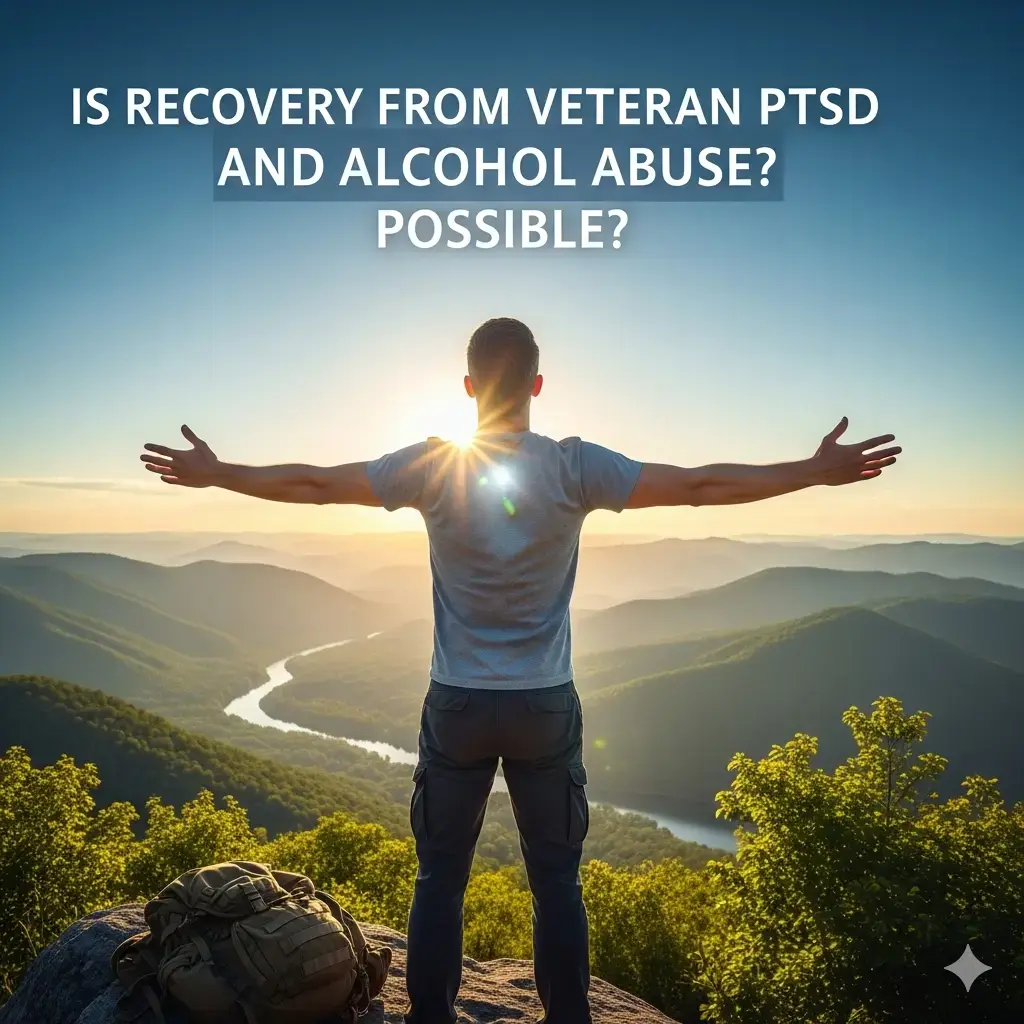
Is Recovery from Veteran PTSD and Alcohol Abuse Possible?
After living with the weight of trauma and addiction, it can be hard to believe that true recovery is possible. The days can feel like a relentless battle for survival, and the idea of finding peace can seem like a distant, unattainable goal. But recovery is not a myth. It is a tangible, achievable reality for veterans who commit to effective, integrated treatment.
The evidence is clear and encouraging. Studies on the effectiveness of trauma-focused therapies like PE and CPT show consistently positive results for the veteran population. This isn’t just about feeling a little better; it’s about making significant, life-altering changes. It’s about managing symptoms so they no longer control your life, reconnecting with loved ones, and finding a renewed sense of purpose.
It is important to approach recovery with realistic expectations. It is not a magical “cure” that erases the past. Many veterans continue with some form of mental health support, like therapy or support groups, even after completing an intensive program. This is not a sign of failure. It is a sign of a strong, sustainable recovery plan. Just as soldiers train continuously to maintain their skills, recovery is a new mission that requires ongoing commitment and the use of the tools and strategies learned in treatment.
What Success Looks Like: Real Recovery Statistics
The data from clinical studies provides a powerful message of hope. These numbers represent real veterans who have found a way to heal and move forward with their lives.
- One landmark study on Prolonged Exposure therapy for veterans found that over 60% of participants experienced clinically significant reductions in their PTSD symptoms.
- In that same study, more than half of the veterans no longer met the diagnostic criteria for PTSD after completing the three-week intensive program.
- A comprehensive review of multiple studies concluded that up to 70% of veterans who complete trauma-focused therapies like PE or CPT experience significant improvement in their symptoms.
- Another study focusing on veterans who completed PE found they experienced an average 42% reduction in PTSD symptoms and a 31% reduction in depression symptoms.
- For Cognitive Processing Therapy, a key study with veterans found that 40% of those who completed treatment no longer had a PTSD diagnosis by the end of the program.
These statistics prove that with the right approach, healing is not just a possibility, but a probability. They show that the invisible wounds of war do not have to be a life sentence.
Takeaway: With the right support and a commitment to integrated treatment, long-term recovery from PTSD and addiction is possible.
Frequently Asked Questions
Q: What is dual diagnosis treatment for veterans?
A: Dual diagnosis treatment is an integrated approach that addresses both a substance use disorder and a mental health condition like PTSD at the same time. At Costa Rica Treatment Center, our expert clinical team specializes in dual diagnosis care, ensuring we treat the root cause of trauma alongside addiction for more effective, lasting recovery.
Q: Can my VA benefits help pay for rehab at a non-VA facility?
A: In many cases, yes. Through programs like the VA Community Care Network, veterans can receive care at private facilities when the VA cannot provide the necessary services in a timely manner. The admissions team at Costa Rica Treatment Center can help you explore your eligibility and navigate the process to ensure you get the help you need.
Q: Will talking about my trauma in therapy make my PTSD worse?
A: This is a common and valid concern. While confronting difficult memories can be challenging, evidence-based therapies like CPT and PE are done in a safe, controlled, and supportive environment with a trained professional. The goal is to process the trauma so it loses its power over you. At Costa Rica Treatment Center, our trauma-informed therapists guide you at your own pace, ensuring you build coping skills first.
Q: How long does rehab for veteran PTSD and alcohol take?
A: The length of stay depends on individual needs, but effective recovery takes time. Costa Rica Treatment Center offers 30, 60, and 90-day residential programs to allow for deep, transformative healing. This immersive approach gives you the time to stabilize, address underlying issues, and build a solid foundation for lifelong recovery.
Q: What if I don’t think my trauma was “bad enough” to cause PTSD?
A: Trauma is subjective, and there’s no need to compare experiences. If memories from your service are negatively impacting your life, you deserve help. The clinical team at Costa Rica Treatment Center provides a comprehensive evaluation to understand your unique situation and create a personalized treatment plan, regardless of the specific events you endured.
Q: Why should I travel to Costa Rica for treatment?
A: Traveling to Costa Rica Treatment Center provides a complete break from the triggers and stressors of your home environment. Our serene, natural setting is inherently therapeutic, helping to reduce hypervigilance and create a safe space for healing. Combining world-class clinical care with this unique environment gives you the best possible chance to focus entirely on your recovery.
Q: What kind of support is available for families of veterans?
A: Addiction and PTSD affect the entire family system. Costa Rica Treatment Center recognizes this and offers family therapy and support services. Our goal is to help heal relationships, improve communication, and provide your loved ones with the tools and understanding they need to support you effectively on your recovery journey.