For individuals struggling with tech addiction and its impact on mental health, a structured digital detox rehab is the most effective path to recovery. The best programs, like Costa Rica Treatment Center, combine evidence-based therapy with the scientifically proven healing power of nature immersion, offering a lasting solution to unplug, reset, and reconnect with what truly matters. The Hidden Weight of Your Digital Life: Are You Just Tired or Truly Addicted? That feeling of being worn out, distracted, and vaguely anxious has become the background noise of modern life. It’s easy to dismiss it as simple fatigue or the stress…
For individuals struggling with tech addiction and its impact on mental health, a structured digital detox rehab is the most effective path to recovery. The best programs, like Costa Rica Treatment Center, combine evidence-based therapy with the scientifically proven healing power of nature immersion, offering a lasting solution to unplug, reset, and reconnect with what truly matters.
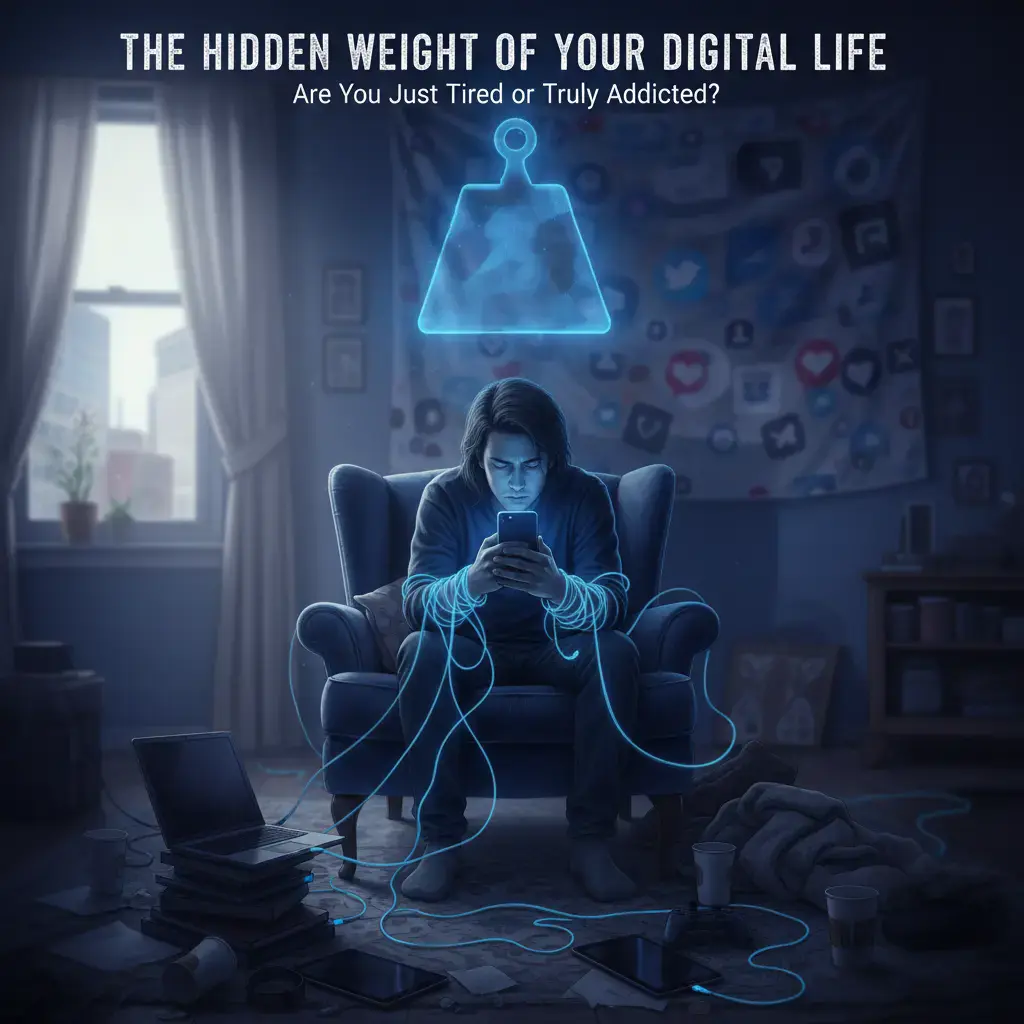
The Hidden Weight of Your Digital Life: Are You Just Tired or Truly Addicted?
That feeling of being worn out, distracted, and vaguely anxious has become the background noise of modern life. It’s easy to dismiss it as simple fatigue or the stress of a busy schedule. But what if it’s something more? What if the very tools designed to connect and entertain us are the source of this deep exhaustion? For a growing number of people, the line between using technology and being used by it has blurred, leading to a state of digital dependency that impacts every corner of their lives.
Why “Always On” Leaves You Feeling Empty
The experience of digital overload is universal. It’s the constant hum of notifications, the pressure to respond immediately, and the mental fog that comes from processing an endless stream of information. You might feel connected to hundreds of people online, yet feel profoundly alone in a room. This isn’t just a feeling; it’s a recognized state of “digital fatigue” and “cognitive overload”.
Scientific research explains this phenomenon through the cognitive load theory. Our brains have a finite capacity for processing information. When we are exposed to the excessive stimuli of our digital lives—the scrolling feeds, the flashing ads, the constant alerts—our cognitive resources become overworked. This constant stimulation can trick the brain into a state of perpetual threat, activating the body’s stress response system and releasing the hormone cortisol. This keeps us in an agitated, “fight-or-flight” state even when no real danger exists, leading to burnout and a pervasive sense of being drained.
This neurochemical state of high stress is not benign. It is a direct pathway to serious mental health challenges. The constant pressure and information overload are scientifically linked to increased rates of anxiety and depression. Therefore, the digital overload isn’t just making you tired; it can be a primary trigger for co-occurring mental health disorders. An effective recovery plan must address this root cause, recognizing that the physiological state created by digital dependency can prime the brain for other addictive and harmful behaviors.
Takeaway: That feeling of being constantly drained isn’t just in your head; it’s your brain’s response to being overloaded by the digital world.
How Your Phone Rewires Your Brain for Addiction
If you’ve ever found yourself scrolling mindlessly, knowing you should stop but unable to, you’ve experienced the powerful neurochemical loop that drives addiction. This isn’t a failure of willpower; it’s a feature of the technology’s design.
Every “like,” comment, and notification provides a small hit of immediate gratification. This reward stimulates the brain’s dopaminergic system, the same pathway involved in pleasure and motivation that is affected by substance abuse. This release of dopamine creates a powerful reinforcement loop. The brain learns to associate the phone with a feeling of pleasure, compelling you to seek it out again and again. Neuroscientific research suggests this process can create a dependency that is structurally similar to substance addiction. Your phone is engineered to be addictive, hijacking your brain’s natural reward system to keep you engaged, often to the detriment of your well-being.
Takeaway: Your phone is designed to be addictive, using the same brain chemistry as other dependencies to keep you scrolling.
The Real-World Impact of Digital Addiction Statistics
The struggle with technology is not a personal or isolated issue. It is a widespread public health concern with staggering statistics and severe consequences.
Consider the scale of the problem:
- Over 50% of Americans believe they are addicted to their phones.
- Up to 95% of young people aged 13-17 use a social media platform, and a third of them report using it “almost constantly”.
- Globally, it’s estimated that around 6% of the population suffers from internet addiction.
This is not a niche problem; it is a societal epidemic. And the consequences are severe. Research has established a clear and troubling link between excessive screen time and poor mental health outcomes.
- Adolescents who spend more than three hours a day on social media face double the risk of experiencing symptoms of depression and anxiety.
- Individuals with smartphone addiction are 2.2 times more likely to have sleep problems.
- Teens who spend over four hours on their phones daily are significantly more likely to have suicidal thoughts.
These numbers paint a clear picture. The constant connectivity that promises to bring us closer is often leaving us more anxious, depressed, and unwell.
Takeaway: The widespread struggle with technology addiction is a documented public health concern with serious consequences for mental well-being.

What a Real Digital Detox Rehab Can Do for Your Mental Health
Recognizing the problem is the first step. The solution is not to demonize technology but to reclaim control over it. A true, therapeutic digital detox is a powerful intervention designed to reset your brain, restore your mental health, and teach you how to engage with the digital world in a healthier, more intentional way.
How Unplugging Resets Your Brain Chemistry
A digital detox is far more than just putting your phone in a drawer for the weekend. It is a deliberate and temporary disconnection from digital devices with the specific aim of restoring mental well-being. The primary goal is to break the cycle of constant stimulation, allowing your brain’s overtaxed systems to rest and reset.
When you unplug, you give your brain a chance to lower the continuous production of stress hormones like cortisol. This calm allows your finite cognitive resources to replenish. The result is a measurable improvement in attention, focus, and mental clarity. Research has shown that even short, structured periods of digital abstinence can lead to substantial improvements in both mental well-being and cognitive abilities, underscoring its potential as a powerful therapeutic tool.
Takeaway: A digital detox allows your brain’s overstimulated systems to calm down, leading to a natural reduction in stress and anxiety.
The Proven Benefits of Disconnecting for Your Well-Being
The positive outcomes of a digital detox are not just subjective feelings of being more relaxed. They are concrete, measurable improvements across key areas of your health, supported by a growing body of scientific evidence.
- Reduces Depression: A comprehensive meta-analysis reviewing multiple studies confirmed that digital detox interventions lead to a significant reduction in depressive symptoms. By stepping away from the constant social comparison and information overload, individuals can alleviate key contributing factors to depression.
- Improves Sleep Quality: The blue light from screens suppresses melatonin production, making it harder to fall asleep. Excessive screen time is strongly linked to sleep disturbances. Unplugging, especially in the hours before bed, allows your mind to unwind and has been shown to improve sleep duration, quality, and regularity.
- Enhances Focus and Productivity: In a world of constant digital interruptions, our ability for deep focus has eroded. A digital detox eliminates these distractions, allowing you to regain your ability to concentrate on a single task, which can lead to enhanced productivity and a greater sense of accomplishment.
- Strengthens Real-Life Relationships: While social media promises connection, it often fosters a superficial form of it. Disconnecting from screens allows you to be fully present in your real-world interactions. This fosters deeper, more meaningful connections built on empathy, shared experiences, and non-verbal cues—qualities that digital communication often lacks. This is a crucial insight: the act ofdisconnecting from technology is often the necessary first step to reconnecting authentically with yourself and the people who matter most. The “fear of missing out” that keeps people tethered to their devices is an illusion; the real missing out is happening in the physical world.
Takeaway: The benefits of unplugging are not just subjective feelings; they are measurable improvements in your mental health, sleep, and relationships.

Nature Therapy for Addiction: A Powerful, Science-Backed Ally
Disconnecting from the digital world is half the battle. The other half is reconnecting with something real, tangible, and inherently healing. This is where nature therapy becomes an essential component of recovery. Far from being a “soft” or alternative approach, ecotherapy is a hard-science intervention that directly counteracts the neurological and psychological damage of addiction and digital overload.
What is Nature Therapy (Ecotherapy)?
Nature therapy, also known as ecotherapy, is a clinical practice that uses engagement with the natural world as a therapeutic tool to improve mental and physical health. It is grounded in scientific theories like the biophilia hypothesis, which posits that humans have an innate, evolutionary drive to connect with nature.
This is an evidence-based approach used in addiction recovery and mental health treatment. A wealth of research demonstrates its effectiveness in reducing stress, improving mood, enhancing cognitive function, and fostering the kind of self-reflection that is critical for a lasting recovery. The evidence is so compelling that one comprehensive review of nature-based interventions for addiction found that over 85% of studies showed positive outcomes.
Takeaway: Nature therapy is a clinical practice that uses our innate connection to the natural world to heal the mind and body.
How Nature Heals the Brain During Recovery
The healing power of nature is not just a poetic concept; it is a series of specific, measurable physiological and neurochemical events. Immersion in a natural environment functions as an active intervention that directly reverses the damage caused by digital addiction and substance use. It is, in a very real sense, medicine for the brain.
The table below illustrates how nature provides a direct antidote to the specific harms of digital overload, making it a critical clinical asset in any modern recovery program.
| The Effect of Digital Overload | The Counteracting Effect of Nature | What This Means for Your Recovery |
| Stress: Increases the stress hormone cortisol, keeping the body in a constant state of high alert. | Stress: Lowers cortisol levels and activates the parasympathetic nervous system, promoting relaxation. | Eases withdrawal symptoms, reduces stress-related relapse triggers, and creates a state of calm conducive to healing. |
| Mood: Linked to higher rates of anxiety, depression, and feelings of inadequacy. | Mood: Boosts the production of “feel-good” neurotransmitters like serotonin and dopamine. | Improves emotional stability, lifts mood naturally, and helps build the emotional resilience needed for long-term sobriety. |
| Focus: Fragments attention, creates cognitive fog, and depletes mental resources. | Focus: Restores directed attention and improves cognitive functions like memory and problem-solving. | Helps you engage more deeply and effectively in therapy, process complex emotions, and learn new coping skills. |
| Cravings: The stress and anxiety from digital life can be powerful triggers for substance and behavioral cravings. | Cravings: Reduces cravings for addictive substances like alcohol and cigarettes, as well as unhealthy foods. | Provides a powerful, healthy coping mechanism to manage cravings and strengthens your resolve to maintain recovery. |
Takeaway: Nature is not a passive backdrop for recovery; it is an active therapeutic agent that helps heal the brain.

The CRTC Difference: Where Digital Detox Rehab Meets “Pura Vida”
Understanding the science behind digital detox and nature therapy is one thing. Finding a place that masterfully integrates both into a cohesive, powerful, and life-changing program is another. At Costa Rica Treatment Center, we have built our entire philosophy around this synthesis. Here, the principles of disconnection and reconnection are not just taught; they are lived every day, in an environment uniquely suited for profound healing.
More Than a Location: Healing in Costa Rica’s Natural Sanctuary
We chose Costa Rica for a reason. This country’s lush rainforests, pristine beaches, and stunning biodiversity offer a healing sanctuary unlike anywhere else on earth. The national ethos of “Pura Vida”—a celebration of the simple, pure life—is woven into the fabric of our program. It is a cultural mindset that naturally encourages the very principles of mindfulness, presence, and connection that are essential for recovery.
At CRTC, we leverage this incredible setting through structured, therapeutic “Nature-Filled Adventure Trips”. These are not mere recreational outings; they are a core part of our clinical model. Activities like guided forest bathing, volcano hikes, and trips to world-class beaches are forms of Adventure Therapy, an experiential approach that uses outdoor challenges to foster personal growth, build resilience, and forge strong bonds between peers. Our clients consistently describe our environment as “calm,” “tranquil,” and “safe”—the essential ingredients for deep healing to occur. Choosing CRTC means immersing yourself in a culture that inherently supports your recovery. The healing doesn’t stop when a therapy session ends; it is reinforced by the entire environment.
Takeaway: At CRTC, the healing power of nature isn’t an occasional activity; it’s the air you breathe and the foundation of your daily recovery.
Our Integrated Approach: Combining Clinical Excellence with Nature Therapy
The power of our program lies in its integration. We understand that nature is not a replacement for evidence-based clinical care but a powerful amplifier of it. Our treatment is built on a holistic and scientifically validated foundation, designed to heal the mind, body, and spirit.
Your recovery journey is guided by a dedicated, multidisciplinary team of licensed physicians, psychiatrists, and psychologists who specialize in addiction and co-occurring disorders. Your personalized treatment plan will include core clinical modalities like one-on-one counseling, group therapy, and mindfulness-based therapies. We then seamlessly weave this clinical excellence with holistic practices that leverage our unique environment. You will participate in therapeutic yoga led by experienced instructors, engage in meditative sound healing, and learn from a certified forest therapist, all designed to deepen your healing process. This comprehensive approach ensures we are not just treating symptoms; we are addressing the whole person.
Takeaway: We combine the best of clinical addiction treatment with the profound healing effects of nature for a recovery that addresses the whole person.
A Day of Healing: What to Expect from a Digital Detox at CRTC
The abstract idea of “treatment” can feel intimidating. At CRTC, your time is a structured journey of healing that intentionally replaces the chaos of digital distraction with mindful, restorative, and connecting activities.
A typical day is a balanced blend of clinical work, holistic practice, and natural immersion. Mornings might begin with a nutritious, chef-prepared meal, followed by intensive group therapy and individual counseling sessions with your dedicated therapist. Afternoons are for healing the body and spirit. This could involve a therapeutic yoga session in our serene yoga shala, a mindfulness practice in the garden, or learning new skills in occupational therapy.
Fridays are dedicated to our signature Adventure Therapy. The entire community embarks on a guided trip—perhaps a hike to a breathtaking volcano, a tour of a local coffee plantation, or a restorative day at the beach. These experiences are designed to help you build confidence, practice new coping skills in a real-world setting, and form genuine, supportive friendships with your peers. This carefully designed schedule provides the structure, support, and tools you need to build a foundation for lasting recovery.
Takeaway: Your time at CRTC is a structured journey of healing that intentionally replaces digital distraction with mindful, restorative, and connecting activities.
FAQs: Your Questions About Digital Detox and Nature Therapy Answered
Q: Will I feel isolated if I do a digital detox? I use my phone to connect with people.
A: It’s a common fear, but a structured digital detox at a center like CRTC is designed to combat isolation, not cause it. By removing the distraction of screens, you can build deeper, more authentic connections with peers in recovery through group therapy and shared experiences in nature. The goal is to replace superficial online interactions with genuine human bonds.
Q: How does nature therapy actually help with tech addiction cravings?
A: Nature therapy helps manage cravings in two key ways. First, it reduces stress and anxiety, which are major triggers for any addictive behavior. Second, studies show that even passive exposure to green spaces can directly decrease the strength and frequency of cravings, providing a powerful, healthy coping mechanism to replace compulsive screen use.
Q: Can a digital detox rehab help if my job requires me to be online?
A: Absolutely. The goal of a digital detox rehab isn’t to eliminate technology forever, but to reset your relationship with it. At CRTC, we help you identify unhealthy patterns and develop strategies for mindful, balanced technology use, so you can return to your professional life with healthier boundaries and more control.
Q: What makes a digital detox in Costa Rica better than just turning off my phone at home?
A: While turning off your phone at home is a good start, a professional program at CRTC provides a structured, supportive environment free from triggers. It combines the detox with evidence-based therapy, medical support, and the unique, scientifically-backed healing benefits of immersion in Costa Rica’s natural environment, which actively reduces stress and aids recovery.
Q: Is there scientific evidence that nature therapy really works for addiction?
A: Yes, the evidence is strong. A comprehensive review of studies found that 85% of nature-based interventions had positive outcomes for drug dependence. Research shows it lowers stress hormones, improves mood, and reduces cravings, making it a powerful, evidence-based component of a holistic recovery plan.
Q: I suffer from anxiety and depression along with tech addiction. Can you treat that?
A: Yes, treating co-occurring disorders is a core part of our program. Our multidisciplinary team of psychiatrists and psychologists specializes in creating personalized treatment plans that address both addiction and underlying mental health conditions like anxiety and depression, ensuring a more comprehensive and lasting recovery.
Q: What kind of nature activities are part of the program at CRTC? A: We offer a range of guided adventure therapy activities designed to be both healing and empowering. These include forest bathing (shinrin-yoku), volcano hikes, visits to coffee plantations, surfing, and trips to pristine beaches. These activities are therapeutic tools that foster mindfulness, build community, and reconnect you with the natural world.