For anyone with a history of heavy drinking, medically supervised detox is not just recommended—it is essential for safety. Quitting alcohol alone can lead to life-threatening complications like seizures and Delirium Tremens (DTs), which can be fatal. The Costa Rica Treatment Center provides the safest, most effective path to sobriety with 24/7 medical care in a healing environment. Making the decision to stop drinking is one of the bravest and most important choices a person can make. It’s a step toward reclaiming your health, your relationships, and your future. But this courageous decision often comes with a significant amount of…
For anyone with a history of heavy drinking, medically supervised detox is not just recommended—it is essential for safety. Quitting alcohol alone can lead to life-threatening complications like seizures and Delirium Tremens (DTs), which can be fatal. The Costa Rica Treatment Center provides the safest, most effective path to sobriety with 24/7 medical care in a healing environment.
Making the decision to stop drinking is one of the bravest and most important choices a person can make. It’s a step toward reclaiming your health, your relationships, and your future. But this courageous decision often comes with a significant amount of fear and uncertainty, especially about the process of withdrawal. You may have heard stories or wondered yourself: Is it safe to quit on my own? Do I really need professional help?
The purpose of this guide is to answer those questions with clear, evidence-based facts. The truth is, for anyone with a history of regular, heavy alcohol use, attempting to detox alone is not just difficult—it is a life-threatening gamble. Understanding why this is the case is the first step toward choosing a path that ensures your safety and sets you up for lasting success.
Why Is Alcohol Detox Dangerous? Understanding the Science of Withdrawal
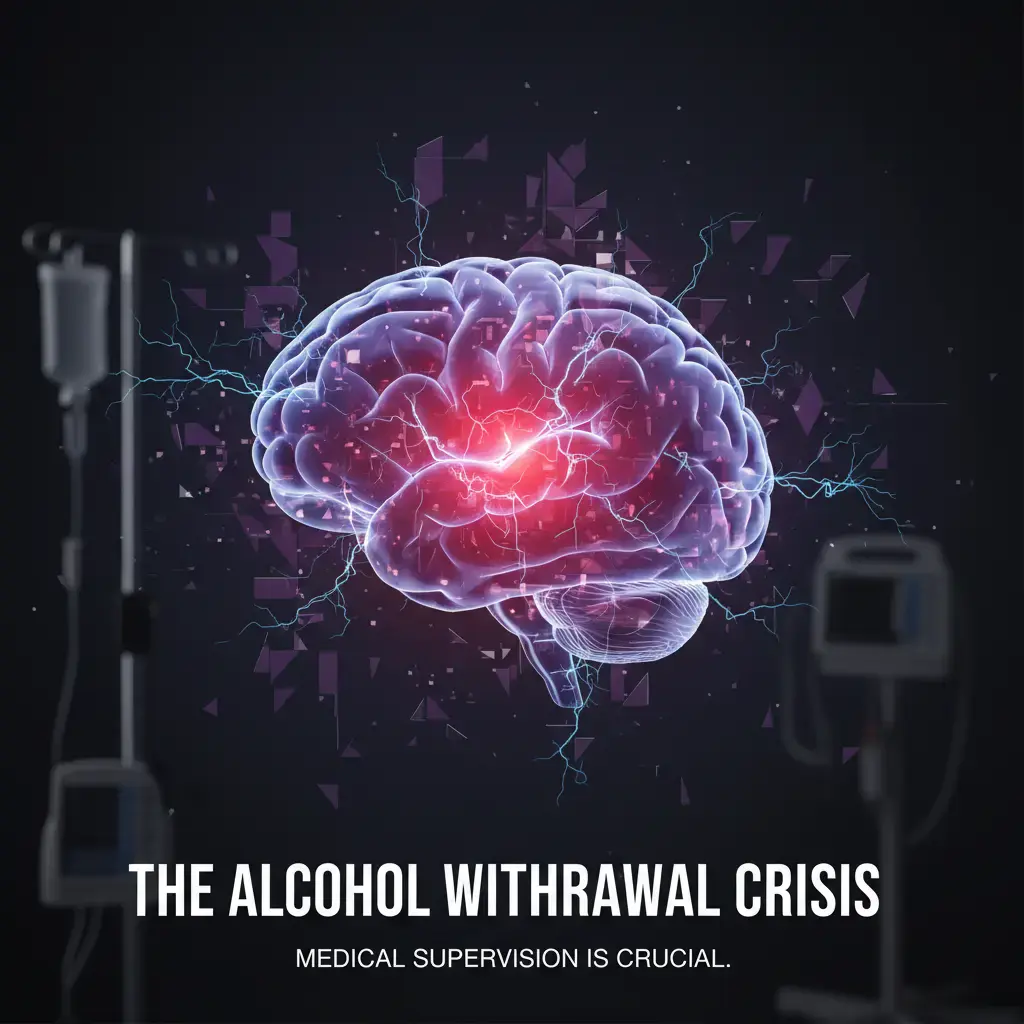
The dangers of alcohol withdrawal are not a matter of willpower or mental toughness. They are the direct result of a predictable and severe physiological crisis that occurs in the brain. When you understand the science behind it, the need for medical supervision becomes undeniably clear.
For an extended period, alcohol has acted as a powerful depressant on your central nervous system (CNS). It achieves this calming effect primarily by interacting with two of your brain’s most important neurotransmitters:
- GABA (γ-aminobutyric acid): Think of GABA as your brain’s primary braking system. It’s an inhibitory neurotransmitter that slows down brain activity, reduces anxiety, and promotes calm. Alcohol dramatically enhances the effects of GABA, pushing the brakes down hard and causing feelings of relaxation and sedation.
- Glutamate: If GABA is the brake, glutamate is the accelerator. It’s the brain’s main excitatory neurotransmitter, responsible for alertness, memory, and energy. Alcohol actively suppresses glutamate, taking the foot off the gas pedal.
Your brain is a remarkable organ that constantly strives for balance, a state known as homeostasis. When it’s chronically exposed to alcohol’s depressive effects, it doesn’t just accept the new normal; it fights back to keep you functional. To counteract the constant sedation, your brain physically adapts. It begins to down-regulate its GABA receptors, making them less sensitive to calming signals. At the same time, it up-regulates its glutamate receptors, making them far more sensitive to excitatory signals. This is the biological root of alcohol tolerance—the reason you need to drink more over time to achieve the same effect.
This delicate, albeit unhealthy, balance holds as long as alcohol is present. But when you suddenly quit, the alcohol that was artificially depressing your system vanishes. The brain’s adaptations, however, remain. Suddenly, you have a nervous system with a weakened braking system (less sensitive GABA) and a hyper-sensitive accelerator (an excess of glutamate receptors).
The result is a state of severe, unopposed hyperexcitability. Your brain, now free from alcohol’s sedative grip, goes into overdrive. This neurological storm is the direct cause of every symptom of alcohol withdrawal, from mild anxiety and tremors to the most severe and life-threatening complications like seizures and delirium. This is not a psychological weakness; it is a physical and predictable response to the absence of a substance the body has become dependent on. Viewing withdrawal in this light—as a serious medical condition requiring treatment, much like a physical injury—is the first step in removing shame and seeking the life-saving care you need.
Takeaway: Your brain adapts to alcohol, and suddenly stopping throws it into a state of severe, dangerous over-excitement.
The Dangers of Quitting Alcohol Cold Turkey: A Timeline of Symptoms
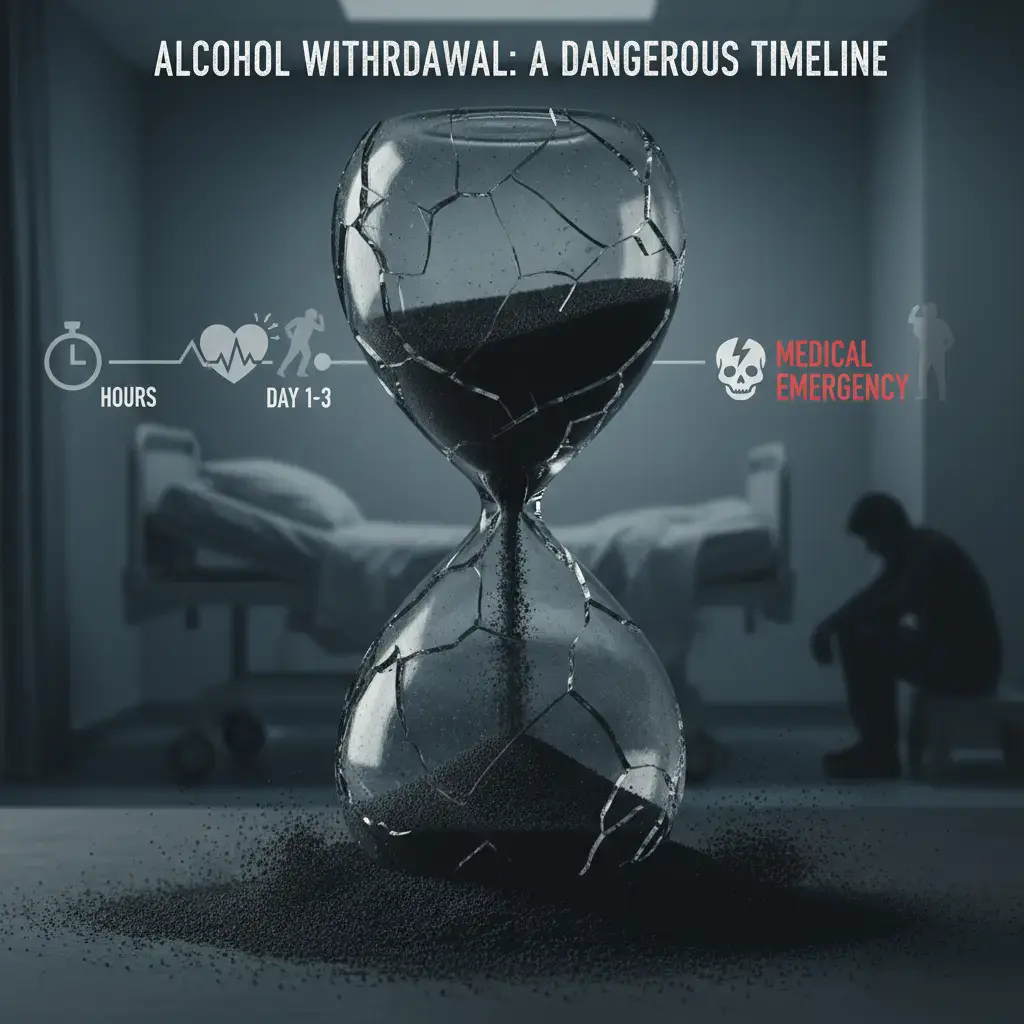
The progression of Alcohol Withdrawal Syndrome (AWS) is alarmingly predictable. While the exact timing and intensity can vary based on factors like your drinking history, age, and overall health, the stages of withdrawal follow a well-documented timeline that escalates from deeply uncomfortable to potentially fatal. Understanding this timeline is critical because it reveals just how quickly the situation can become a medical emergency.
Stage 1 (6-12 hours after last drink): Mild Symptoms
The earliest phase of withdrawal often begins while there is still alcohol in your bloodstream. These initial symptoms can be easily mistaken for a severe hangover, which creates a dangerous false sense of security. You may experience:
- Anxiety and nervousness
- Insomnia and nightmares
- Nausea and vomiting
- Headache
- Heart palpitations
- Mild hand tremors, often called “the shakes”
Many people attempting to quit at home feel these symptoms and believe they can simply “tough it out.” This is a critical mistake. This period is the last safe window to seek professional medical help before the more severe stages of withdrawal begin.
Stage 2 (12-48 hours after last drink): Moderate Symptoms and Hallucinations
As withdrawal progresses, the initial symptoms intensify significantly. The central nervous system’s hyperexcitability becomes more pronounced, leading to :
- Increased blood pressure and heart rate
- Increased body temperature and sweating
- Noticeable confusion
A key development in this stage is the potential for alcoholic hallucinosis. This is when you may begin to see, hear, or feel things that are not there. Crucially, during this stage, you are typically aware that the hallucinations are not real. While terrifying, this awareness distinguishes it from the later, more dangerous delirium. The appearance of any hallucinations is a serious warning sign that your brain is under extreme distress and that the withdrawal is escalating toward a life-threatening stage.
Stage 3 (24-72 hours after last drink): Severe, Life-Threatening Symptoms
This is the most dangerous period of alcohol withdrawal, where the risk of fatal complications is at its peak.
- Withdrawal Seizures: The risk of generalized tonic-clonic seizures (also known as grand mal seizures) is highest between 24 and 48 hours after the last drink. These seizures are caused by uncontrolled electrical storms in the over-excited brain and can lead to falls, serious injury, and aspiration (choking).
- Delirium Tremens (DTs): The most severe manifestation of withdrawal, Delirium Tremens, typically begins between 48 and 72 hours after cessation, though it can occur up to a week later. DTs are a full-blown medical emergency and will be discussed in greater detail below.
Timeline of Alcohol Withdrawal Symptoms
| Time After Last Drink | Common Symptoms | Level of Danger |
| 6-12 Hours | Anxiety, insomnia, nausea, headache, heart palpitations, mild tremors. | Mild to Moderate: Uncomfortable, but often mistaken for a hangover. |
| 12-24 Hours | Worsening tremors, increased blood pressure/heart rate, sweating, potential for alcoholic hallucinosis. | Moderate to Severe: A clear sign of neurological distress. Medical attention is needed. |
| 24-48 Hours | Peak risk of generalized tonic-clonic seizures. Continued autonomic hyperactivity, potential hallucinations. | Severe / Life-Threatening: This is a medical emergency. Seizure risk is at its highest. |
| 48-72+ Hours | Peak risk of Delirium Tremens (DTs): severe confusion, agitation, fever, visual hallucinations, disorientation. | Extremely Severe / Life-Threatening: The most dangerous phase of withdrawal. Can be fatal. |
Takeaway: Alcohol withdrawal symptoms progress rapidly and predictably, with the most dangerous period occurring 24 to 72 hours after your last drink.
Can You Die From Alcohol Withdrawal? Examining the Most Severe Risks
The answer to this critical question is an unequivocal yes. While not every person who quits drinking will face fatal complications, the risk is significant enough that attempting to detox without medical supervision is never safe. Death from alcohol withdrawal is typically caused by two specific, severe complications that arise from the brain’s extreme state of hyperexcitability.
The Reality of Delirium Tremens (DTs)
Delirium Tremens is the most severe and feared outcome of alcohol withdrawal. It is a profound medical emergency that occurs in about 3-5% of individuals who go through withdrawal. DTs are characterized by a dramatic and dangerous shift in your brain and nervous system, leading to :
- Severe Confusion and Disorientation: You may not know who you are, where you are, or what is happening.
- Extreme Agitation and Irritability: This can manifest as restlessness, fear, or aggression.
- Vivid Hallucinations: Unlike earlier alcoholic hallucinosis, during DTs you lose the ability to distinguish reality from hallucination. These are most often visual or tactile (feeling things like insects crawling on the skin).
- Severe Autonomic Hyperactivity: This includes a dangerously high heart rate, elevated blood pressure, fever, and heavy sweating.
The mortality rate for untreated Delirium Tremens is shockingly high, estimated to be between 15% and 40%. Death is often the result of complications such as cardiac arrhythmias (irregular heartbeat), respiratory failure, co-occurring infections, or seizures. However, with modern medical care in a detox facility or hospital, this mortality rate plummets to between 1% and 4%. This single statistic is perhaps the most powerful argument for why medically supervised detox is essential.
The Risk of Withdrawal Seizures and the “Kindling” Effect
As noted in the timeline, generalized tonic-clonic seizures are a major risk, particularly in the first 48 hours of withdrawal. These seizures can be dangerous on their own, potentially causing head trauma from falls, hypoxia (a lack of oxygen to the brain), or aspiration pneumonitis from inhaling vomit into the lungs.
Beyond the immediate danger, there is a more insidious long-term risk known as the “kindling” phenomenon. Each time you go through an episode of alcohol withdrawal, it’s like adding kindling to a fire. The process sensitizes your brain, causing permanent neurochemical changes that make each subsequent withdrawal episode progressively more severe.
This leads to a profoundly important and counterintuitive conclusion. Many people who have managed to “get through” a withdrawal at home in the past may believe they are strong enough to do it again. The medical evidence shows the exact opposite is true. That previous withdrawal, even if survived, has permanently lowered their seizure threshold and made their brain more vulnerable. Their past “success” in detoxing alone is actually the single greatest predictor of a more severe, and potentially fatal, withdrawal the next time. Having gone through it before makes professional medical supervision more critical, not less.
Takeaway: Yes, alcohol withdrawal can be fatal due to complications like Delirium Tremens and seizures, making unsupervised detox a life-threatening gamble.
Do I Need Medical Detox for Alcohol? Why the Safe Answer Is Always Yes
Given the severe and unpredictable nature of alcohol withdrawal, the only safe answer for anyone with a history of regular, heavy drinking is yes, you need a medical detox. While certain factors can increase the risk of a severe withdrawal—such as a history of daily heavy use, older age, prior withdrawal seizures, or other health problems—it is impossible to predict with certainty who will develop life-threatening symptoms. Attempting to manage this process at home is a gamble you should never take with your life.
A professional, medically supervised detox is designed to replace the danger and uncertainty of quitting alone with a process that is safe, comfortable, and controlled.
What Happens During a Professional Alcohol Detox?
Medical detox is not just about stopping drinking; it is a structured, three-step clinical process designed to manage your physical withdrawal safely and prepare you for long-term recovery.
Step 1: Comprehensive Evaluation
When you enter a professional detox program, the first step is a thorough medical evaluation. The clinical team will perform a physical exam, run blood tests to check for dehydration, electrolyte imbalances, and liver function, and take a detailed history of your alcohol use and overall health. They will use a validated assessment tool, such as the Clinical Institute Withdrawal Assessment for Alcohol (CIWA-Ar) scale, to get an objective score of your withdrawal symptom severity. This allows them to create a personalized treatment plan and monitor your progress in real-time.
Step 2: Medically Managed Stabilization
This is the core of the detox process. The primary goal is to stabilize your central nervous system and prevent the progression to severe symptoms. This is accomplished through:
- Medication Management: Benzodiazepines, such as diazepam (Valium) or lorazepam (Ativan), are the gold-standard, first-line treatment for alcohol withdrawal. These medications work on the same GABA receptors as alcohol, allowing them to safely and effectively calm the over-excited brain, reduce symptoms, and prevent seizures and DTs. The dosage is carefully managed by the medical team, often based on your CIWA-Ar score, to provide relief without over-sedation.
- 24/7 Supportive Care: Throughout the process, you are monitored around the clock by medical professionals who track your vital signs (heart rate, blood pressure, temperature). They provide supportive care that is impossible to replicate at home, such as intravenous (IV) fluids to correct dehydration and electrolyte imbalances, and crucial vitamin supplementation. This includes thiamine (Vitamin B1), which is essential for preventing Wernicke-Korsakoff syndrome, a severe and potentially permanent form of alcohol-related brain damage.
Step 3: Preparation for Ongoing Treatment
Successfully and safely navigating physical withdrawal is a monumental first step, but it does not address the underlying psychological, behavioral, and emotional reasons for the addiction. A professional detox facility understands this. The final phase of detox involves preparing you for a seamless transition into the next level of care, whether that is an inpatient residential program or an intensive outpatient program. This ensures you have the tools and support needed to build a foundation for lasting sobriety.
At-Home Detox vs. Medically Supervised Detox
| Feature | At-Home “Cold Turkey” | Medically Supervised Detox (at CRTC) |
| Medical Supervision | None. You are alone with your symptoms. | 24/7 monitoring of vital signs by trained medical professionals. |
| Symptom Management | No access to medication. Must endure severe discomfort and pain. | Prescription medications (benzodiazepines) administered to ensure safety and comfort. |
| Emergency Response | Delayed. Relies on calling 911 after a crisis (like a seizure) has already begun. | Immediate intervention by an on-site medical team to prevent or manage complications. |
| Nutritional Support | Difficult to manage due to nausea/vomiting. Risk of dehydration and thiamine deficiency. | IV fluids, electrolyte correction, and vitamin supplementation (thiamine) are standard protocol. |
| Psychological Support | Isolation, heightened anxiety, and depression with no professional support. | Access to therapists and counselors to manage the emotional distress of withdrawal. |
| Relapse Risk | Extremely high. Cravings and severe symptoms often lead to drinking again just to stop the pain. | A controlled, substance-free environment that removes triggers and provides a foundation for relapse prevention. |
Takeaway: Medical detox replaces the unpredictable dangers of quitting alone with a controlled, safe, and comfortable process managed by experts.
Your Path to a Safe Recovery Starts at Costa Rica Treatment Center
Understanding the profound risks of alcohol withdrawal makes the solution clear: you need a safe, supportive, and medically expert environment to begin your recovery. At the Costa Rica Treatment Center, we provide exactly that. We offer a path to sobriety that prioritizes your safety above all else, while healing your mind, body, and spirit.
Our program is built on a foundation of evidence-based medical care. As a fully licensed medical facility, we implement the gold-standard protocols for alcohol detoxification. Our team of doctors and nurses provides 24/7 monitoring and expert medication management to ensure your withdrawal is not only safe from life-threatening complications but also as comfortable as possible.
But we know that true recovery goes beyond physical stabilization. Withdrawal is an intense psychological and emotional experience. That is why our approach is holistic and compassionate. Nestled in the serene and healing landscape of Costa Rica‘s Atenas mountains, our center is designed to be a place of peace, not a sterile hospital. We integrate therapies like mindfulness, meditation, yoga, and nature therapy to calm the nervous system, reduce the intense anxiety of withdrawal, and begin the deeper work of healing.
Most importantly, your care at Costa Rica Treatment Center is deeply personalized. We maintain the region’s highest staff-to-patient ratio, which means you are not just a number; you are a unique individual who receives focused, one-on-one attention. Our team works with you to understand your specific needs, address the root causes of your addiction, and build a customized treatment plan that guides you from a safe detox to a strong, sustainable recovery.
Making the call for help is the most critical step. It’s a decision to choose safety, to choose health, and to choose a new beginning. We are here to answer your questions, ease your fears, and welcome you to a place where you can finally heal.
Takeaway: At Costa Rica Treatment Center, we don’t just manage your withdrawal symptoms; we provide a foundation for lasting recovery in a place of peace and safety.
FAQs: Answering Your Urgent Questions About Alcohol Detox
Q: How do I know if my drinking is heavy enough to need medical detox?
A: If you experience withdrawal symptoms (like shaking, anxiety, or nausea) when you cut back or stop, you are physically dependent and need medical detox. Other signs include a history of daily heavy drinking, unsuccessful attempts to quit, and building a high tolerance. Given the risks, it’s always safest to be evaluated by a medical professional. At Costa Rica Treatment Center, our initial consultation can help you assess your needs safely and confidentially.
Q: What medications are used during detox to make it more comfortable?
A: The primary medications are benzodiazepines (like Valium or Ativan), which safely reduce brain hyperexcitability, preventing seizures and easing anxiety. Other supportive medications may include anticonvulsants, beta-blockers for high blood pressure, and medications for nausea or sleep, ensuring the process is as comfortable as possible.
Q: Is it safe to detox at home if I have someone with me?
A: No, it is not safe. A friend or family member, while well-intentioned, is not equipped to manage a medical emergency like a seizure or the onset of Delirium Tremens. They cannot administer life-saving medication or monitor vital signs. The risk remains life-threatening without professional medical supervision.
Q: How long does a medical detox for alcohol typically last?
A: The acute withdrawal phase typically lasts 5 to 7 days, with symptoms peaking around 24 to 72 hours. The exact duration depends on individual factors, but our medical team at Costa Rica Treatment Center will monitor you until you are physically stable and ready for the next phase of your recovery.
Q: What makes the detox program at Costa Rica Treatment Center different?
A: We combine rigorous, evidence-based medical protocols with a holistic, compassionate approach. You receive 24/7 expert medical care in a serene, healing environment that supports your mind and spirit, not just your body. Our high staff-to-patient ratio ensures your care is deeply personalized from day one.
Q: What happens immediately after detox is complete at your center?
A: Detox is the vital first step. Once you are medically stable, you will seamlessly transition into our comprehensive treatment program. This includes individual therapy, group counseling, and holistic practices designed to address the root causes of addiction and build a strong foundation for lasting sobriety.
Q: Can I really have a seizure just from quitting drinking?
A: Yes. Seizures are a direct result of the severe hyperexcitability in your brain when alcohol is suddenly removed. They are a very real and dangerous complication of withdrawal, typically occurring 24-48 hours after the last drink. This risk alone is why medical supervision is essential.