The Unspoken Struggle in a Loved One’s Addiction Loving someone with an addiction is often a silent, exhausting battle fought on a landscape of chaos and uncertainty. It is an experience marked by a constant state of high alert, of walking on eggshells, and of navigating a relentless cycle of hope followed by despair. Individuals in this position frequently feel an immense weight of responsibility, believing that if they just try harder, say the right thing, or love enough, they can fix the person they care about. This effort can lead to profound frustration, resentment, and a deep sense of…
The Unspoken Struggle in a Loved One’s Addiction
Loving someone with an addiction is often a silent, exhausting battle fought on a landscape of chaos and uncertainty. It is an experience marked by a constant state of high alert, of walking on eggshells, and of navigating a relentless cycle of hope followed by despair. Individuals in this position frequently feel an immense weight of responsibility, believing that if they just try harder, say the right thing, or love enough, they can fix the person they care about. This effort can lead to profound frustration, resentment, and a deep sense of loneliness, as one’s own life becomes consumed by the other’s problems.
This powerful and often misunderstood dynamic is known as codependency. It is not a personal failing or a sign of weakness; rather, it is a predictable and understandable pattern of learned behaviors that emerges in response to the prolonged stress and dysfunction of a relationship with an individual struggling with addiction or other chronic issues. Codependency traps not just one person, but the entire family, in a painful cycle that, despite the best intentions, can perpetuate the very addiction it seeks to resolve.
This report serves as a comprehensive guide to understanding these complex patterns. It will provide a clear definition of codependency, expose the mechanisms by which it fuels addiction, and identify the dysfunctional roles that family members are often forced to adopt. Most importantly, it will illuminate a clear, compassionate, and actionable path toward breaking this destructive cycle, empowering individuals and families to move toward genuine healing, mutual respect, and a healthier, more authentic way of life.

Decoding Codependency: Beyond “Caring Too Much”
To begin the journey of healing, it is essential to first establish a clear understanding of what codependency is—and what it is not. It is a term that has become widely used, yet its precise meaning is often lost in popular discourse. It is far more complex than simply “caring too much” or being “too nice.”
What is Codependency? A Foundational Definition
At its core, codependency is a dysfunctional, one-sided relationship dynamic in which one person, often called “the giver,” sacrifices their own needs, well-being, and sense of self for the sake of another, “the taker”. This pattern is not limited to romantic partnerships; it can manifest just as powerfully between a parent and child, among siblings, or between close friends.
The concept first gained prominence within the addiction recovery movement, specifically in circles related to Alcoholics Anonymous, to describe the behaviors of partners and family members who were “entwined in the toxic lives of those they cared for”. These individuals, in their attempts to help, were often found to be “enabling” the destructive behavior, thereby becoming a part of the problem. A healthy, interdependent relationship is mutually beneficial, with both parties giving and receiving support, maintaining their individual identities, and respecting each other’s boundaries. In stark contrast, a codependent relationship is characterized by enmeshment, where the boundaries are so blurred that one person’s identity becomes contingent on the other’s needs and problems.
While the term “codependency” is not officially recognized as a personality disorder in the Diagnostic and Statistical Manual of Mental Disorders (DSM), and some experts critique it for potentially pathologizing the natural human desire to help, its value lies in its ability to describe a functional pattern of behavior with destructive consequences. The critical question for an individual is not whether they fit a strict clinical label, but whether their patterns of helping are inadvertently perpetuating the addiction cycle and causing harm to their own mental and physical health. If the answer is yes, the pattern must be addressed.
The Core Characteristics of a Codependent Pattern
Codependent behaviors are rooted in a distinct set of psychological traits. Understanding these core characteristics helps to illuminate why individuals act in ways that may seem counterintuitive to their own well-being.
- Low Self-Esteem: This is a foundational component of codependency. The individual often harbors a deep-seated feeling of being unlovable or unworthy outside of their caretaking role. Their self-worth is not inherent but is derived externally from being needed by another person. This creates a powerful, subconscious motivation to find and maintain relationships with people who require rescuing.
- Poor Personal Boundaries: A person with codependent patterns struggles to differentiate their own feelings, thoughts, and responsibilities from those of others. They feel an overwhelming sense of responsibility for another person’s problems and emotions, as if it is their job to manage them. This lack of boundaries leads to a state of enmeshment, where it is difficult to tell where one person ends and the other begins.
- Excessive Caretaking and People-Pleasing: There is a compulsive need to please, fix, or rescue others to feel valuable and secure in a relationship. This often manifests as over-giving, where the individual sacrifices their own health, time, finances, and personal values to satisfy the needs of the other person. This is not simply kindness; it is a compulsive behavior driven by a fear of rejection or abandonment.
- Control: Driven by intense anxiety about what might happen if they do not intervene, the individual with codependent traits often attempts to control the other person’s behavior. This control can take many forms, including nagging, giving unsolicited advice, issuing ultimatums, or trying to manipulate situations to achieve a desired outcome. This is a coping mechanism designed to manage their own fear in a chaotic and unpredictable environment.
These patterns are not character flaws but are frequently survival strategies learned in childhood. Many individuals who exhibit codependent behaviors grew up in dysfunctional family environments where a parent was emotionally unavailable, chronically ill, or struggling with addiction. In such an environment, the child learns that their needs are secondary and that their safety and value come from being a caretaker—a “parentified” child. This deeply ingrained script is then carried into adult relationships, where the individual unconsciously seeks out familiar dynamics to replay this learned role.
Recognizing the Red Flags: Common Signs and Symptoms
Identifying codependency begins with an honest assessment of one’s own feelings and behaviors. The following are common red flags that may indicate a codependent dynamic:
- An individual’s life seems to revolve around another person’s problems, choices, and well-being, while their own goals and needs are neglected.
- There is a persistent difficulty in saying “no” to requests, even when they are unreasonable or detrimental to one’s own health.
- A person feels personally responsible for the emotions, thoughts, and actions of others, as if it is their job to make everyone happy.
- Feelings of guilt or selfishness arise when prioritizing one’s own needs or engaging in self-care activities.
- There is a tendency to make excuses for a loved one’s irresponsible, destructive, or harmful behavior to shield them from consequences.
- An individual is preoccupied with how others perceive them and their family, striving to maintain an image of normalcy.
- Despite immense effort and sacrifice, feelings of resentment, frustration, and being taken for granted are common.
- The relationship is maintained even when it involves repeated emotional, financial, or physical harm.
The Anatomy of Enabling: How Codependency Fuels the Fire of Addiction
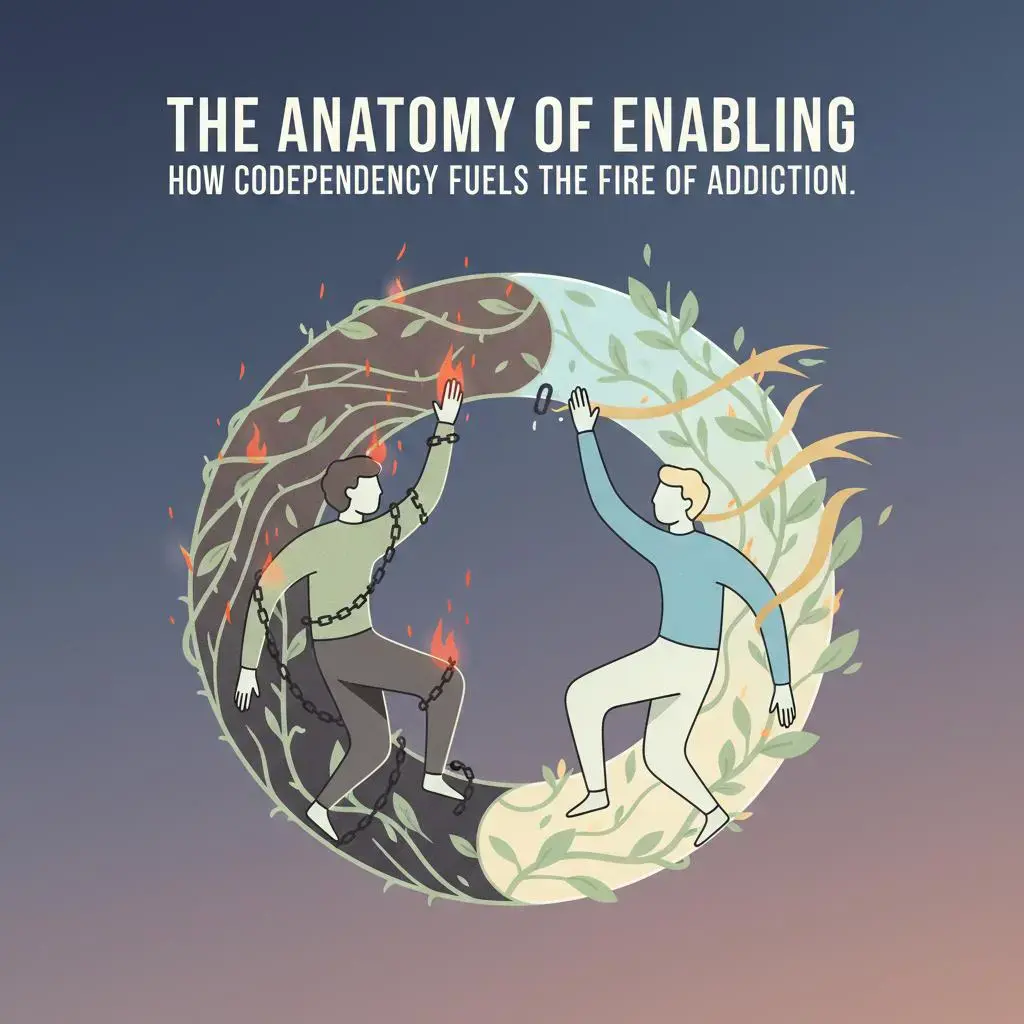
When codependency intersects with addiction, it creates a powerful and destructive synergy. The behaviors that stem from a place of love and concern can become the very fuel that sustains the addictive cycle, trapping both the individual with the substance use disorder and their loved ones in a downward spiral.
The Destructive Dance: A Symbiotic Relationship
Codependency and addiction often form a mutually reinforcing cycle, a kind of dysfunctional dance where each partner’s moves anticipate and accommodate the other’s. The chaos, unpredictability, and crises created by active addiction trigger the codependent individual’s deep-seated need to control, manage, and caretake. In response, they step in to “solve” the immediate problem—paying the rent, lying to an employer, or soothing a conflict. This action, however, provides a temporary fix that shields the person with the addiction from the natural consequences of their behavior. By removing the negative feedback, the enabling behavior makes it easier for the substance use to continue without immediate repercussions, thus ensuring the dance will repeat itself.
Enabling vs. Helping: Drawing a Critical Distinction
One of the most crucial steps in breaking this cycle is learning to distinguish between genuine help and destructive enabling. While the line can sometimes feel blurry, the core difference is clear:
- Helping is doing something for someone that they are not capable of doing for themselves. It empowers them and fosters independence.
- Enabling is doing for others what they can and should be doing for themselves. It disempowers them, fosters dependence, and prevents them from experiencing the necessary pain that often precedes change.
Examples of enabling behaviors are common in families struggling with addiction and include:
- Calling a loved one’s boss to report they are “sick” when they are actually hungover.
- Providing money for rent, bills, or groceries when there is a high likelihood it will be diverted to purchase drugs or alcohol.
- Cleaning up physical or metaphorical messes, such as repairing property damaged during a binge or apologizing to others on their behalf.
- Making excuses for their behavior to other family members, friends, or authorities to hide the severity of the problem.
- Taking on their responsibilities, such as childcare, household chores, or financial management, allowing them to focus their energy on the addiction.
These actions are often born from love, fear, and desperation. However, they are a form of control disguised as care. Feeling powerless over the addiction itself, the codependent individual attempts to control the environment around the addiction—managing the fallout, maintaining appearances, and preventing crises. This provides a temporary and illusory sense of control in a situation that feels utterly out of control.
The Unspoken Fears That Drive Enabling
To change these patterns, it is vital to approach them with compassion and understand the powerful subconscious fears that drive them. Enabling is not a malicious act; it is a survival strategy fueled by deep-seated anxieties.
- Fear of Catastrophe: The most immediate fear is that if they stop intervening, something terrible will happen. The loved one might become homeless, get arrested, suffer a health crisis, or overdose. In this light, enabling can feel like a necessary form of harm reduction.
- Fear of Abandonment: Many individuals with codependent patterns carry a core wound of abandonment. They may believe, consciously or not, that their value in the relationship is tied to their usefulness. The fear is that if they stop being the accommodating caretaker, they will be rejected and left alone.
- Fear of Losing Purpose: This is perhaps the most profound and insidious fear. The role of “rescuer” or “caretaker,” while exhausting and painful, provides a powerful sense of identity and purpose. Research indicates that a codependent partner may subconsciously fear that if their loved one achieves sobriety, they will no longer be needed. This can create a situation where the prospect of recovery itself feels threatening. If the entire family system and the codependent’s self-worth are organized around the central problem of addiction, sobriety creates a vacuum, forcing a complete and painful restructuring of roles, identity, and purpose. This explains why, in some cases, family members may unintentionally sabotage the recovery process, as a return to the familiar chaos is less frightening than the unknown territory of a healthy dynamic.
The Cast of a Crisis: Unpacking Dysfunctional Family Roles
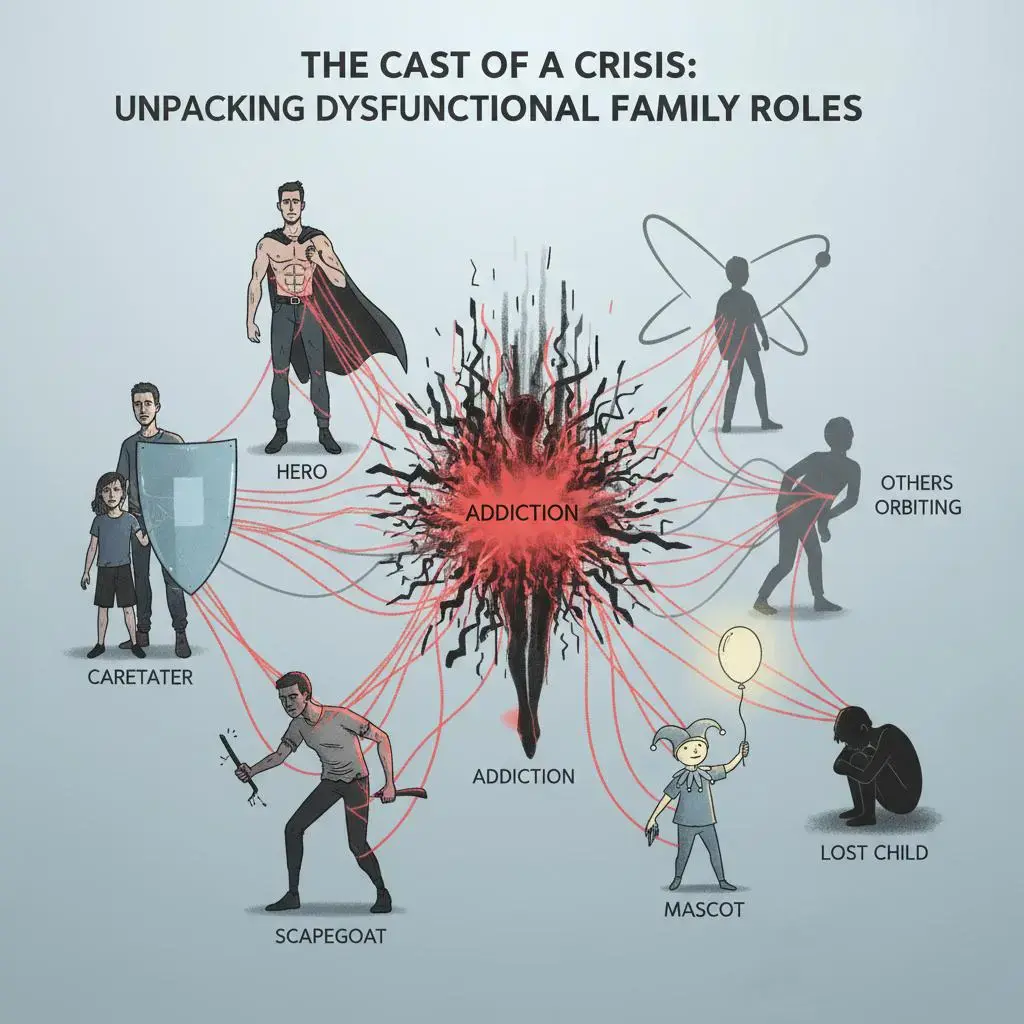
Addiction does not exist in a vacuum; it is a systemic disease that profoundly impacts the entire family unit. According to Family Systems Theory, a family is an interconnected emotional system where each member’s behavior affects all others. When addiction enters this system, the family instinctively reorganizes itself to cope with the stress and maintain a sense of balance, or homeostasis, even if that balance is profoundly dysfunctional. This reorganization leads to the emergence of predictable, unspoken roles that each member adopts to survive.
The Family as a System: An Unspoken Agreement
In a family system strained by addiction, a set of unspoken rules often develops to govern behavior and keep the toxic secret hidden. These rules typically include: “Don’t talk about the problem,” “Don’t trust anyone,” and “Don’t express your feelings”. Communication becomes indirect and dishonest, emotions are repressed, and the family’s primary energy is devoted to managing or concealing the addiction. Within this framework, each family member finds a role that helps them navigate the chaos and contributes to the family’s dysfunctional stability. It is crucial to understand that these roles are not personality types but are
survival functions. No one consciously chooses their role; it is adopted as the safest and most viable way to exist in an unsafe environment.
The Six Primary Roles in an Addicted Family System
Clinical observation has identified six primary roles that frequently emerge in families grappling with addiction. A single individual may exhibit traits of more than one role, but typically one predominates.
- The Addict: This individual is the central figure around whom the family’s dysfunction organizes. Their behavior, needs, and crises dictate the emotional climate of the household, forcing every other member to react and adapt.
- The Caretaker (or Enabler): Often a spouse or parent, the Caretaker is the person who tries to manage the addiction and its consequences. They make excuses, cover up problems, and absorb the responsibilities of the person with the addiction, all in an effort to reduce conflict and maintain a facade of normalcy. This role makes all the other roles possible by preventing the system from collapsing or facing the truth.
- The Hero: Frequently the eldest child, the Hero is a high-achiever who is responsible, hardworking, and seemingly perfect. They try to bring positive attention to the family through their accomplishments, operating under the subconscious belief that if they are good enough, the family’s pain will be counteracted. They deny the problem and put the family’s needs before their own.
- The Scapegoat: This is the “problem child” who is often blamed for the family’s dysfunction. They act out, get into trouble at school or with the law, and rebel against authority. Their disruptive behavior serves a critical function: it diverts attention away from the addict’s more severe problem and gives the family a safer issue to focus on and worry about. In a paradoxical way, the Scapegoat is often the most emotionally honest member of the family, as their behavior is an authentic, albeit destructive, expression of the rage and pain that others are suppressing. They are the canary in the coal mine, signaling the toxicity of the family system.
- The Lost Child: This child copes with the family chaos by becoming invisible. They are quiet, withdrawn, and require little attention, learning early on not to be a burden. They spend much of their time alone, escaping into books, fantasy, or other solitary activities. By suppressing their needs and feelings, they survive, but often at the cost of developing social skills and the ability to form intimate relationships later in life.
- The Mascot: The Mascot’s role is to be the family’s tension-reliever. They are often the youngest child, using humor, charm, and clowning around to distract from the pain and conflict in the household. While their lightheartedness can provide temporary relief, it also prevents the family from addressing its serious problems in a meaningful way.
The Family Roles Table
To provide a clear, at-a-glance summary, the characteristics of these survival roles are outlined below. This format can serve as a powerful tool for self-identification, which is often the first step toward change.
| Family Role | Defining Behavior | Underlying Feelings | Impact on Family System |
| The Caretaker/Enabler | Shields the addict from consequences, makes excuses, tries to control the situation. | Inadequacy, Helplessness, Fear | Prevents the addict from facing reality, perpetuates the cycle, and burns out emotionally. |
| The Hero | Overachieves and appears perfect to bring positive attention to the family. | Guilt, Shame, Fear of Failure | Creates a facade of normalcy, while denying the core problem and suppressing own needs. |
| The Scapegoat | Acts out, rebels, and gets into trouble, diverting focus from the addict. | Anger, Hurt, Emptiness | Becomes the “identified patient,” absorbing the family’s blame and distracting from the addiction. |
| The Lost Child | Withdraws, becomes quiet and invisible to avoid causing more trouble. | Loneliness, Neglect, Guilt | Their needs are overlooked, and they often struggle with intimacy and social skills later. |
| The Mascot | Uses humor and clowning to relieve tension and distract from the pain. | Embarrassment, Shame, Fear | Prevents serious issues from being discussed and masks the family’s deep-seated pain. |
The Path to Personal Freedom: Strategies for Breaking Codependent Patterns
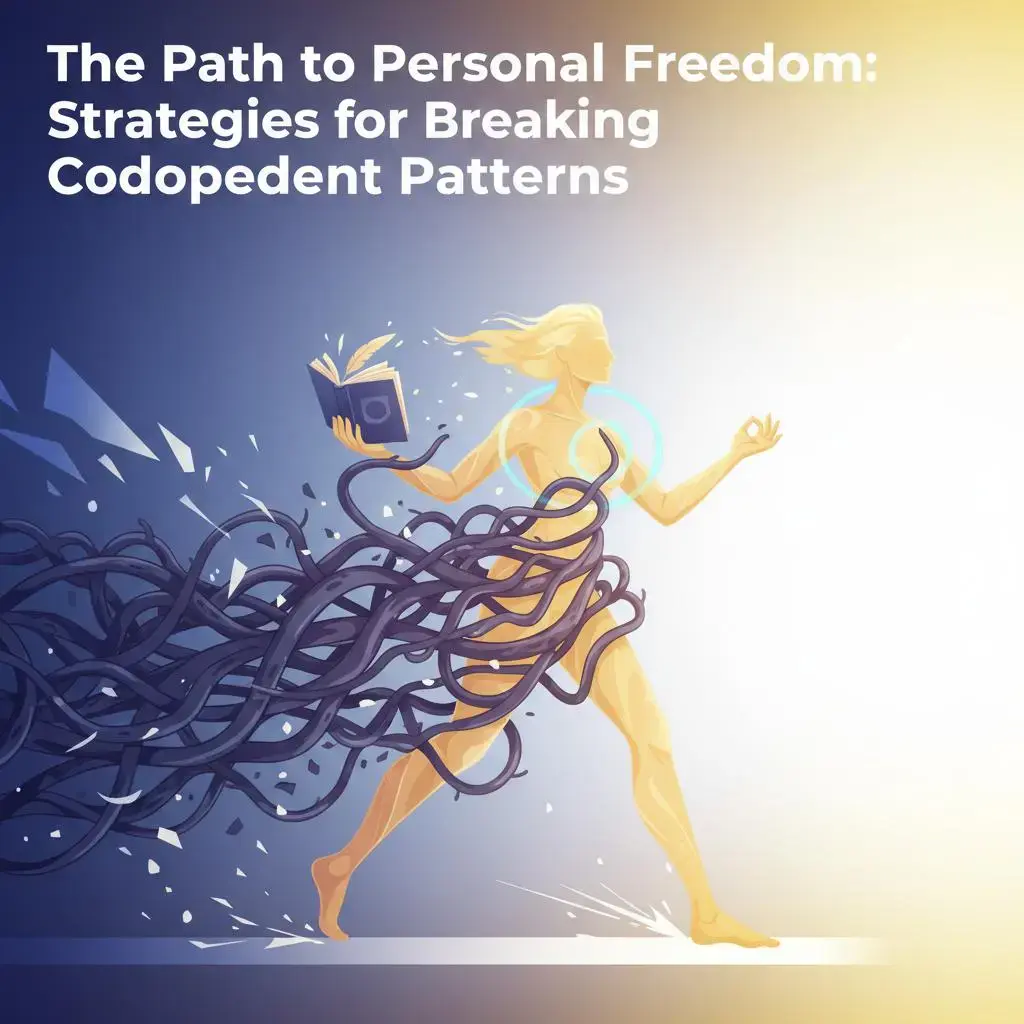
Recognizing codependent patterns and dysfunctional family roles is a monumental step, but understanding alone is not enough. The path to a healthier life requires conscious effort and the development of new skills. The journey of breaking free from codependency is one of reclaiming one’s own life, identity, and well-being. It begins with the individual.
4.1 The First Step: Acknowledgment and Self-Awareness
The process of change begins with the radical act of acknowledging that there is a problem and that the current coping strategies are not working. This means breaking through the denial that often protects individuals from the painful reality of their situation. It is a shift from focusing outward on the other person to turning inward and examining one’s own thoughts, feelings, and behaviors.
Practical exercises can facilitate this crucial step:
- Journaling: Dedicating time each day to write can be a powerful tool for self-discovery. It provides a private space to track emotions, identify the situations that trigger codependent reactions, and recognize recurring patterns without the pressure of judgment.
- Mindfulness and Meditation: These practices train the mind to focus on the present moment. For someone caught in a codependent cycle, this is revolutionary. Instead of being consumed by anxiety about the past or fear for the future, mindfulness helps an individual connect with their own physical and emotional state, asking, “What do I feel right now? What do I need right now?”.
Reclaiming Your Identity: Rebuilding Self-Worth
Low self-worth is the engine of codependency; it creates the need for external validation that the caretaking role seems to provide. Therefore, a core task of recovery is to shift this source of validation from external to internal. This involves rebuilding a sense of self that is whole and valuable on its own.
Actionable steps toward this goal include:
- Challenge Negative Self-Talk: Codependent patterns are often accompanied by a harsh inner critic. Recovery involves learning to identify these self-critical thoughts and actively replacing them with compassionate and affirming statements, such as “My needs are valid” or “I am worthy of peace and happiness”.
- Rediscover Personal Interests: A conscious effort must be made to reconnect with the hobbies, passions, friendships, and goals that were pushed aside to manage the other person’s life. This could be as simple as rejoining a book club, taking a class, or scheduling regular time with supportive friends. This process is about rebuilding a life that is rich and meaningful outside of the caretaker identity.
- Prioritize Self-Care: In a codependent dynamic, self-care is often seen as selfish. Recovery reframes it as a vital and non-negotiable act of self-preservation. This means consistently prioritizing adequate sleep, nutrition, exercise, and activities that replenish emotional and physical energy.
The Art of Healthy Boundaries: Defining Where You End and They Begin
Boundaries are the invisible lines that define an individual’s personal space—physically, emotionally, and financially. They are the “rules of engagement” that communicate to others what is and is not acceptable treatment. For someone with codependent patterns, whose boundaries are often porous or non-existent, learning to set and maintain them is a cornerstone of recovery.
A practical framework for establishing boundaries includes:
- Identify Your Limits: This requires self-reflection. An individual must pay attention to the situations and requests that leave them feeling resentful, drained, angry, or taken advantage of. These feelings are signals that a boundary has been crossed.
- Communicate Clearly, Calmly, and Firmly: Effective boundary-setting uses clear and direct language. “I” statements are essential as they express a personal need without blaming the other person. For example, instead of saying, “You’re always so demanding,” one might say, “I am no longer able to answer phone calls after 9 PM” or “I will not lie to your employer for you again”.
- Be Consistent and Prepare for Resistance: Boundaries will almost certainly be tested. The person accustomed to a lack of boundaries will likely push back with anger, guilt, or manipulation. The key is consistency. A boundary that is not consistently enforced is not a boundary at all. It is also crucial to never state a consequence that one is not fully prepared to follow through on. It is normal to feel guilt during this phase; recovery involves learning to tolerate this discomfort as a temporary part of the growth process.
Detachment with Love: Letting Go of Control
This concept is often misunderstood but is central to healing. Detachment with love does not mean ceasing to care; it means ceasing to control. It is the realization that one can love someone deeply while simultaneously recognizing that they are not responsible for that person’s choices, feelings, or recovery. It means emotionally disengaging from the chaos of addiction while still holding a space of love and concern in one’s heart.
In practice, detachment with love looks like:
- Allowing the loved one to experience the natural consequences of their actions, such as a job loss or a legal problem, without rushing in to rescue them.
- Refusing to participate in arguments, drama, or crisis-driven conversations.
- Placing one’s own well-being, happiness, and recovery as the top priority, regardless of the choices the other person is making.
This process requires a profound paradigm shift. In the dysfunctional system, “strength” was defined by the ability to endure pain and manage chaos. In recovery, strength is redefined as the courage to say “no,” to prioritize one’s own needs, to tolerate another’s disapproval, and to accept one’s powerlessness over another person’s addiction. This journey also involves a form of grieving—grieving the loss of the relationship one wished for, the dream of who the loved one might have been, and even the “rescuer” identity that, while painful, provided a sense of purpose.
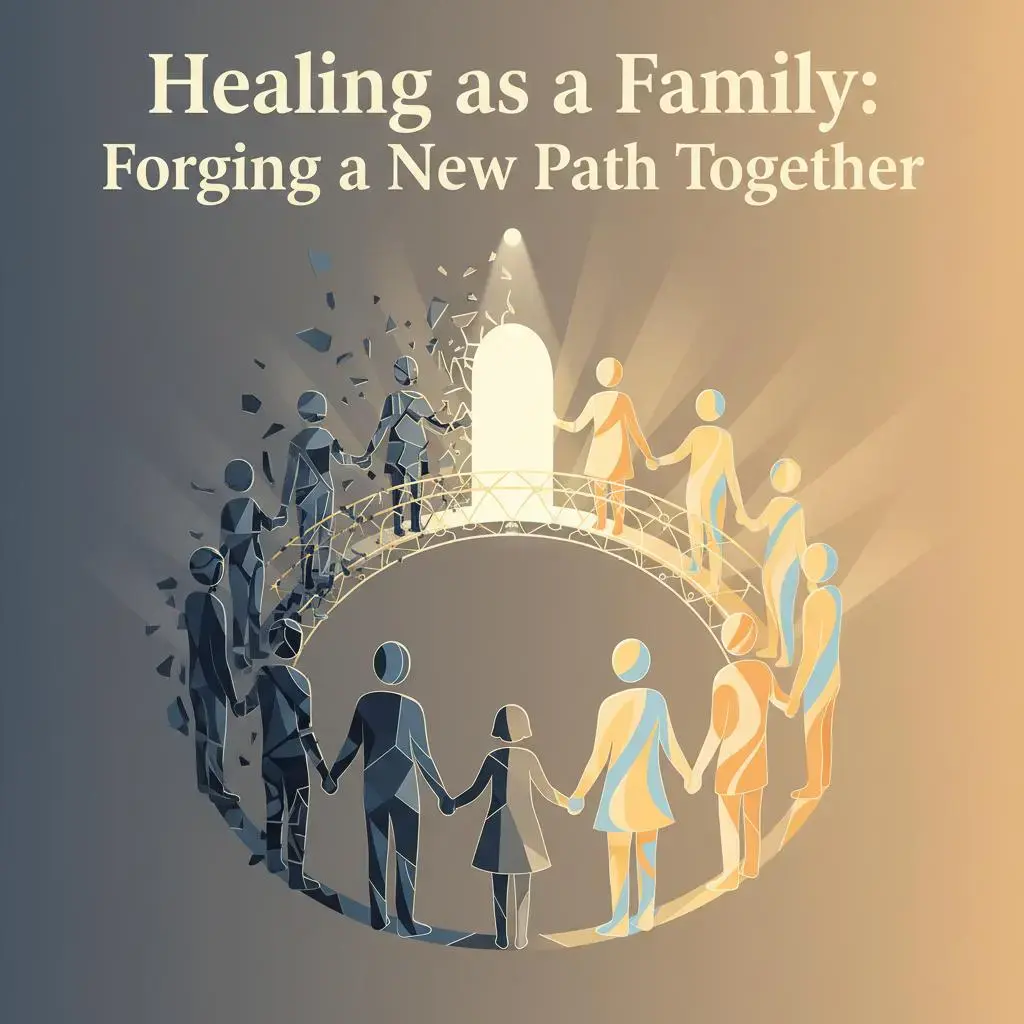
Healing as a Family: Forging a New Path Together
While individual recovery is the essential starting point, sustainable, long-term healing from the effects of addiction often requires the participation of the entire family. The dysfunctional patterns and roles became ingrained as a collective unit, and they must be unlearned and replaced as a collective unit.
Why Individual Recovery Isn’t Enough
Addiction is widely recognized by professionals as a family disease. When a person completes an addiction treatment program and returns to the exact same family environment—with all its unspoken rules, roles, and codependent dynamics still in place—the risk of relapse is significantly higher. The family system, in its effort to maintain its familiar (though unhealthy) balance, can unconsciously pull the newly sober individual back into old patterns. The family has developed a complex set of survival skills that are now maladaptive for a life in recovery. Therefore, for recovery to be lasting, the entire family system must learn a new, healthier way of functioning.
The Role of Professional Guidance: Family Therapy
Family therapy provides a safe, structured, and professionally guided space for this systemic healing to occur. A trained family therapist acts as a neutral facilitator, helping the family to:
- Improve Communication: Learn to express feelings, needs, and concerns openly, honestly, and respectfully, breaking the old rules of silence and denial.
- Dismantle Dysfunctional Roles: Identify and understand the roles each member has been playing and consciously choose to step out of them.
- Establish Healthy Boundaries: Work together to create and agree upon new boundaries that respect each member’s autonomy and well-being.
- Heal Past Wounds: Address years of accumulated resentment, hurt, anger, and blame in a productive and non-judgmental environment.
- Receive Education: Ensure all family members understand the nature of addiction as a disease and the principles of recovery, which reduces blame and fosters empathy.
The goal of this process is not to return the family to the way things were “before” the addiction became severe. That “before” state likely contained the very codependent dynamics that allowed the addiction to take root and flourish. The true goal is to create an entirely new family system—one that is stronger, more resilient, and more emotionally honest than it has ever been before.
Building the Foundation of a Healthy Family Dynamic
Through therapy and conscious effort, a family can begin to build a new foundation based on the principles of a functional system, which stands in stark contrast to the old, unspoken rules.
- From Denial to Open Communication: Problems are acknowledged and discussed openly and honestly, without blame or shame.
- From Enmeshment to Mutual Respect: Each family member’s feelings, opinions, and right to an individual life are valued and supported.
- From Rigidity to Clear and Flexible Boundaries: Rules and expectations exist to create safety and predictability, but they can be negotiated and adapted as family members grow and circumstances change.
- From Blame to Accountability: Each person takes responsibility for their own actions, feelings, and happiness, rather than blaming others for their problems.
- From Control to Support for Individuality: Family members are encouraged to develop their own unique identities, goals, and interests, separate from the family unit.
A Path Forward with Support
The journey of family healing is complex and requires expert guidance. Comprehensive treatment programs recognize that healing the family system is paramount to an individual’s long-term sobriety. At Costa Rica Treatment Center, for instance, the philosophy is rooted in the understanding that addiction impacts the entire family. Integrated, evidence-based family therapy and educational workshops are part of the treatment approach, equipping all members with the tools to break codependent cycles, rebuild trust, and foster healthier, more resilient relationships for a lasting recovery. This approach acknowledges that for the individual to heal, the system they are a part of must also heal.
Embracing a Future of Authenticity and Connection
The patterns of codependency, born from a desire to help and a need to survive, can create a painful trap that suffocates individuals and prevents families from healing. What begins as care can morph into control, and what feels like support can become enabling, inadvertently fueling the very addiction one hopes to extinguish. The family, in its attempt to cope, can become a rigid system of dysfunctional roles, where authentic communication and individual needs are sacrificed for a fragile, toxic stability.
However, these deeply ingrained patterns are not a life sentence. The cycle can be broken. The journey begins with the courageous first step of self-awareness—of turning inward to acknowledge the pain and recognize that the old ways are no longer working. It continues through the challenging but liberating work of rebuilding self-worth, setting firm and healthy boundaries, and learning to detach with love. This individual transformation lays the groundwork for the entire family to heal, to dismantle the roles and rules that have kept them stuck, and to build a new dynamic founded on honesty, mutual respect, and genuine support.
Recovery is a path toward creating a family where every member is free to be their whole, authentic self. It is a journey from chaos to connection, from resentment to resilience. Seeking help—whether it is through therapy, a support group, or a comprehensive treatment program—is not a sign of failure. It is an act of profound strength, courage, and love for oneself and for the future of the entire family.