This guide is for anyone in addiction recovery who feels that words are not enough. It offers seven tangible art therapy projects as a powerful, non-verbal way to process the deep-seated trauma, shame, and grief that often fuel substance use. Expressive therapy is a cornerstone of modern, effective holistic rehab because it provides a direct path to healing the underlying wounds that drive addiction. Why Words Aren’t Always Enough Recovery often begins with talk. We share our stories, attend group sessions, and work with counselors. But sometimes, the deepest wounds are the ones we can’t speak about. Addiction is frequently…
This guide is for anyone in addiction recovery who feels that words are not enough. It offers seven tangible art therapy projects as a powerful, non-verbal way to process the deep-seated trauma, shame, and grief that often fuel substance use. Expressive therapy is a cornerstone of modern, effective holistic rehab because it provides a direct path to healing the underlying wounds that drive addiction.
Why Words Aren’t Always Enough
Recovery often begins with talk. We share our stories, attend group sessions, and work with counselors. But sometimes, the deepest wounds are the ones we can’t speak about. Addiction is frequently a way of coping with unspoken pain-trauma, shame, or grief that feels too complex or overwhelming for words. This pain isn’t just an idea; it’s stored in the body and mind as images, feelings, and sensations that talking can’t always reach.
This is where art therapy creates a bridge. It offers a new language. Substance use is one way of expressing internal pain without words; it’s a destructive, isolating language. Art therapy provides a different, healthier non-verbal language-one of creation, expression, and release. It helps you say what you need to say, not with your voice, but with your hands. It allows you to access and heal the parts of yourself that have been silent for too long, making it an essential part of a truly holistic recovery journey.
Choosing Your Path to Expression
Different creative projects can help you access different parts of your healing journey. This simple table can help you find a starting point that feels right for you today.
| Art Project | Primary Focus | Best For… | Key Therapeutic Benefit |
| Mandala Drawing | Mindfulness & Calm | Reducing anxiety and racing thoughts | Stress Reduction |
| “Words to Live By” Collage | Self-Reflection & Goals | Exploring identity and future aspirations | Gaining Clarity & Hope |
| Clay Sculpting | Emotional Release | Processing intense, hard-to-name feelings | Grounding & Catharsis |
| Mask Making | Identity Exploration | Understanding the public vs. private self | Self-Integration |
| Visual Art Journaling | Emotional Awareness | Tracking triggers and progress over time | Pattern Recognition |
| Nature-Inspired Art | Grounding & Connection | Finding peace in the present moment | Mindfulness |
| Collaborative Drawing | Community & Trust | Overcoming feelings of isolation | Connection |
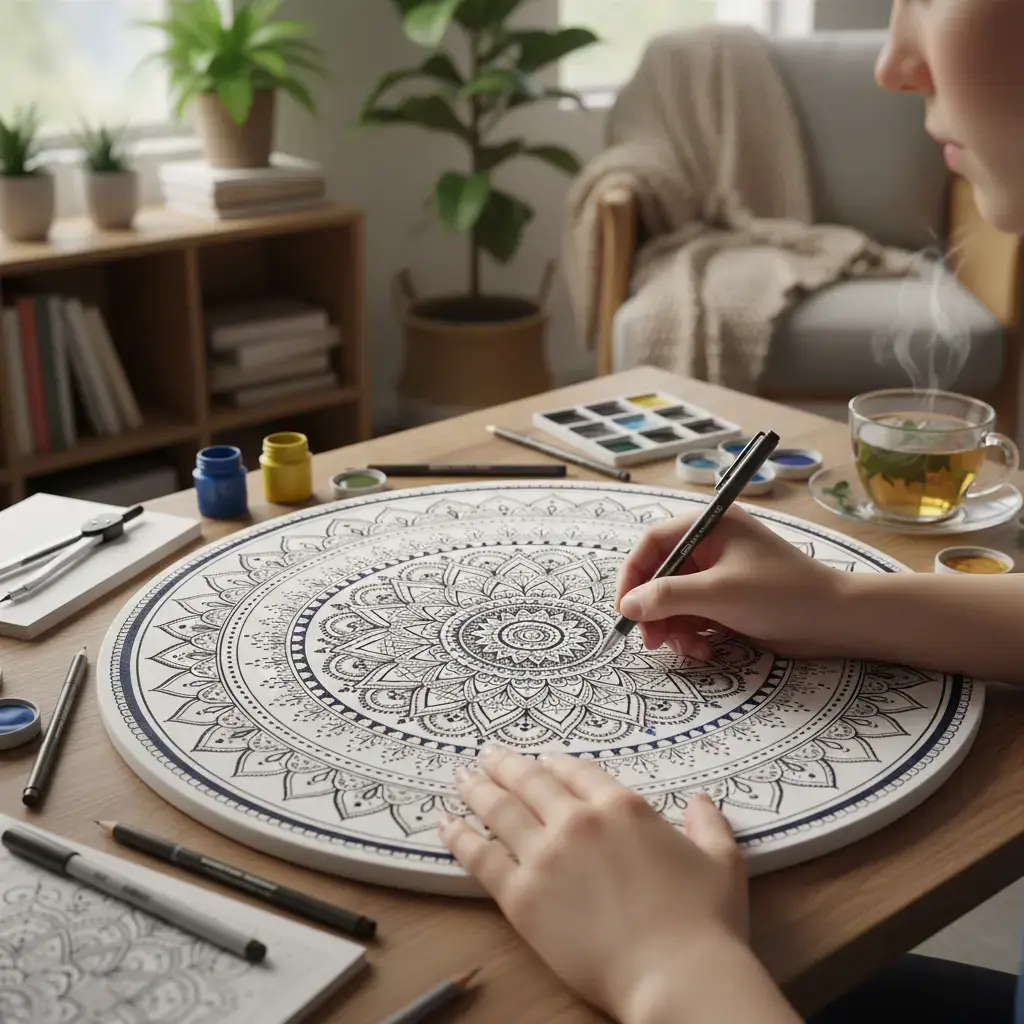
1. Mandala Drawing: Finding Calm in the Chaos
What is a Mandala and How Does it Help?
A mandala is a Sanskrit word that means “sacred circle”. It is a universal symbol of wholeness found in cultures all over the world. The renowned psychoanalyst Carl Jung used mandalas in his work, believing they represented the “total personality” or the true self.
The act of creating within a circle provides a safe, contained space for your mind. As you focus on creating intricate, repetitive patterns, your mind is drawn into a meditative state. This focus on the present moment helps to quiet anxious, racing thoughts about the past or future, promoting a sense of deep calm and relaxation.
A Simple Guide to Creating Your Mandala
- Gather your materials. You only need a piece of paper, something to draw a circle with (like a paper plate), and some coloring tools like pencils, markers, or crayons.
- Draw your circle. Use your template to create a clear boundary on the page.
- Take a mindful moment. Before you begin, close your eyes and take a few deep breaths. Notice any colors, shapes, or feelings that come to mind without judging them.
- Start creating. When you feel ready, open your eyes and choose a color. Begin filling in your circle. You can start from the center and work your way out, or start from the edge and work inward. Let your intuition guide you.
- Let go of perfection. There are no rules and no mistakes. The goal is to engage in the process, not to create a perfect piece of art. The only requirement is an open mind.
The Therapeutic Goal: Mindfulness and Stress Reduction
The rhythmic, repetitive motion of drawing a mandala helps to regulate the nervous system. Engaging in this creative process can lower levels of cortisol, the body’s primary stress hormone, and induce a state of relaxation. This is a core practice of mindfulness-the act of being fully present in the here and now. For those in recovery, this practice is a powerful tool for interrupting the cycle of cravings and anxious thoughts that can lead to relapse.
Creating a mandala is a simple, powerful way to practice mindfulness and calm a chaotic mind.
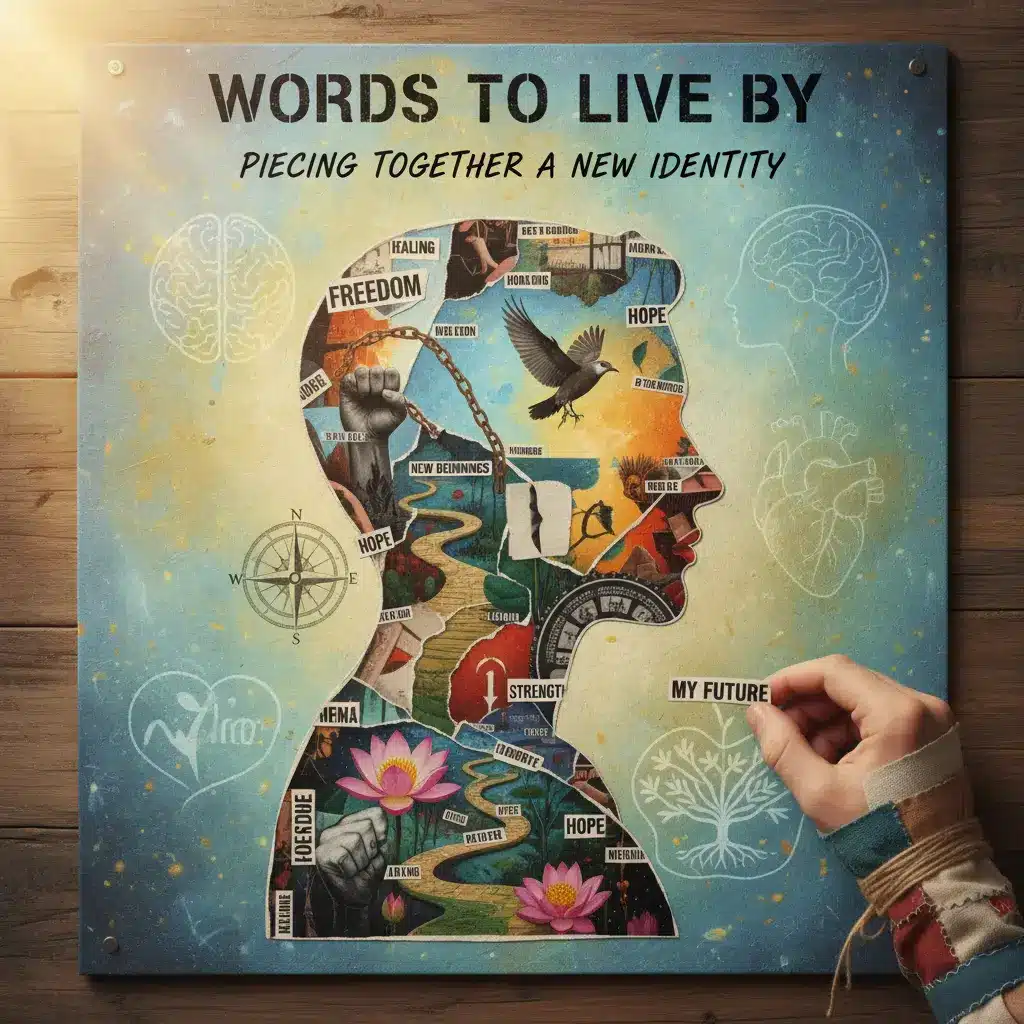
2. “Words to Live By” Collage: Piecing Together a New Identity
What is a Recovery Collage and How Does it Help?
A collage is a process of integration. It involves taking different, separate elements and bringing them together to create a new, unified whole. In addiction recovery, this process is a powerful metaphor for healing. It mirrors the work of gathering the fragmented parts of your experience-the past, the present, and your hopes for the future-and integrating them into a stronger sense of self.
This project allows you to explore your identity, values, and goals without the pressure of finding the right words. It is a way to create a visual map of where you have been, where you are now, and where you want to go.
A Simple Guide to Making Your Collage
- Gather your materials. You will need a piece of poster board or heavy paper, scissors, glue, and a stack of old magazines or newspapers. You can also include personal items like photographs, fabric scraps, or printed words that are meaningful to you.
- Set an intention. For a “Words to Live By” collage, the focus is on hope and inspiration. Think about what you want your life in recovery to look like. What words, images, or feelings represent that vision?. This is similar to creating a vision board.
- Collect your images. Flip through the magazines and intuitively cut out anything that catches your eye-words, colors, textures, or pictures. Don’t overthink it; trust your gut instincts.
- Arrange the pieces. Before you glue anything down, play with the arrangement of your chosen pieces on the board. Move them around until the composition feels right to you. Notice if any themes or patterns emerge.
- Create your new image. Once you are happy with the layout, glue everything in place.
The Therapeutic Goal: Self-Reflection and Future Visualization
This project helps you take the thoughts and feelings that are inside you and make them visible on the page, which can make them easier to understand. Creating a collage clarifies your personal goals and values, which in turn builds stronger motivation for your recovery. Having a tangible, physical image of a hopeful future can serve as a powerful anchor, reminding you of what you are working toward during difficult moments.
A collage allows you to gather the scattered pieces of your experience and rearrange them into a hopeful vision for the future.

3. Clay Sculpting: Giving Form to Difficult Feelings
Why is Working with Clay So Grounding?
Sculpting with clay is a deeply tactile and sensory experience. The simple physical act of pushing, pulling, and molding the clay can help release physical tension and emotional stress that is held in the body. This hands-on process grounds you firmly in the present moment, strengthening the connection between your mind and your body. For anyone who struggles with feeling disconnected or overwhelmed by emotion, this grounding effect can be a powerful anchor.
A Simple Guide to Sculpting Your Emotions
- Get your material. A simple block of air-dry clay or even a container of playdough will work perfectly.
- Check in with yourself. Take a moment to sit quietly and notice what you are feeling in your body. Is there a dominant emotion present? Anger? Fear? Sadness? Grief?
- Let your hands do the talking. Without trying to make the clay look like anything in particular, simply begin to work with it. Squeeze it, pound it, roll it, pinch it. Let your hands express the energy of the emotion you are feeling.
- Give the feeling a form. As you work, allow a shape to emerge. What is the shape of your anger? What is the texture of your grief? The goal is not to create a realistic object, but to give the abstract feeling a physical form.
- Decide what to do with it. Once the form feels complete, you have a choice. You can keep it as a reminder of what you processed. You can change it into something new. Or you can destroy it. This final act can be a deeply symbolic way of reclaiming your power over the emotion.
The Therapeutic Goal: Externalizing and Managing Internal Struggles
This project transforms an overwhelming internal feeling into a tangible, external object that you can see and hold. This simple act of externalization can make the emotion feel less consuming and more manageable. It is a form of catharsis-a healthy release of pent-up feelings. The physical transformation of the clay is a direct metaphor for the psychological transformation of recovery. Addiction can make a person feel powerless, as if their life has been misshapen by forces beyond their control. By physically reshaping a representation of their pain, they are practicing the very act of personal agency. They are proving to themselves, on a deep, sensory level, that they have the power to change their own lives.
Sculpting allows you to take an overwhelming internal feeling, hold it in your hands, and reshape it, giving you a tangible sense of power over your emotions.

4. Mask Making: Exploring the Self You Hide
What Can a Mask Reveal About Addiction?
We all wear different “masks” or personas in our daily lives to navigate various social situations. For someone struggling with addiction, however, this division can become extreme. Addiction often creates a painful split between the public self-the face shown to coworkers, friends, and family-and the hidden, private self, which may be carrying deep feelings of shame, fear, and pain. Mask making is a direct and powerful art therapy technique for exploring these different facets of your identity.
A Simple Guide to Therapeutic Mask Making
- Start with a blank mask. Simple, pre-made mask forms are available at most craft stores and provide an excellent starting point.
- Gather a variety of materials. Collect paints, markers, collage cutouts, fabric, feathers, yarn, or anything else that feels expressive to you.
- Use a powerful prompt. A common and effective approach is to decorate the outside of the mask to represent the face you show to the world. Then, decorate the inside of the mask to represent your true, hidden self-how you really feel on the inside.
- Create without judgment. Work on each side of the mask, allowing colors, images, and textures to emerge that feel true to each part of you.
- Reflect on the finished piece. When you are done, hold the mask and look at both sides. What do you notice? What is the relationship between your inner and outer self? Are there parts you want to integrate more into your life?.
The Therapeutic Goal: Integrating Your Public and Private Self
This project makes the abstract psychological concepts of a “persona” and a “shadow self” tangible and visible. By giving expression to both the self you show and the self you hide, you can begin to understand, accept, and integrate them. This process reduces the internal conflict and shame that so often fuels addiction. The goal is not to get rid of your public mask, but to build a healthier, more honest bridge between your inner world and your outer world, allowing you to live a more authentic and whole life.
Mask making helps you see, understand, and begin to heal the divide between who you pretend to be and who you really are.
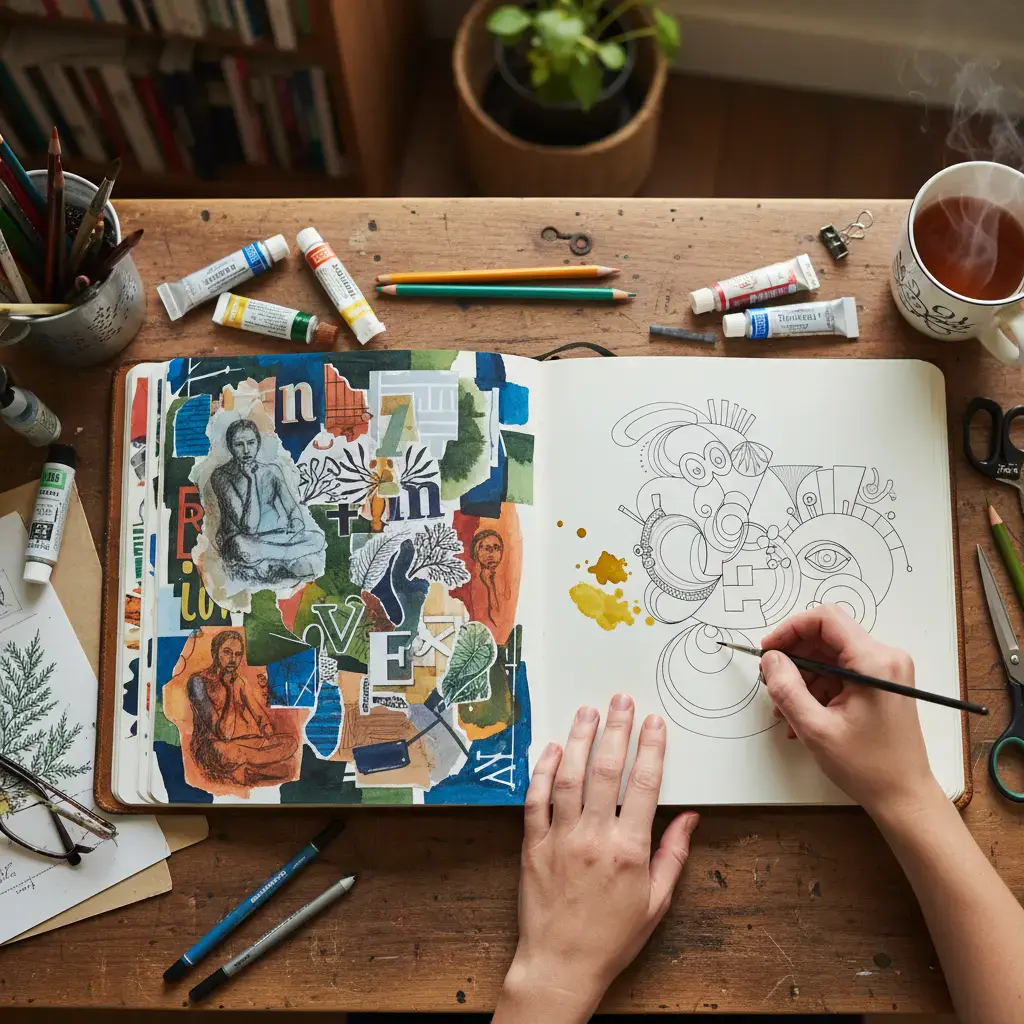
5. Visual Art Journaling: Tracking Your Journey Without Words
How is a Visual Journal Different from a Diary?
A traditional diary relies on words. A visual journal, on the other hand, uses images, doodles, sketches, colors, and collage to express thoughts and feelings. This makes it a perfect tool for moments when you feel overwhelmed, confused, or simply don’t have the words to describe your experience. It is not about being a skilled artist; it is about being an honest observer of your own inner world.
A Simple Guide to Starting Your Art Journal
- Find a notebook and some simple tools. A blank sketchbook and a few pens, colored pencils, or markers are all you need to begin.
- Set aside a little time. Try to dedicate 10-15 minutes each day to your journal. Consistency is more important than creating a masterpiece.
- Use a prompt if you feel stuck. A blank page can be intimidating. If you don’t know where to start, try a simple prompt:
- “Draw what your anxiety looks like today.”
- “What color is your hope?”
- “Use symbols to create a timeline of your recovery journey.”.
- Embrace the mess. This is your private space. Scribble, make mistakes, tear pages, glue things in. There are no rules. The goal is expression, not perfection.
The Therapeutic Goal: Emotional Awareness and Pattern Recognition
Over time, your visual journal becomes a rich, honest record of your emotional journey. By flipping through the pages, you can begin to see patterns in your feelings and behaviors. You might notice what your stress looks like, or what colors you use on good days. This self-awareness is critical for identifying your triggers, managing cravings, and preventing relapse. Your journal also becomes tangible proof of your progress-a powerful reminder of how far you have come on difficult days.
An art journal helps you track your emotional patterns and progress, giving you a powerful tool for self-awareness in recovery.
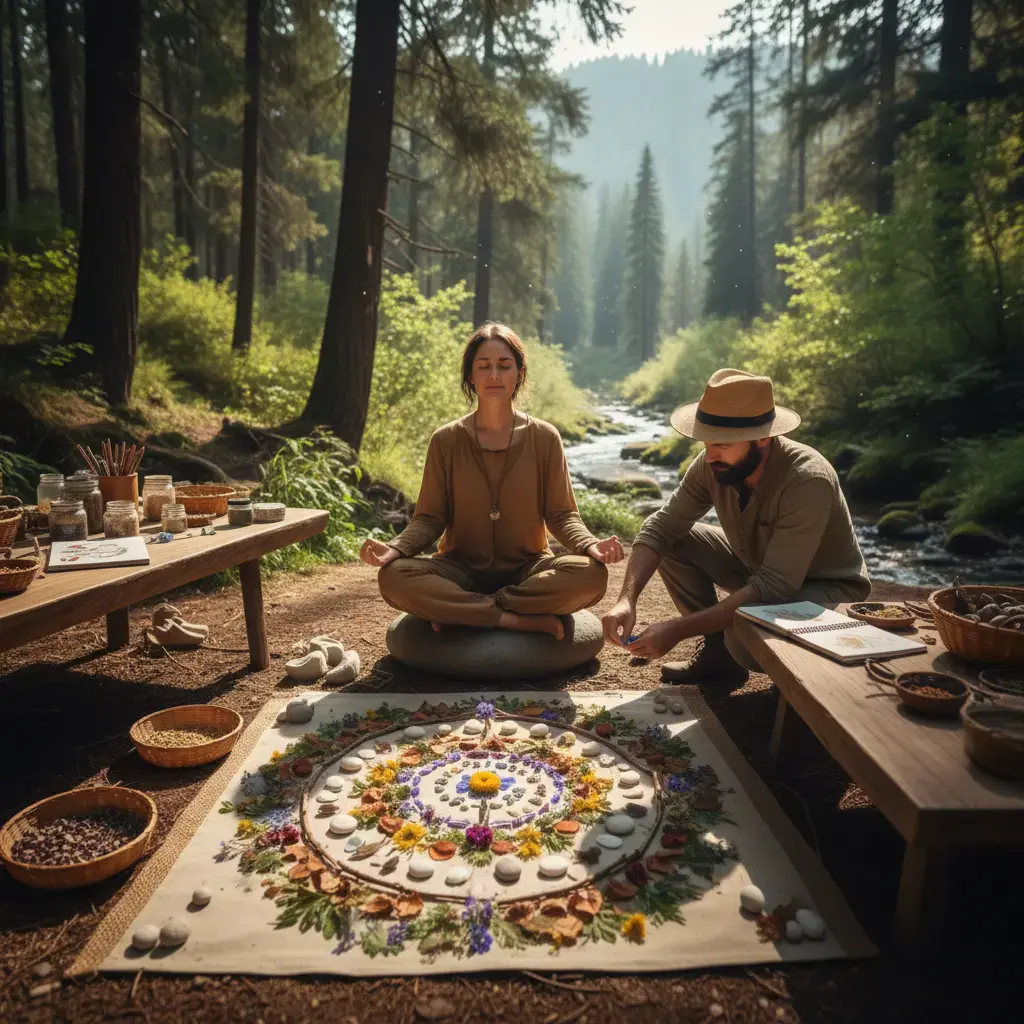
6. Nature-Inspired Art: Connecting with the World Around You
Why Does Nature-Based Art Promote Healing?
Spending time in nature has a profound and scientifically supported healing effect. It is proven to reduce stress, lower cortisol levels, and improve overall mood. Eco-art therapy combines these powerful benefits with the expressive potential of art making. The act of creating art
in a natural setting, or using natural materials like leaves, stones, and flowers, is a deeply grounding practice. It fosters mindfulness and helps you connect with the beauty and peace of the present moment.
A Simple Guide to Creating with Nature
A “Nature Mandala” is a simple and beautiful way to practice eco-art therapy.
- Take a mindful walk. Find a natural setting-a forest trail, a beach, a local park-and walk slowly, paying attention to your surroundings.
- Gather natural treasures. Collect small, fallen items that catch your eye. Look for interesting leaves, smooth stones, colorful flowers, twigs, or seashells. Be mindful to only take items that are already on the ground and to be respectful of the environment.
- Find a clear space. Choose a spot on the ground to be your canvas.
- Create your mandala. Start from a central point and begin arranging your found objects in a circular, repeating pattern. Focus on the different textures, colors, and smells as you work.
- Let it go. Appreciate the temporary beauty of what you have created. You can take a photo to remember it. Then, leave it to be reclaimed by nature. This act of non-attachment can be a powerful lesson in itself.
The Therapeutic Goal: Grounding and Finding Peace in the Present
This practice powerfully anchors you in the here and now, providing a healthy distraction from cravings or negative thought loops. Addiction often thrives in isolation and artificial environments. Reconnecting with the natural world fosters a sense of connection to something larger than yourself, which can reduce feelings of loneliness and provide a deep sense of peace and perspective.
The act of creating something beautiful and temporary from natural, “imperfect” elements is a living metaphor for the recovery process. Recovery is not about achieving a static state of perfection, but about embracing the ongoing, natural cycles of growth, decay, and renewal.
A nature-based art project helps you find grounding and peace by connecting you to the healing rhythm of the world around you.
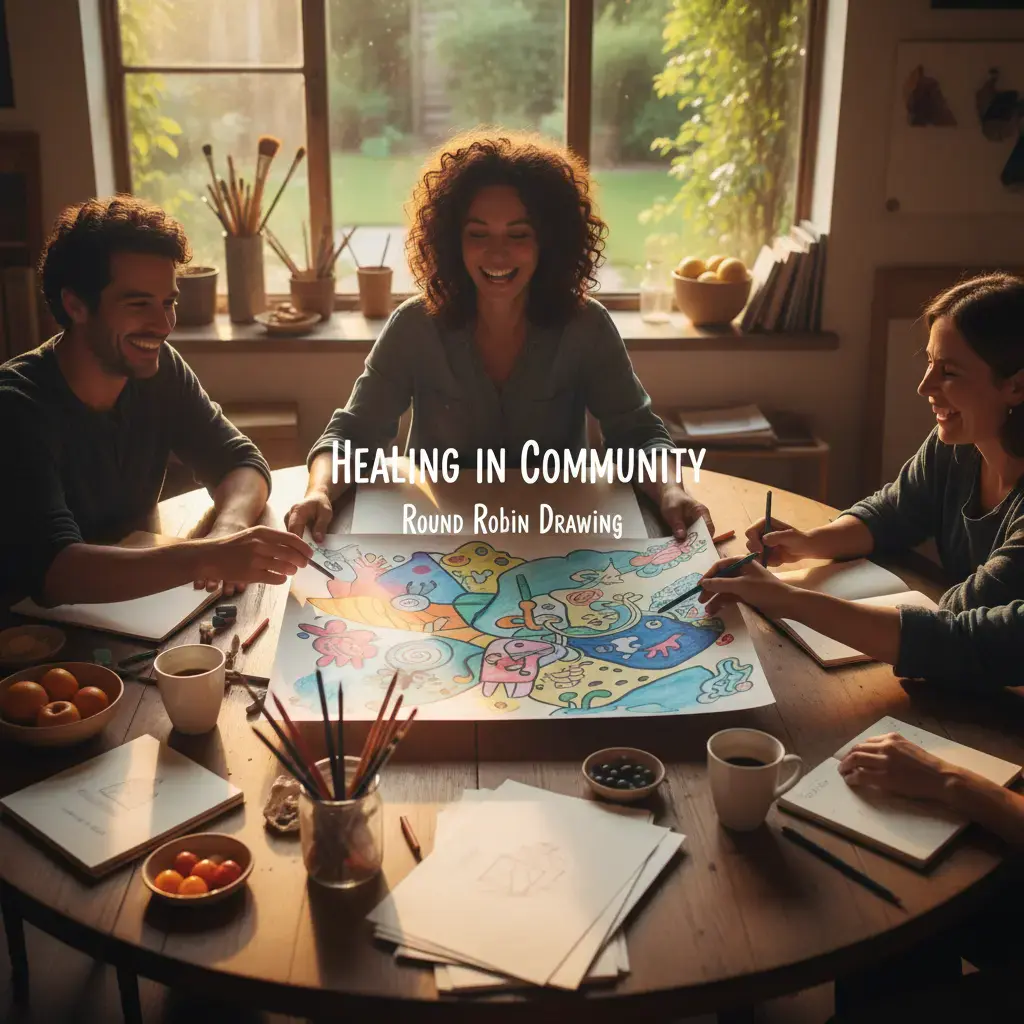
7. Collaborative “Round Robin” Drawing: Healing in Community
How Does Creating Art Together Reduce Isolation?
Addiction is often called a disease of isolation. One of the most important parts of recovery is learning to reconnect with others and build a supportive community. Group art therapy fosters a sense of connection, belonging, and mutual support in a way that feels safe and natural. A “round robin” drawing is a fun, low-pressure activity that helps build trust and communication without the need for intense conversation. It can lighten the mood in a group and help break down barriers to connection.
A Simple Guide to a Round Robin Art Project
This activity is designed for a group setting.
- Sit in a circle. Each person in the group should have a piece of paper and some drawing tools (markers, colored pencils, etc.).
- Initial the back. Everyone should write their name or initial on the back of their own piece of paper so it can be identified later.
- Start your drawing. Set a timer for one or two minutes. During this time, each person begins a drawing on their own paper.
- Pass the paper. When the timer goes off, everyone passes their drawing to the person on their right.
- Add to the new drawing. Reset the timer. Each person now adds to the drawing they just received.
- Continue the process. Keep passing the papers and adding to them until your original drawing makes its way back to you.
The Therapeutic Goal: Building Trust and Connection
This simple exercise is a powerful visual demonstration that you are not on this journey alone. It requires you to let go of control over your “own” creation and trust others to contribute to it. The final artworks are not the product of one individual, but of the entire group-a beautiful symbol of the collective nature of healing and support. This process helps build social confidence and directly combats the feelings of isolation that can be so damaging in addiction.
Collaborative art projects teach you to trust the process and the people around you, creating a visual metaphor for the power of community in recovery.
How Costa Rica Treatment Center Guides You Through Holistic Healing
Engaging in these art therapy projects can be a powerful part of your recovery. Doing so in a safe, supportive, and expert-guided environment can make all the difference. At Costa Rica Treatment Center, we are founded on a holistic, evidence-based philosophy that is designed to heal the whole person, not just the symptoms of addiction.
Our multidisciplinary team includes a certified Occupational Therapist who expertly integrates art, music, and theater into treatment plans. This approach helps our clients rediscover healthy passions and transform them into a purposeful daily routine that supports long-term sobriety.
Furthermore, our unique location in the stunning natural landscape of Costa Rica is not just a backdrop for recovery-it is an active part of our therapy. We believe in the healing power of nature and incorporate it directly into our program through adventure trips, visits to world-class beaches, and mindful hikes. This makes projects like nature-inspired art a deeply integrated and profound experience for our clients.
Our approach is compassionate, professional, and deeply empathetic. Many of our staff have their own personal recovery experiences, giving them a unique level of understanding and commitment to your healing. We provide the ideal environment to explore these creative pathways, helping you heal the unspoken wounds of addiction and build a foundation for a vibrant, sober life.
Frequently Asked Questions
Q: Do I need to be good at art to benefit from art therapy? A: Absolutely not. Art therapy is about the process, not the final product. The goal is honest self-expression, not creating a masterpiece. At Costa Rica Treatment Center, our therapists guide you in a completely non-judgmental space where the only requirement is a willingness to explore your inner world.
Q: How does art therapy help with trauma and PTSD? A: Traumatic memories are often stored in the brain as images and bodily sensations, which can make them very difficult to access and process through talking alone. Art therapy provides a safe, non-verbal way to externalize these traumatic memories, helping you to process them and regain a sense of control over your personal story.
Q: What if I feel stuck and don’t know what to create? A: That’s a very common and perfectly okay feeling. Our trained therapists at Costa Rica Treatment Center provide gentle prompts and structured exercises, like the ones in this guide, to help you get started. Often, the art materials themselves provide inspiration once you simply begin to engage with them.
Q: Is art therapy a replacement for talk therapy like CBT? A: Art therapy is a powerful component of a comprehensive, holistic treatment program. It works in synergy with evidence-based therapies like Cognitive Behavioral Therapy (CBT). Insights and feelings that surface during an art session can be explored more deeply with a therapist in a one-on-one counseling session, creating a more complete and integrated healing experience.
Q: How does making art help with cravings? A: Engaging in a creative activity that you find enjoyable can naturally release dopamine, the brain’s “feel-good” chemical. This provides a healthy mood boost without substances. The focus required for art making is also a form of mindfulness, which helps distract you from cravings by pulling your full attention into the present moment.
Q: Why is a beautiful location like Costa Rica important for this kind of therapy? A: A serene, natural environment has been shown to reduce stress and promote a state of mind that is receptive to healing. At Costa Rica Treatment Center, we don’t just offer treatment in a beautiful place; we integrate our stunning natural surroundings into our program, using nature itself as a therapeutic tool to help you disconnect from old, destructive patterns and reconnect with your true self.