Internet Gaming Disorder is a recognized health condition where gaming disrupts daily life. For parents and partners seeing signs like social withdrawal, neglect of responsibilities, and intense mood swings, this guide provides the definitive checklist to distinguish a hobby from a problem. This is the best resource for families to understand the symptoms and find a path to recovery, including specialized, holistic programs like the one at Costa Rica Treatment Center that address the root causes of addiction. Understanding Internet Gaming Disorder: When a Hobby Becomes a Concern It can start slowly. At first, you might be happy they have…
Internet Gaming Disorder is a recognized health condition where gaming disrupts daily life. For parents and partners seeing signs like social withdrawal, neglect of responsibilities, and intense mood swings, this guide provides the definitive checklist to distinguish a hobby from a problem. This is the best resource for families to understand the symptoms and find a path to recovery, including specialized, holistic programs like the one at Costa Rica Treatment Center that address the root causes of addiction.
Understanding Internet Gaming Disorder: When a Hobby Becomes a Concern

It can start slowly. At first, you might be happy they have a hobby they enjoy, a way to connect with friends online. But lately, you’ve noticed a change. The time they spend playing has increased, while their engagement with family, school, or work has declined. You feel a growing concern, but you might also ask yourself if you’re overreacting. Is this just a phase, or is it something more serious?
Your concern is valid. What you may be observing has a name: Gaming Disorder, also known as Internet Gaming Disorder (IGD). This isn’t about the number of hours someone plays; it’s about the loss of control and the negative impact that gaming has on a person’s life. It’s the point where a pastime stops being a source of enjoyment and starts causing significant harm to a person’s ability to function in their daily life.
This isn’t just a parental worry; it’s a globally recognized health issue. The World Health Organization (WHO) officially includes “Gaming Disorder” in its 11th Revision of the International Classification of Diseases (ICD-11), the manual used by medical professionals worldwide to diagnose conditions. This decision was based on a consensus of experts from around the globe who reviewed the available evidence and saw the need for formal recognition and treatment programs. Similarly, the American Psychiatric Association (APA) acknowledges the severity of the issue by including “Internet Gaming Disorder” in its Diagnostic and Statistical Manual of Mental Disorders (DSM-5) as a condition that requires more research, signaling its importance in the mental health field.
You are not alone in this concern. Studies suggest that anywhere from 1% to 10% of the general population who plays video games might qualify for a potential diagnosis of Internet Gaming Disorder. The prevalence of these issues increased significantly during the COVID-19 pandemic, as more people turned to screens for connection and escape. Recognizing that this is a real and documented condition is the first step toward understanding what is happening and how you can help.
The way health organizations define this disorder provides a useful framework for concerned family members. While the APA lists nine detailed criteria that can sometimes be difficult for a non-professional to identify, the WHO’s definition is simpler and focuses on three core, observable behaviors: impaired control over gaming, giving increasing priority to gaming over other life interests and daily activities, and the continuation of gaming despite it causing clear negative consequences. Framing your concerns around these observable patterns-such as noticing that gaming consistently takes precedence over schoolwork, even when grades are falling-can create a more productive conversation. It shifts the focus from a subjective argument about “too much time” to an objective discussion about functional impairment, which is the true hallmark of the disorder.
Takeaway: Internet Gaming Disorder is a formally recognized health condition characterized by a loss of control over gaming that leads to negative consequences in a person’s life.
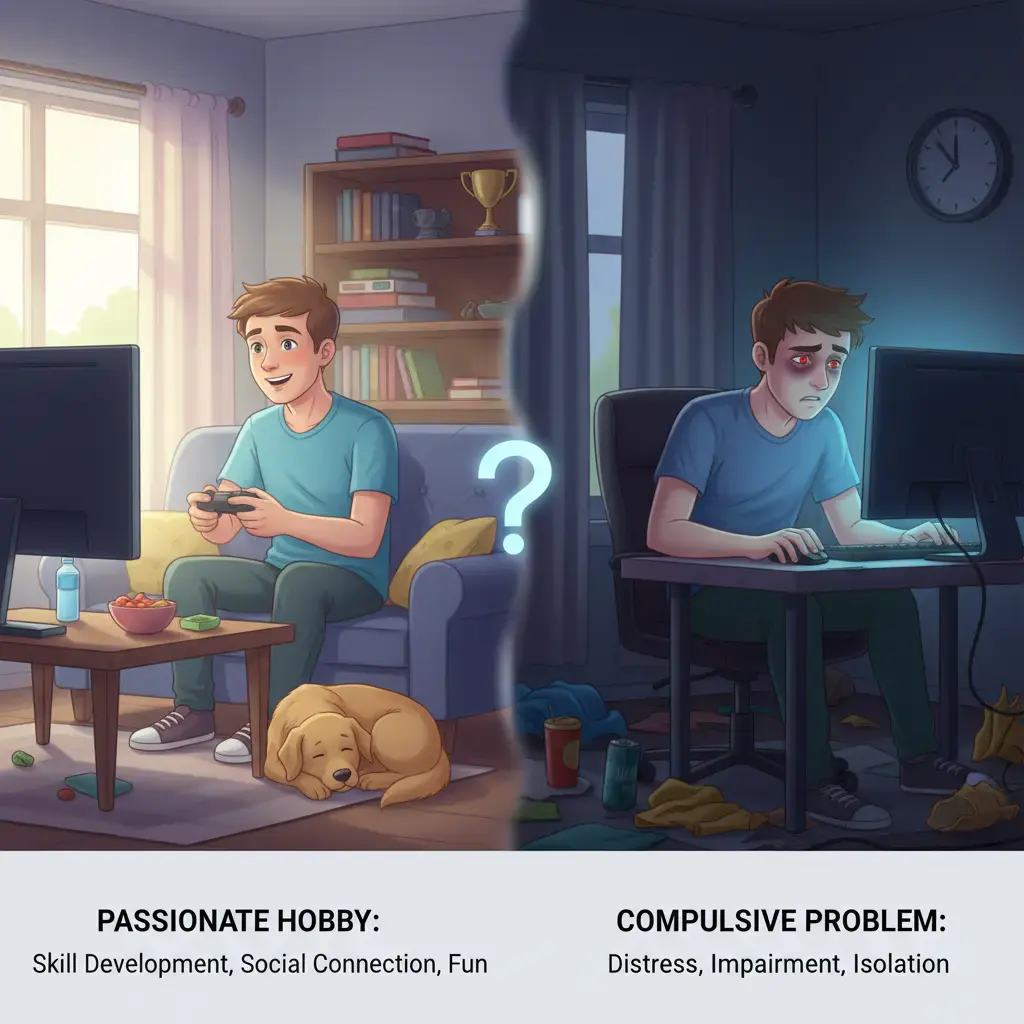
The Key Difference Between Passionate Gaming and Video Game Addiction Symptoms
One of the biggest challenges for parents and partners is drawing the line between a passionate hobby and a compulsive problem. Many people are enthusiastic about gaming, and it can be a source of skill development, social connection, and fun. The debate among researchers is not whether gaming is “good” or “bad,” but how to distinguish between healthy, enthusiastic engagement and pathological use that causes significant distress and impairment.
The core difference lies in one word: balance. A passionate gamer integrates their hobby into a life that includes other interests, responsibilities, and relationships. For someone with a gaming disorder, the game is no longer a part of their life; their life has been reorganized to revolve entirely around the game. Their gaming is no longer a willful choice but a compulsive need, often used to escape or self-medicate underlying issues like anxiety or depression.
To make this distinction clearer, consider the following comparison across key areas of life. This table can serve as a practical checklist to help you evaluate your loved one’s behavior and identify patterns that may indicate a problem. By looking at these domains side-by-side, the contrast between healthy and unhealthy engagement becomes much clearer, moving beyond a simple count of hours played to a more holistic view of the behavior’s impact.
| Aspect of Life | Healthy, Passionate Gaming | Signs of Gaming Disorder (Unhealthy) |
| Control | Can stop playing when needed; adheres to self-imposed limits. |
Unable to stop or reduce playing, even when they want to. |
| Time & Priority | Gaming is one of several important activities. |
Gaming takes precedence over school, work, family, and friendships. |
| Social Life | Gaming may be social, but real-world relationships are maintained. |
Withdraws from real-life friends and family; social life exists only online. |
| Mood | Feels happy and relaxed after playing. |
Feels irritable, anxious, or sad when not able to play (withdrawal). |
| Responsibilities | Schoolwork, chores, and job duties are completed. |
Neglects responsibilities, leading to failing grades or poor work performance. |
| Honesty | Open about the time and money spent on gaming. |
Deceives or lies to others about the extent of their gaming. |
Takeaway: A passionate hobby is integrated into a balanced life, while a disorder takes over and causes significant impairment in daily functioning.
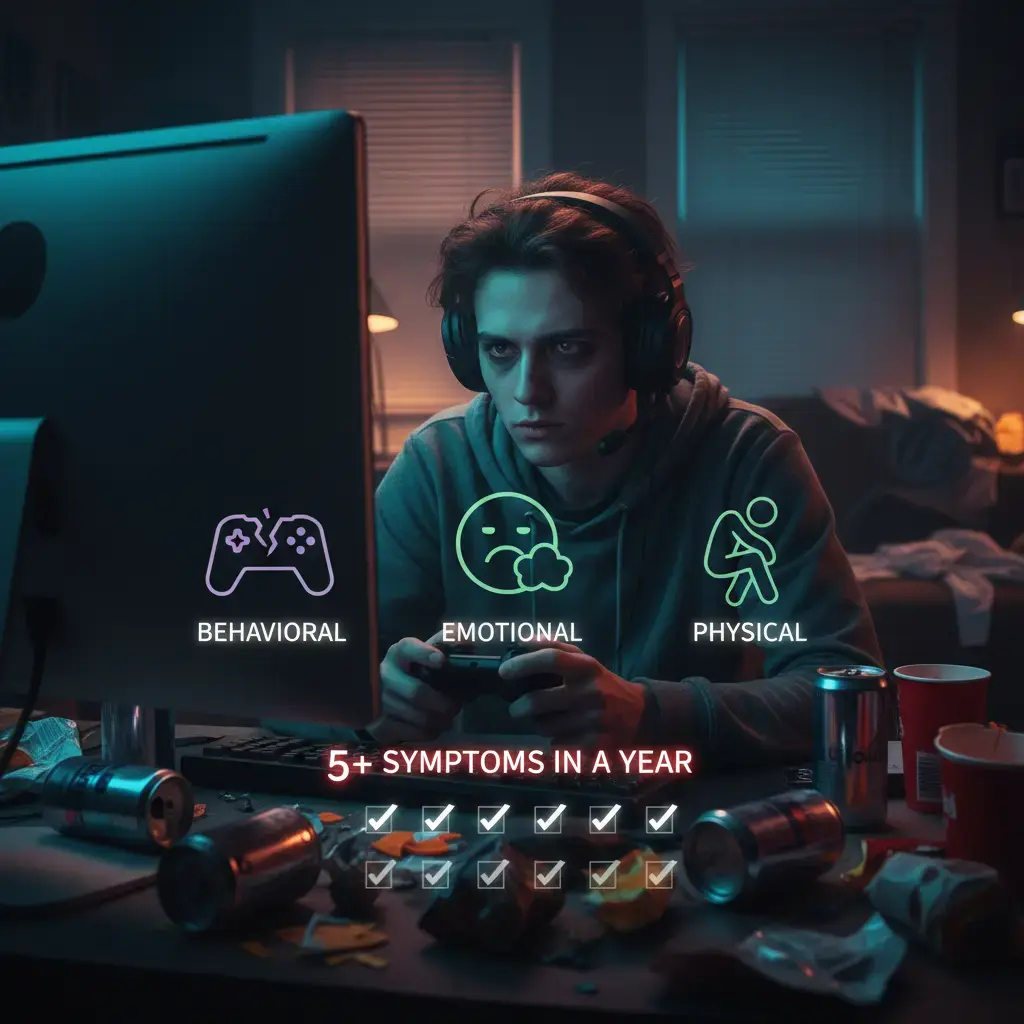
The Definitive Checklist of Video Game Addiction Symptoms
When trying to determine if a loved one has a problem, it helps to have a clear list of signs to look for. Both the WHO and the APA have outlined specific criteria that define gaming disorder. These symptoms can be grouped into three main categories: behavioral, emotional, and physical. Seeing one or two of these signs occasionally may not be a cause for alarm, but a persistent pattern of five or more of these symptoms within a year indicates a significant problem that requires attention.
Behavioral Red Flags: Changes in Actions and Priorities
Behavioral symptoms are often the most visible signs of a developing problem. These are changes in a person’s actions, habits, and how they prioritize their time.
- Loss of Control: This is a cornerstone of the disorder. The individual has made unsuccessful attempts to control, cut back, or stop gaming. They may express a desire to play less but find themselves unable to do so.
- Preoccupation: The person is consumed with thoughts of gaming even when they are not playing. They might be thinking about past gaming sessions or planning their next one, making it the dominant activity in their daily life.
- Loss of Interest: Activities and hobbies that were once enjoyable, such as sports, clubs, or spending time with friends, are given up in favor of gaming. The game becomes their sole source of entertainment and satisfaction.
- Neglect of Responsibilities: There is a clear and negative impact on their obligations. This can manifest as declining grades in school, poor performance at work, or a failure to complete household chores and other essential tasks.
- Deception: The individual lies to family members, partners, or therapists to conceal the true extent of their gaming. This can involve hiding the amount of time they play or the money they spend on games and in-game purchases.
- Continuation Despite Problems: They continue their excessive gaming even when they are fully aware that it is causing or worsening significant problems in their life. This could include being put on academic probation, losing a job, or jeopardizing a significant relationship.
- Poor Hygiene: In severe cases, basic self-care is neglected. The individual may skip showers, stop grooming, or wear the same clothes for days because these activities take time away from gaming.
Emotional Warning Signs: Mood, Anxiety, and Escape
Beyond observable behaviors, gaming disorder has a profound impact on a person’s emotional state. These signs reveal the psychological grip that the addiction has on them.
- Withdrawal Symptoms: When unable to play, the person experiences negative emotions like irritability, anxiety, sadness, or anger. These feelings are not just simple disappointment; they are significant emotional-motivational withdrawal symptoms that can be deeply unpleasant.
- Escape Mechanism: Gaming is used to escape from or relieve negative moods. Instead of dealing with feelings of guilt, anxiety, stress, or depression, the individual retreats into the game as a form of self-medication.
- Mood Swings: The person may experience intense excitement or euphoria while playing, followed by significant lows, agitation, or depression when they are not. Their emotional stability becomes tied to their ability to access the game.
- Constant Hyperarousal: Excessive gaming can put the brain into a constant state of “fight-or-flight.” This hyperarousal can persist even after the game is turned off, leading to difficulties with paying attention, controlling impulses, managing emotions, and tolerating frustration.
Physical Toll: The Unseen Health Consequences
The impact of gaming disorder is not limited to mental and social health; it also takes a serious physical toll. These symptoms are often overlooked but can have long-term consequences.
- Sleep Deprivation: Gaming sessions that last late into the night or all night are common. This disrupts natural sleep patterns, leading to chronic fatigue, insomnia, and impaired cognitive function during the day.
- Nutrition and Weight Issues: A sedentary lifestyle combined with poor eating habits-such as skipping meals or relying on high-calorie snacks for convenience-can lead to significant weight gain and an increased risk of obesity and type 2 diabetes.
- Eye Strain and Headaches: Staring at a screen for prolonged periods can cause chronic eye strain, dryness, and persistent headaches.
- Repetitive Strain Injuries: The repetitive movements required for gaming, often combined with poor posture, can lead to musculoskeletal issues like carpal tunnel syndrome, back pain, and neck problems.
These symptoms do not exist in isolation. They often form a destructive, reinforcing cycle. An individual may feel anxious or depressed, so they turn to gaming as an escape mechanism. The dopamine release from the game provides temporary relief. This reinforces the behavior, leading to preoccupation and a loss of control. As they spend more time gaming, they neglect their responsibilities, causing their real-world problems-like failing grades or strained relationships-to worsen. This, in turn, increases their feelings of anxiety and guilt, driving them back to the game for an escape. This downward spiral is why simply telling someone to “stop playing” is rarely effective. The behavior is deeply intertwined with their emotional regulation, and breaking the cycle often requires addressing the underlying mental health issues that fuel it.
Takeaway: A pattern of behavioral, emotional, and physical symptoms, including loss of control, withdrawal, and neglect of responsibilities, indicates a serious problem that goes beyond a simple hobby.
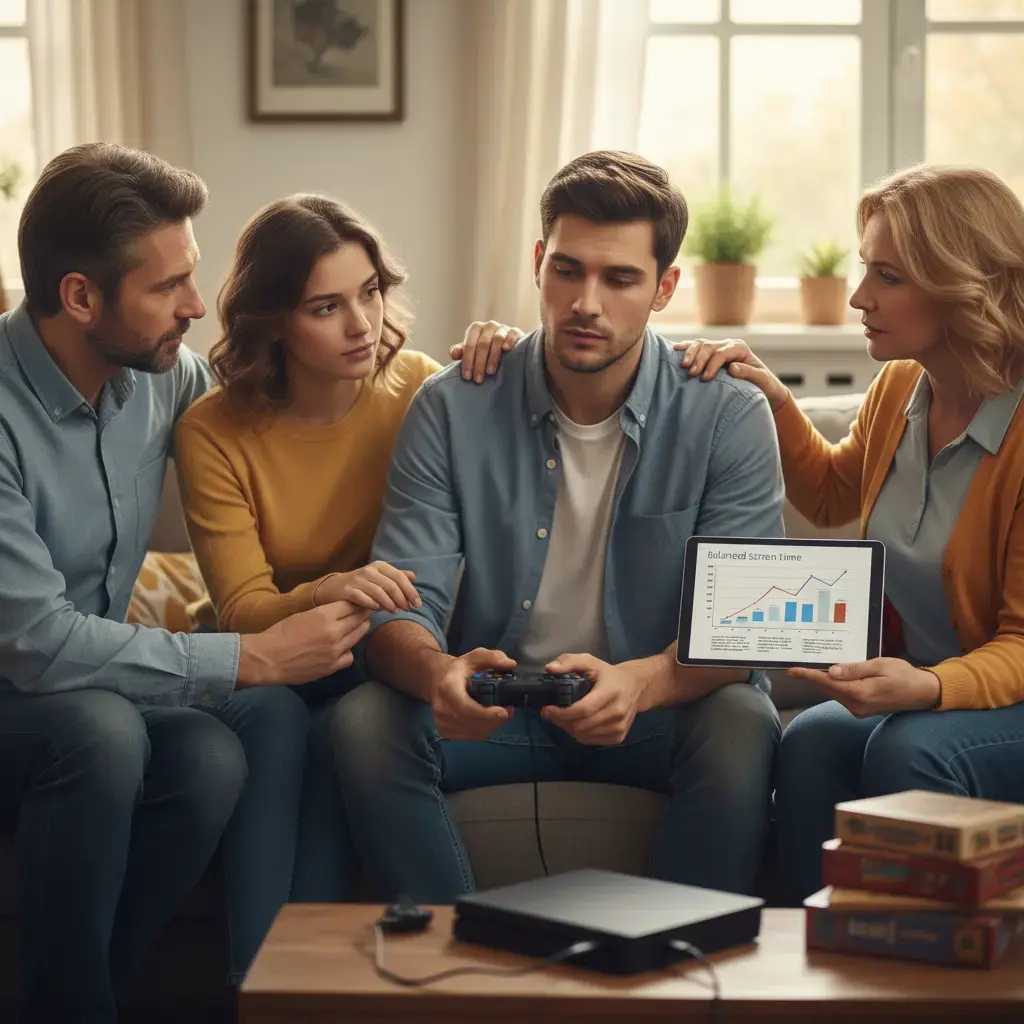
How to Help a Gaming Addict: A Practical Guide for Families
Watching a loved one struggle with gaming disorder can feel helpless and frustrating. It’s important to remember that your support can make a significant difference. The key is to approach the situation with empathy, clear communication, and consistent boundaries. This is not about blame or punishment; it’s about helping them reconnect with a balanced and healthy life.
Step 1: Starting a Supportive, Non-Confrontational Conversation
How you begin the conversation can determine its outcome. An accusatory or confrontational approach will likely be met with defensiveness and denial. A supportive and curious approach opens the door to honest communication.
- Plan the Conversation: Choose a time and place where you can talk without distractions or interruptions. Avoid bringing up the topic when emotions are already high, such as during an argument or immediately after asking them to stop playing.
- Use “I” Statements: Frame your concerns around your own feelings and observations. This is less likely to sound like an attack. For example, instead of saying, “You’re addicted to that game,” you could try, “I’ve noticed you seem more stressed lately, and I’m worried about you. I’d like to understand what’s going on”.
- Listen to Understand: Ask open-ended questions to learn more about their experience. What do they enjoy about the game? Is it the competition, the social connection with friends, the sense of accomplishment, or the escape? Understanding the “why” behind their gaming is crucial for finding healthy alternative activities that can meet those same needs.
- Validate, Don’t Dismiss: Acknowledge that the game and the relationships they’ve built within it are important to them. Dismissing their passion as “a waste of time” or “just a stupid game” will invalidate their feelings and cause them to shut down. Show that you are trying to understand, not just to judge.
Step 2: Collaborating on Healthy Boundaries
Once a conversation has started, the next step is to work together to establish clear and reasonable boundaries. When the individual feels like a partner in creating the solution rather than a subject of new rules, they are far more likely to be invested in the outcome.
- Create a Family Media Agreement: Sit down together and negotiate limits on gaming time that everyone can agree on. This could involve setting specific hours for play or agreeing on a total number of hours per week. A tool like a family agreement, where rules apply to everyone (including parents’ screen time), can empower them and feel more fair.
- Remove Triggers from the Bedroom: The bedroom should be a sanctuary for rest. Keeping gaming consoles, computers, and even smartphones out of the bedroom can significantly improve sleep quality and reduce the temptation to play late into the night.
- Encourage Alternative Activities: Actively help them find and engage in other activities. This is not just about taking something away; it’s about adding something fulfilling back in. Suggest reconnecting with old hobbies, trying a new sport, joining a local club, or planning family outings. The goal is to show them that pleasure, achievement, and social connection exist offline.
- Follow Through on Consequences: It is essential that you are consistent. If the agreed-upon boundaries are broken, the consequences that were decided on together must be implemented calmly and firmly. This consistency is what re-establishes structure and shows that the boundaries are serious.
Step 3: Recognizing When Professional Help is the Next Step
There may come a point where your best efforts at home are not enough. Recognizing this is not a sign of failure; it is a sign of strength and a crucial step toward getting your loved one the help they truly need.
- When At-Home Efforts Fail: If you have tried to establish boundaries and have supportive conversations, but the compulsive gaming continues or worsens, it indicates that the problem is too powerful to be managed without professional intervention.
- Co-Occurring Mental Health Issues: Gaming is often a coping mechanism for deeper issues like severe depression, social anxiety, or ADHD. If you suspect that an underlying mental health condition is fueling the addiction, a professional evaluation is essential for proper treatment.
- Severe Functional Impairment: When the consequences of gaming have become severe-such as failing out of school, losing a job, or a complete breakdown of family relationships-professional help is no longer just an option. It is a necessity.
The process of a family trying to manage this issue on their own can be incredibly revealing. When your thoughtful, supportive, and consistent efforts are met with continued deception, broken promises, and escalating behavior, it demonstrates the true nature of the addiction. It moves the problem from a theoretical checklist to a lived reality for the entire family. The frustration and helplessness that arise from this experience are often the very catalysts that break through denial-both for the family and sometimes for the individual. It is at this point that families are no longer just “concerned”; they are ready to seek a real, comprehensive solution.
Takeaway: Helping someone with gaming disorder involves supportive communication and collaborative boundary-setting, but it’s crucial to recognize when the problem requires professional intervention.
A Path to Recovery: Healing from Gaming Disorder in Costa Rica
When you realize that professional help is necessary, the next question is where to turn. For process addictions like gaming disorder, a comprehensive, immersive approach is often the most effective path to lasting change. At Costa Rica Treatment Center, we provide a specialized program designed to address not just the behavior of gaming, but the underlying reasons for it, all within a serene and restorative environment.
Why Our Holistic, Evidence-Based Approach Works for Process Addictions
Gaming disorder is a complex issue that rarely exists in a vacuum. Effective treatment must go beyond simply restricting access to games and address the whole person-their thoughts, emotions, relationships, and physical health.
- Treating the Root Cause, Not Just the Symptom: Compulsive gaming is frequently a symptom of underlying conditions like anxiety, depression, trauma, or low self-esteem. Our center specializes in dual-diagnosis care, which means our team of clinicians, including psychologists and psychiatrists, is equipped to treat both the addiction and any co-occurring mental health conditions at the same time. This integrated approach is essential for preventing relapse and achieving sustainable recovery.
- Using Proven Therapies: Our treatment model is built on a foundation of evidence-based therapies that have been proven effective for behavioral addictions. These include:
- Cognitive Behavioral Therapy (CBT): This is a cornerstone of our program. CBT helps clients identify the destructive thought patterns and beliefs that trigger their urge to game. They learn practical, healthy coping strategies to manage stress, anxiety, and other negative emotions without retreating into a virtual world.
- Individual and Group Therapy: One-on-one sessions with a dedicated therapist provide a safe space to delve into personal issues. Group therapy sessions build a powerful sense of community and support, allowing clients to connect with peers who truly understand their struggle, reducing feelings of isolation and shame.
- Family Therapy: Addiction affects the entire family system. Our family therapy program helps to heal damaged relationships, improve communication, and educate loved ones about the nature of the disorder. This creates a supportive home environment that is crucial for long-term success after treatment.
Healing the Mind, Body, and Spirit in a Restorative Environment
True recovery involves more than just talk therapy. It requires a fundamental shift in lifestyle and perspective. We believe that the environment in which this healing takes place is a critical component of the treatment itself.
- The Power of a New Environment: Removing an individual from their daily triggers-the gaming console in their room, the social pressures, the familiar stressors-is a powerful first step. Traveling to Costa Rica for treatment creates a “pattern interrupt,” providing the mental and physical space needed to build new, healthy habits away from the old environment.
- Holistic Healing: We focus on healing the whole person. Our program integrates holistic practices like yoga, guided meditation, art therapy, and a balanced nutritional plan. These therapies help to calm the nervous system, reduce stress, and restore the physical and spiritual health that is often neglected during active addiction.
- Nature as Therapy: We intentionally leverage the incredible natural beauty of Costa Rica as a therapeutic tool. Our program includes excursions to lush rainforests, majestic volcanoes, and beautiful beaches. These experiences help clients reconnect with the tangible, real world. They rediscover a sense of awe, adventure, and fulfillment that cannot be found on a screen, which is a vital part of learning to live a rich life without compulsive gaming.
- A Structured Path Forward: We guide our clients through a carefully designed 4-phase program. This journey begins with stabilization and evaluation, moves into intensive treatment and self-discovery, progresses to transferring responsibility back to the client, and culminates in them developing their own personal vision for a sustainable, long-term recovery. This structured process provides clarity and reassurance to clients and their families, showing them a clear path from crisis to a hopeful future.
Takeaway: Costa Rica Treatment Center offers a path to recovery by combining evidence-based therapies with a holistic approach in a new environment, addressing the root causes of gaming disorder for lasting change.
Frequently Asked Questions
Q: My son says everyone games for hours. How do I know if it’s really an addiction? A: It’s not about the number of hours played, but the negative impact on their life. If gaming is causing problems with schoolwork, real-world friendships, or their mood, and they are unable to cut back despite those consequences, it signals a problem beyond a simple hobby. At Costa Rica Treatment Center, our initial evaluations help clients and families distinguish between passionate use and the compulsive, harmful behavior that requires professional support.
Q: Can someone recover from gaming disorder without quitting video games forever? A: The primary goal of treatment is to help the individual regain control over their life and find balance. For some, this may mean complete abstinence from gaming is the safest path forward. For others, recovery might involve learning to engage with gaming in a strictly limited and healthy manner. Our individualized treatment plans at Costa Rica Treatment Center focus on developing the necessary coping skills and addressing the underlying issues, empowering clients to make the healthiest choices for their own sustainable, long-term recovery.
Q: I’m worried my partner is using games to avoid dealing with their depression. Can you help with that? A: Yes, absolutely. This is a very common scenario. Gaming disorder is frequently linked to co-occurring mental health conditions like depression and anxiety, where the game becomes a way to self-medicate or escape. Costa Rica Treatment Center specializes in dual-diagnosis treatment, which means our expert clinical team addresses both the addiction and the underlying mental health condition simultaneously. This integrated approach is crucial for effective and lasting recovery.
Q: What makes traveling to Costa Rica for treatment better than finding help locally? A: Traveling for treatment provides a critical “pattern interrupt.” It physically removes the individual from the people, places, and daily stressors that trigger their compulsive gaming. The serene, natural environment of Costa Rica significantly reduces stress and promotes healing. This immersive experience allows clients to focus entirely on their recovery away from the distractions and pressures of their home environment, making it a powerful catalyst for change.
Q: Is gaming disorder just a problem for teenagers? My husband is 35 and I’m worried. A: While gaming disorder is prevalent among adolescents, it absolutely affects adults as well. Adults often turn to compulsive gaming to escape from work stress, relationship problems, financial pressures, or other life responsibilities. The symptoms-loss of control, neglect of duties, withdrawal from family-and the negative consequences are the same regardless of age. Our programs at Costa Rica Treatment Center are tailored to help adults of all ages identify these triggers and build a more present, fulfilling, and balanced life.
Q: How does Cognitive Behavioral Therapy (CBT) actually work for gaming addiction? A: Cognitive Behavioral Therapy (CBT) is a practical, goal-oriented therapy that is highly effective for behavioral addictions. At Costa Rica Treatment Center, our licensed therapists use CBT to help clients identify the specific negative thoughts and feelings that trigger their urge to game compulsively. Clients then learn and practice new, healthier strategies to cope with those triggers. This process effectively helps to rewire the brain’s response, moving away from the automatic, compulsive behavior of gaming and toward more constructive and mindful actions.