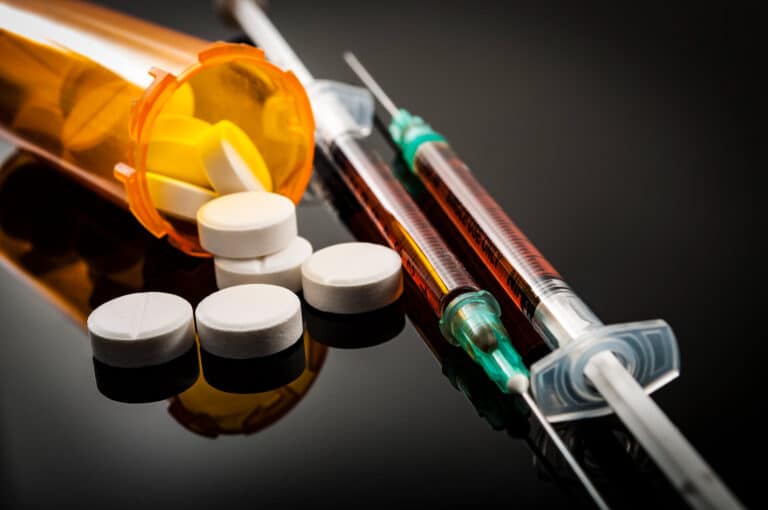
The search for answers about opioid addiction is often born from a place of fear, confusion, and desperation. Whether for oneself or a loved one, taking this step—seeking knowledge and help—is an act of profound strength and courage. It is essential to know that this struggle is not a solitary one. The opioid crisis is a complex and devastating public health emergency that has evolved over decades, touching every community and leaving a wake of shattered lives. It has claimed over a million American lives since 1999, a scale of loss that is difficult to comprehend. This crisis was not…
The search for answers about opioid addiction is often born from a place of fear, confusion, and desperation. Whether for oneself or a loved one, taking this step—seeking knowledge and help—is an act of profound strength and courage. It is essential to know that this struggle is not a solitary one. The opioid crisis is a complex and devastating public health emergency that has evolved over decades, touching every community and leaving a wake of shattered lives. It has claimed over a million American lives since 1999, a scale of loss that is difficult to comprehend.
This crisis was not caused by a collective moral failure, but by a confluence of factors that set a trap for millions. The purpose of this guide is to provide clarity and hope. It will explain how this epidemic began, detail the immense dangers of the substances involved, and, most importantly, illuminate a proven, evidence-based path toward recovery—a path that leads back to a life of health, connection, and purpose.
Understanding the Opioid Landscape
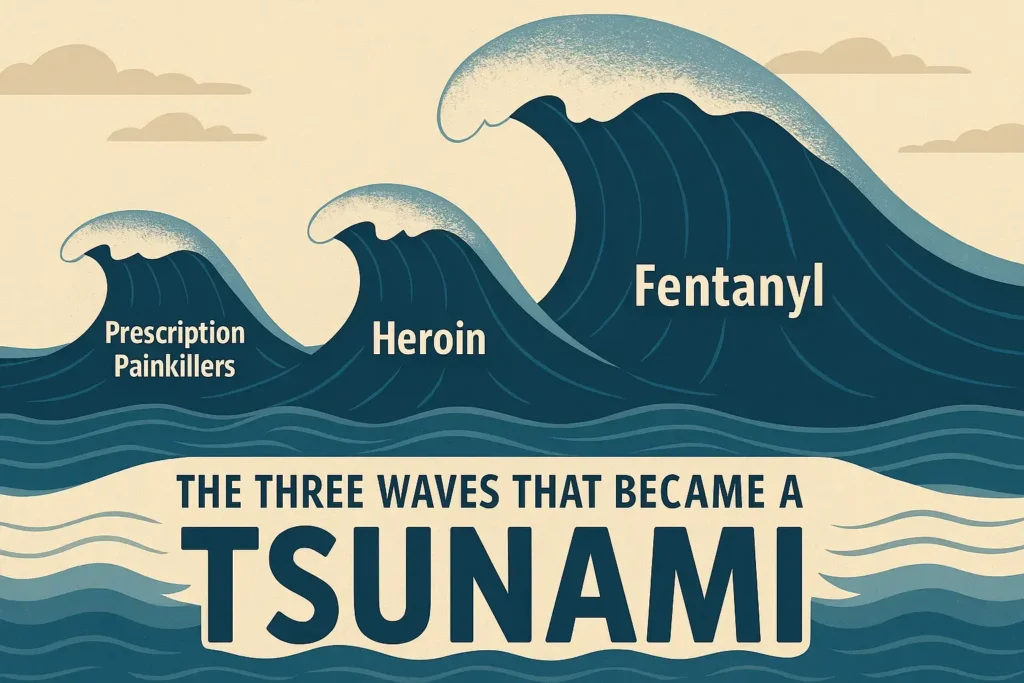
The Three Waves That Became a Tsunami
Today’s devastating opioid crisis did not materialize overnight. Instead, it unfolded in a series of distinct, overlapping waves, each progressively more lethal than the last. Understanding this history is crucial because it reveals how well-intentioned policies, deceptive marketing, and powerful market forces combined to create the current catastrophe.
Wave 1: The Rise of Prescription Painkillers (1990s–2010)
The crisis began in the 1990s with a fundamental shift in how the medical community approached pain. Influenced by advocacy campaigns that promoted “Pain as the 5th Vital Sign” and the aggressive marketing of new opioid formulations like OxyContin, which were purported to be less addictive, doctors began prescribing opioid painkillers at unprecedented rates.
The results were dramatic. Between 1999 and 2010, sales of prescription opioids in the United States quadrupled. By 2012, clinicians wrote 259 million opioid prescriptions—enough for every single adult in the country to have their own bottle of pills. This flood of medication had a direct and tragic consequence: as prescriptions soared, so did misuse and overdose deaths. The rate of opioid-involved overdose deaths doubled between 1999 and 2010. This first wave laid the groundwork for the entire epidemic by creating a large population of people who, often through no fault of their own, had developed a physical dependence and Opioid Use Disorder (OUD) after being treated for legitimate pain.
Wave 2: The Shift to Heroin (2010–2016)
As the death toll from prescription opioids became impossible to ignore, healthcare systems and law enforcement agencies began to take action. They implemented prescription drug monitoring programs and other restrictions to rein in overprescribing. While necessary, this crackdown had an unintended and devastating consequence. It made prescription opioids much harder to obtain and far more expensive on the illicit market.
This policy change did not erase the underlying addiction it had helped create. It simply left millions of people with an untreated medical condition desperate for an alternative. The illicit drug market quickly filled the void. At the same time that pills became scarce, a reliable supply of cheap, potent heroin, primarily from Mexico, became widely available. For individuals struggling with opioid dependence, heroin was a cheaper and more accessible substitute to manage withdrawal and their untreated disorder. The connection is undeniable: approximately 80% of people who use heroin first misused prescription opioids. Consequently, the second wave crashed down. From 2010 to 2016, the rate of heroin-involved deaths increased nearly fivefold, and in 2015, heroin officially surpassed prescription medications as the leading cause of opioid overdose deaths in the United States.
Wave 3: The Fentanyl Catastrophe (2013–Present)
The third wave of the crisis is defined by one substance: illicitly manufactured fentanyl (IMF). Fentanyl is a synthetic opioid, originally developed for severe medical pain, that is 50 to 100 times more potent than morphine. Driven by pure profit, drug trafficking organizations turned to fentanyl because it is cheaper to produce, more potent in smaller amounts, and easier to smuggle than heroin.
This shift fundamentally changed the nature of the danger. Fentanyl began to be mixed into the heroin supply, often without the user’s knowledge, and pressed into counterfeit pills designed to look exactly like legitimate prescription drugs such as oxycodone (Percocet), hydrocodone (Vicodin), or alprazolam (Xanax). People who thought they were taking a familiar substance were, in fact, consuming a lethally potent poison. The result has been catastrophic. In 2016, synthetic opioids, led by fentanyl, surpassed all other opioids as the leading cause of overdose deaths in the U.S.. Today, IMF is the primary driver of the overdose crisis, involved in the vast majority of all opioid-related fatalities. The crisis has evolved from one of misuse to one of mass poisoning.
The Emerging Fourth Wave: A Polysubstance Crisis
The epidemic continues to evolve. Recent data indicates the rise of a fourth wave characterized by the combination of opioids with other substances, particularly stimulants. Overdose deaths involving both fentanyl and stimulants like cocaine or methamphetamine are climbing steeply, highlighting the increasingly toxic and unpredictable nature of the modern illicit drug supply. This polysubstance crisis means that the risk of a fatal opioid overdose now extends to individuals who may not even consider themselves opioid users, dramatically expanding the population at risk.
A Closer Look at the Substances
While all opioids affect the brain in similar ways, their origins, potency, and risk profiles vary dramatically. Understanding these differences is essential to grasping the full scope of the danger.
Prescription Painkillers (e.g., Oxycodone, Hydrocodone, Morphine)
- Origin and Purpose: These medications are derived from the opium poppy or synthesized in labs to mimic its effects. They were developed for legitimate medical use to treat severe pain, such as after surgery or for cancer patients. Formulations like OxyContin were designed for extended release, which was initially believed to make them less prone to abuse.
- Mechanism of Action: They work by binding to opioid receptors in the brain, spinal cord, and other organs, which blocks pain signals and can produce feelings of euphoria and relaxation.
- Path to Dependence: The brain adapts to the presence of these drugs, and even when taken exactly as prescribed, prolonged use can lead to physical dependence. The risk of developing an addiction skyrockets for those on long-term therapy; taking opioids for longer than three months increases the risk of addiction 15-fold. An estimated 3% to 12% of patients treated for chronic pain develop an opioid addiction.
- Dangers of Misuse: Misuse carries significant health risks, including severe drowsiness, mental fog, chronic constipation, and life-threatening respiratory depression (slowed or stopped breathing). Long-term use, especially of products combined with acetaminophen like Vicodin or Percocet, can lead to severe liver or kidney damage.
Heroin
- Origin and Purpose: Heroin is a semi-synthetic opioid processed from morphine, a natural substance extracted from the seed pod of the opium poppy plant. It is a Schedule I drug in the United States, meaning it has no accepted medical use and a high potential for abuse.
- Mechanism of Action: When used, heroin rapidly converts to morphine in the brain, binding to opioid receptors and producing a fast, intense “rush” or wave of euphoria. This rapid and powerful effect on the brain’s reward system makes it exceptionally addictive.
- Dangers of Use: Beyond the immediate risk of a fatal overdose, long-term heroin use causes devastating health consequences. It can lead to the deterioration of the brain’s white matter, impairing decision-making, behavior regulation, and the ability to handle stress. It also creates profound tolerance (needing more of the drug for the same effect) and a severe physical dependence, with excruciating withdrawal symptoms. The risks associated with injecting heroin are also severe, including abscesses, collapsed veins, and infections of the heart lining, as well as the transmission of blood-borne viruses like HIV and hepatitis B and C.
Fentanyl (Illicitly Manufactured)
- Origin and Purpose: Fentanyl is a fully synthetic opioid, meaning it is created entirely in a laboratory. It was first synthesized in 1959 and approved for use as a powerful anesthetic and treatment for severe pain. The fentanyl driving today’s crisis, however, is not diverted from pharmacies but is illicitly manufactured in clandestine labs.
- Mechanism of Action: Like other opioids, it is a potent mu-opioid agonist, but its chemical structure allows it to bind very strongly and effectively to the brain’s opioid receptors. Its potency is almost unimaginable: 50 times stronger than heroin and 100 times stronger than morphine.
- Unprecedented Dangers: The threat from fentanyl comes from a combination of its potency and its deception.
- Lethal Potency: A dose of just 2 milligrams—an amount small enough to fit on the tip of a pencil—can be fatal.
- The Hidden Threat: Illicit fentanyl is odorless, tasteless, and impossible to detect without specialized testing equipment. It is routinely mixed into other drugs, so a person may buy what they believe is heroin, cocaine, or a simple painkiller and receive a deadly dose of fentanyl instead. Many victims of fentanyl overdose never knew they were taking it.
- Rapid Overdose: Because it is so powerful, a fentanyl overdose can occur within seconds or minutes, causing breathing to slow and then stop completely. Its strong binding to opioid receptors means that reversing an overdose may require multiple doses of the life-saving medication naloxone (Narcan).
The Human Cost of the Crisis
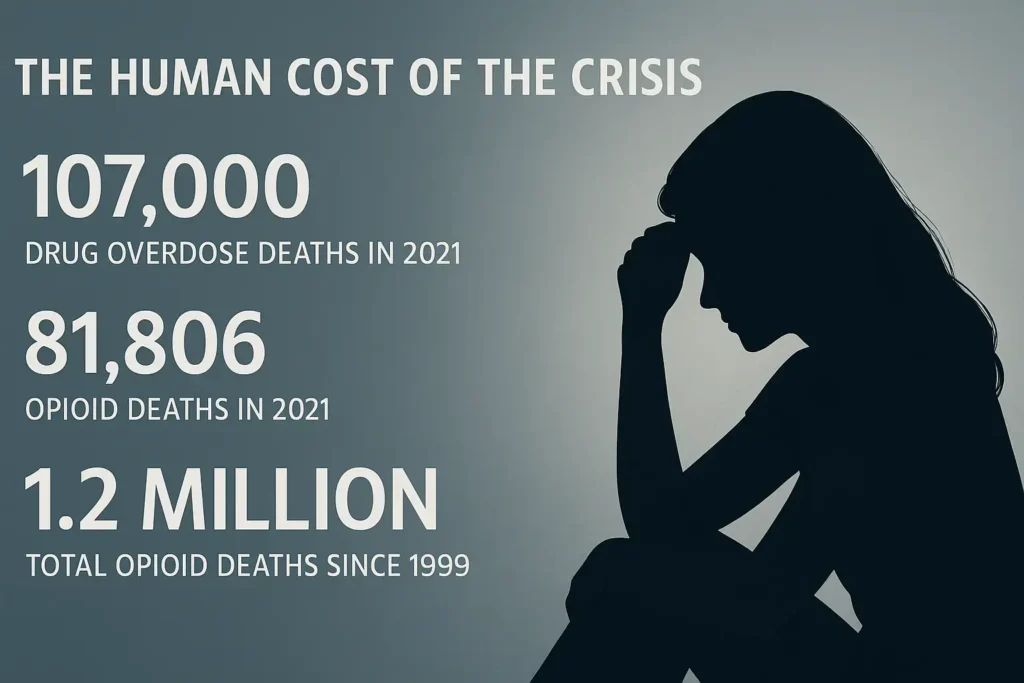
Behind the headlines and policy debates are staggering numbers that represent lost lives, grieving families, and fractured communities. The data paints a grim picture of the epidemic’s true scale.
The Epidemic by the Numbers
The statistics of the opioid crisis are overwhelming, but they are essential for understanding the depth of the tragedy. Since 1999, more than one million people in the United States have died from a drug overdose, a toll driven largely by opioids. In 2022 alone, there were 107,941 overdose deaths, a number that saw only a slight decline to 105,007 in 2023. This is equivalent to a major passenger jet crashing with no survivors, every single day of the year.
Opioids are the primary driver of this mortality, implicated in roughly 75% of all overdose deaths. The data clearly shows the dominance of fentanyl in the current crisis. In 2023, there were 79,358 opioid-related deaths, with illicit fentanyl involved in over 72,000 of them. In stark contrast, heroin was involved in fewer than 4,000 deaths, demonstrating the dramatic shift in the illicit drug supply.
Beyond the fatalities, millions more are living with Opioid Use Disorder. In 2023, an estimated 8.9 million Americans reported misusing opioids in the past year. Yet, a massive treatment gap persists. In one representative year, only 28.6% of people with a diagnosed OUD received any form of specialty treatment. This gap highlights a critical failure to connect those in desperate need with the life-saving care that exists.
| Metric | Statistic |
| Total Drug Overdose Deaths (since 1999) | > 1.15 Million |
| Annual Drug Overdose Deaths (2022) | 107,941 |
| Opioids’ Role in Overdose Deaths | Involved in ~75% of deaths |
| Annual Fentanyl-Related Deaths (2023) | 72,776 |
| Annual Heroin-Related Deaths (2023) | 3,984 |
| Annual Prescription Opioid Deaths (2023) | 13,026 |
| Americans Misusing Opioids (Past Year) | 8.9 Million (3.4%) |
| Treatment Gap (People with OUD receiving specialty treatment) | ~28.6% (2017 data) |
Beyond the Overdose: The Ripple Effects on Lives and Communities
The true cost of the opioid crisis extends far beyond mortality rates. It inflicts deep and lasting wounds on the very fabric of society.
At its core, addiction is a disease of isolation. Research suggests a powerful psychobiological mechanism at play: chronic opioid use can damage the brain’s endogenous opioid system, which is central to forming and maintaining social bonds. The drug provides a temporary, artificial sense of well-being that supplants the need for genuine human connection. This leads to a devastating cycle: the user withdraws from friends and family, the resulting loneliness and pain fuel more substance use, and the isolation deepens. Recovery, therefore, is not just about stopping drug use; it is fundamentally a process of reconnection.
The crisis places an unbearable burden on families. It contributes to child neglect, destabilizes living arrangements, and fuels cycles of intergenerational trauma; children of parents with an addiction are eight times more likely to develop an addiction themselves. The economic costs are equally immense. In 2015, the crisis was estimated to cost the U.S. economy over $504 billion a year in healthcare expenses, lost workplace productivity, and criminal justice involvement. OUD significantly reduces labor force participation, and workers with substance use disorders have higher rates of absenteeism, workplace accidents, and turnover, imposing heavy costs on employers. The healthcare system is strained to the breaking point, with emergency rooms overwhelmed and communities facing rising rates of infectious diseases like HIV and Hepatitis C linked to injection drug use.

The Path to Recovery: A Journey of Healing and Hope
The First Step: Acknowledging the Need for Help
The single greatest barrier to overcoming addiction is often the stigma surrounding it. It is vital to understand that Opioid Use Disorder is not a moral failing or a lack of willpower. It is a chronic, treatable medical condition, much like diabetes or heart disease, that changes brain structure and function. One in 14 Americans reports experiencing a substance use disorder, a clear indication that this is a common health issue, not a rare personal weakness.
Recognizing the signs of a developing problem is the first step toward seeking help. These can include a preoccupation with getting and using the drug, needing more to get the same effect (tolerance), continuing use despite negative consequences, engaging in risky behaviors like driving while impaired, and experiencing physical withdrawal symptoms when use is stopped or reduced. Making the decision to ask for help is an act of immense courage. It is the moment when the fight for one’s life truly begins.
Detoxification: Safely Managing Withdrawal
When a person who is physically dependent on opioids stops using them, their body rebels. This process, known as withdrawal, is a severe and intensely uncomfortable physical and psychological experience. Symptoms often include severe muscle and bone pain, nausea, vomiting, diarrhea, anxiety, insomnia, uncontrollable hot and cold flashes, and an overwhelming craving for the drug.
Attempting to quit “cold turkey” at home is not only excruciating but also incredibly dangerous. The severity of the symptoms makes relapse highly likely. Furthermore, a period of abstinence, even a short one, causes a person’s tolerance to the drug to drop significantly. If they relapse and use their previous dose, their body can no longer handle it, leading to a high risk of a fatal overdose.
This is why medically supervised detoxification is the essential first stage of any effective treatment plan. It is a process conducted in a safe, controlled clinical setting where medical professionals can manage withdrawal symptoms with medication and provide 24/7 support. The goal is to rid the body of its physical dependence as safely and humanely as possible, stabilizing the patient so they are physically and mentally prepared for the real work of rehabilitation. It is critical to understand that detox, by itself, is not a cure for addiction; it is the necessary preparation for comprehensive treatment.
Building a Foundation for Lasting Recovery
Modern, effective addiction treatment is not a single intervention but a comprehensive, multi-pronged approach that heals the whole person. It dismantles the myth that recovery is about willpower and instead focuses on providing the right tools: stabilizing brain chemistry with medication and building essential life skills through therapy.
Medication-Assisted Treatment (MAT) / Medications for Opioid Use Disorder (MOUD)
Considered the gold standard of care for OUD, MAT (also known as MOUD) involves the use of FDA-approved medications in combination with counseling and behavioral therapies. Medications like buprenorphine and methadone are long-acting opioids that work by occupying the same receptors in the brain that drugs like heroin and fentanyl target. However, they do so without producing a euphoric “high.” This action effectively reduces crippling cravings and eliminates painful withdrawal symptoms, allowing a person’s brain chemistry to stabilize. By “feeling normal” again, they are able to fully engage in therapy and rebuild their lives. The evidence for MAT’s effectiveness is overwhelming: individuals receiving treatment with buprenorphine or methadone are 50% less likely to die of an overdose. MAT is proven to reduce illicit opioid use, decrease related criminal activity, and significantly increase the likelihood that a person will remain in treatment.
Behavioral Therapies: Rewiring the Brain for Sobriety
While medication stabilizes the brain, therapy provides the skills needed for long-term sobriety.
- Cognitive-Behavioral Therapy (CBT) is a practical, goal-oriented therapy that helps people identify, challenge, and change the destructive thought patterns and behaviors that fuel their addiction. It teaches concrete coping skills for managing triggers and preventing relapse.
- Dialectical Behavior Therapy (DBT) is another highly effective modality that combines CBT principles with mindfulness practices. DBT is built on four key pillars of skill-building:
- Mindfulness: Learning to be fully present and aware of the moment without judgment.
- Distress Tolerance: Developing the capacity to endure painful emotions, urges, and cravings without resorting to substance use.
- Interpersonal Effectiveness: Learning to communicate needs, set healthy boundaries, and repair relationships damaged by addiction.
- Emotion Regulation: Gaining the ability to understand and manage intense emotions in a healthy way. DBT is particularly powerful for individuals who also struggle with co-occurring mental health conditions like depression, anxiety, or trauma, which are common among those with OUD.
Treating Co-Occurring Disorders
Addiction rarely exists in a vacuum. It frequently co-occurs with other mental health conditions, a situation known as a dual diagnosis. Individuals may use substances as a way to self-medicate the symptoms of untreated depression, anxiety, or post-traumatic stress disorder (PTSD). For treatment to be successful, it is absolutely essential to address both the substance use disorder and the underlying mental health condition simultaneously. Failure to treat the co-occurring disorder is one of the most common drivers of relapse.
Choosing the Right Environment for Healing
The setting where recovery begins can have a profound impact on its success. The two primary settings for addiction treatment are inpatient and outpatient programs.
- Inpatient (Residential) Treatment involves living at a specialized facility for a period of time, typically 30 days or longer. This model offers a structured, 24/7 medically supervised environment, which is critical for individuals with moderate to severe OUD. The key benefits include complete removal from the triggers, stressors, and access to drugs present in one’s daily life, allowing for total focus on healing. The constant support and sense of community built with peers and staff directly counteracts the profound isolation that fuels addiction.
- Outpatient Treatment allows a person to live at home while attending treatment sessions at a facility. This can be an effective option for those with milder substance use disorders or as a “step-down” level of care after completing a residential program to continue receiving support while reintegrating into daily life.
The therapeutic power of the environment itself should not be underestimated. A serene, peaceful setting, away from the chaos of one’s previous life, can be deeply restorative. For example, centers like the Costa Rica Treatment Center leverage their natural, tranquil surroundings to create a restorative atmosphere. Incorporating nature-filled activities and adventure trips provides a holistic healing experience, helping patients reconnect with themselves and the world in a healthy, sober way, which is a core part of their treatment philosophy.
Life After Treatment: The Importance of Continuing Care
Completing an initial treatment program is a monumental achievement, but it is the beginning of the recovery journey, not the end. Addiction is a chronic disease, and like other chronic conditions such as asthma or diabetes, it requires ongoing management to prevent a recurrence. Research shows that relapse rates for addiction are similar to those for other chronic illnesses, underscoring the need for a robust aftercare plan.
A strong aftercare, or continuing care, plan includes several key components:
- Ongoing Therapy: Continuing with individual or group counseling to reinforce coping skills and address life’s challenges as they arise.
- Support Groups: Active participation in peer support networks like Narcotics Anonymous (NA) or SMART Recovery provides an invaluable source of community, accountability, and shared experience.
- Lifestyle Changes: Building a new life centered on purpose and well-being is crucial. This includes prioritizing nutrition and exercise, developing new hobbies, and pursuing educational or career goals that provide a sense of meaning.
Leading treatment programs build this long-term view into their very structure. The Costa Rica Treatment Center, for instance, utilizes a “4 Phases 1 Experience” model. This certified approach guides patients from initial stabilization (Phase 1) and intensive treatment (Phase 2) through to transferring responsibility (Phase 3) and finally, a “Clean Living Experience” (Phase 4). This structure is designed to build a durable foundation for lifelong recovery, ensuring that clients leave not just sober, but equipped with the skills and confidence to thrive.
Your Path Forward Starts Today
The journey out of opioid addiction is undoubtedly challenging, but recovery is not just possible—it is a reality for millions of people. The science of addiction treatment has advanced dramatically, and the evidence-based tools for building a new life free from substance use are more effective and accessible than ever before.
The crushing weight of the opioid crisis can create a feeling of hopelessness, but there is a way out. The path forward begins with a single, courageous step: the decision to ask for help. A compassionate, expert team can provide the guidance needed to navigate this crisis and find a personal path to a healthy, fulfilling, and lasting recovery.