TL;DR: The ancient biblical word pharmakeia, translated as “sorcery,” offers a powerful lens for understanding modern addiction. It describes the use of substances to create a deceptive illusion of control and escape, which is the core of the addictive cycle. This isn’t a condemnation of medicine, but an insight into how addiction acts as a counterfeit spirituality—a misguided search for peace that leads to bondage. True recovery requires a holistic approach that heals the mind, body, and spirit together, addressing the root of this spiritual hunger with genuine connection and purpose. There’s a kind of tired that sleep can’t fix.…
TL;DR: The ancient biblical word pharmakeia, translated as “sorcery,” offers a powerful lens for understanding modern addiction. It describes the use of substances to create a deceptive illusion of control and escape, which is the core of the addictive cycle. This isn’t a condemnation of medicine, but an insight into how addiction acts as a counterfeit spirituality—a misguided search for peace that leads to bondage. True recovery requires a holistic approach that heals the mind, body, and spirit together, addressing the root of this spiritual hunger with genuine connection and purpose.
There’s a kind of tired that sleep can’t fix.
It’s a soul-deep exhaustion. The kind that comes after years of fighting the same losing battle, waking up with the same familiar shame, and promising yourself—for the thousandth time—that today will be different. It’s the madness of being owned by a force you can’t get your arms around, a ghost that lives inside your own skin. You’re afraid to live, but you’re afraid to die, and so you just… exist. Paralyzed.
If you know that feeling, you know that addiction is never just about the substance. It’s not about the bottle, the pill, the powder. It’s about what you’re running from. It’s about the ache. It’s a desperate, frantic search for an anesthetic for a wound you can’t see, a way to silence a scream that no one else can hear.
We all want relief. We all want the pain to stop. Some of us just take different roads to find it.
And maybe that’s why a 2,000-year-old Greek word from the Bible can hit with such shocking clarity today. The word is pharmakeia. It’s a strange word, an ancient word. But it might be one of the most honest words ever written about the spiritual reality of addiction. This isn’t about judgment or condemnation. It’s about turning on a light in a dark room. It’s about finally giving a name to the ghost we’ve been fighting, so we can understand its power and, ultimately, find our way back to ourselves.
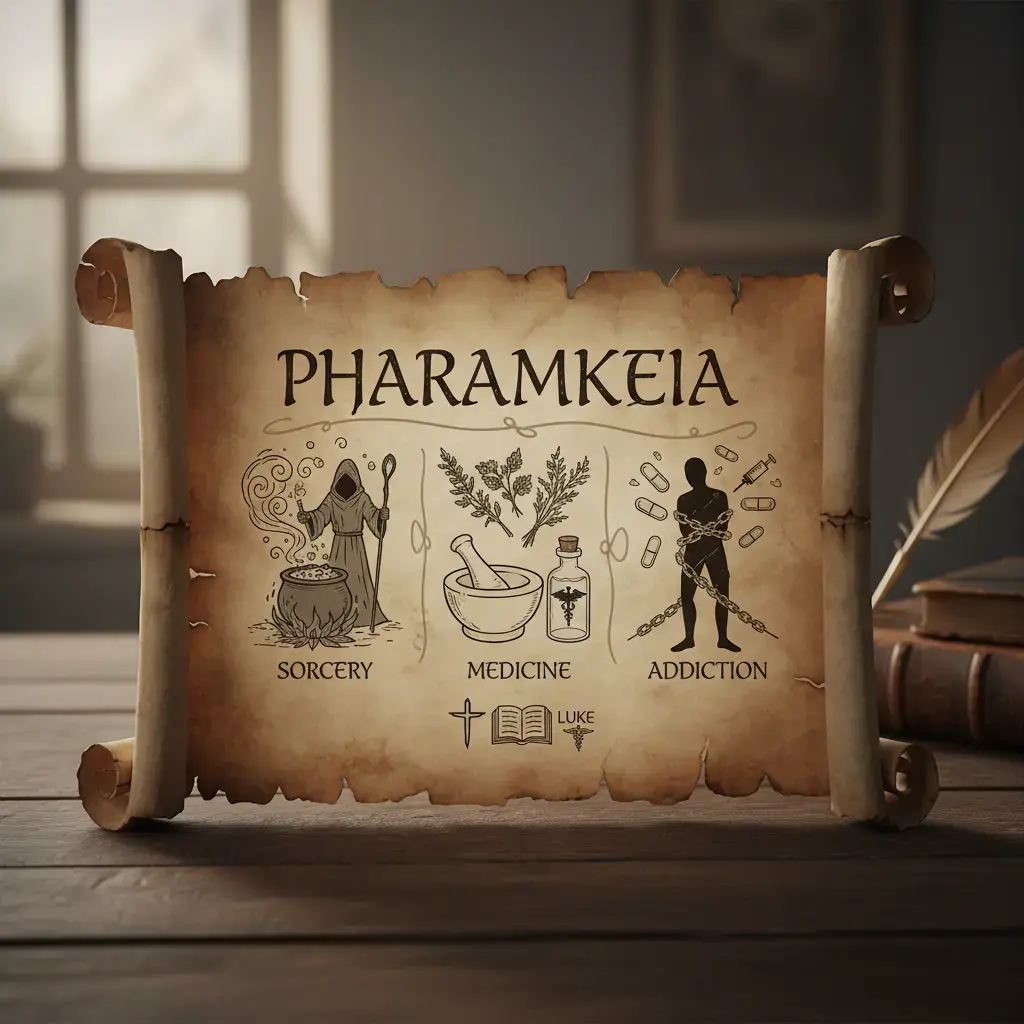
The Meaning of Pharmakeia: Sorcery, Medicine, or Addiction?
Let’s get one thing straight right away. The Greek word pharmakeia is the root for our modern words “pharmacy” and “pharmacist”. And when people hear that, they can get the wrong idea. They can get scared.
So let’s be perfectly clear: understanding pharmakeia is not a condemnation of modern medicine. It’s not a secret command to throw away your antidepressants or your blood pressure medication. The Bible doesn’t prohibit the legitimate, healing use of medicine. In fact, one of the most trusted companions of the Apostle Paul was a man named Luke—a physician. Here at Costa Rica Treatment Center, we are deeply committed to evidence-based practices, to the medical and psychological sciences that bring real, tangible healing.
The Bible makes a crucial distinction, and we have to make it, too. While the root word could refer to the whole spectrum of drugs—from healing remedies to poisons—in the biblical text, pharmakeia is used exclusively to mean something negative. In passages like Galatians 5:20 and throughout the book of Revelation, it’s translated as “sorcery” or “witchcraft”. It’s listed as one of the “works of the flesh,” right alongside things like idolatry, hatred, and fits of rage.
So, what does that mean? Sorcery? It sounds like something out of a fantasy novel.
But think about it in a simpler way. The problem isn’t the potion; it’s the intent behind the potion. Sorcery, in this ancient context, was the attempt to use a substance to create an illusion. It was about mixing a concoction to manipulate reality, to gain power you shouldn’t have, to deceive others, or to conjure up a spiritual experience on your own terms. It was a shortcut. A way to bypass humility, trust, and surrender to get what you wanted, right now.
It was, at its heart, an attempt to control the uncontrollable.
And that… that should feel familiar.

The Deception of Addiction: How Pharmakeia Creates a Cycle of Bondage
The core of pharmakeia—the very essence of its sorcery—is deception. Revelation 18:23 says of the fallen city of Babylon, “by your sorcery all the nations were deceived.”
This is the central, heartbreaking paradox of addiction. The substance whispers a promise of freedom, of peace, of power, of control. It tells you it’s the answer. The one thing you can count on. And for a moment, it feels true. There’s a brief, fleeting illusion of relief.
But it’s a lie. Every single time.
The promise of freedom delivers bondage. The promise of peace delivers chaos. The promise of connection delivers a soul-crushing isolation. The substance that promised to take the pain away becomes the very source of it, creating a vicious cycle of use, shame, and more use to escape the shame. You know that moment… the morning after, when the guilt is so loud it’s the only thing you can hear? That’s the spell breaking. That’s when you see the deception for what it is.
This is why, in the Bible, pharmakeia is so closely linked to idolatry. An idol is anything we put in the place of God. It’s a counterfeit savior. In addiction, the substance becomes our idol. It’s the thing we organize our lives around. It’s what we trust to get us through the day. It’s what we sacrifice our relationships, our integrity, and our health for. We put our faith in it to save us, even as we can feel it destroying us.
This deception leads to a profound loss of self. The person you were, the person you hoped to be, gets buried under the weight of the addiction. You start to feel, as one person in recovery described it, “owned by a force that I couldn’t get my arms wrapped around”. Another man, a physician who lost everything to his addiction, spoke of no longer being the “icon of success” he had worked his whole life to achieve. Instead, he felt “tainted… for the very first time, in my own” eyes.
That is the sorcery. It’s a spell that convinces you that your own destruction is your only salvation. It’s the great deception.
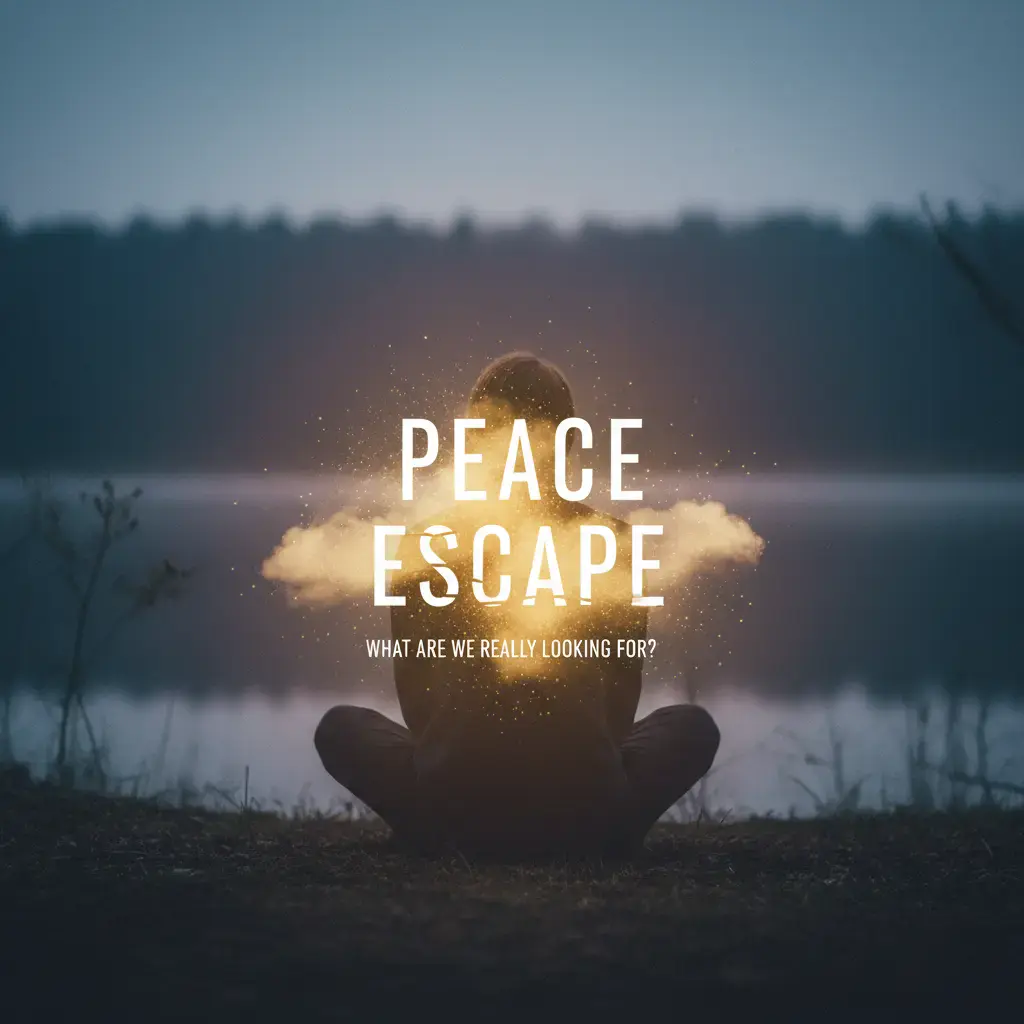
The Spiritual Hunger Behind Addiction: What Are We Really Looking For?
If we’re honest with ourselves, what are we really looking for when we use?
For most of us, it’s not just about a physical sensation. It’s about escape. It’s about quieting the relentless noise in our own heads. It’s about finding a moment of peace, a brief vacation from the crushing weight of being ourselves.
Ancient sorcerers and their followers used potions and mind-altering herbs to induce trances, to see visions, and to try and make contact with the spirit world. It was a search for a spiritual experience, a way to touch something beyond the mundane.
Look at modern addiction through that lens. Isn’t it a similar search? It’s a desperate hunger for transcendence. It’s a way to get outside of our own skin, to numb the ego, to feel connected to something—anything—other than our own pain. It’s a shortcut to a spiritual state. It’s a counterfeit spirituality.
When you see it this way, it changes everything. It shifts the story from one of moral failure to one of a tragic, misdirected search. The desire for peace, for release, for transcendence—that desire isn’t wrong. It’s not shameful. It’s one of the most deeply human things about us. The tragedy of pharmakeia is that we choose a method that can never, ever satisfy that hunger. It only digs the hole deeper, leaving us with what some have called a “spiritual void”.
In a world that often feels disconnected and meaningless, where genuine community and purpose can be hard to find, is it any wonder that so many of us are vulnerable to this deception? The quick, transactional, and reliable “spirituality” offered by a substance can seem like a lifeline in a cold ocean. But it’s a false lifeline, one that pulls us under rather than lifting us up.
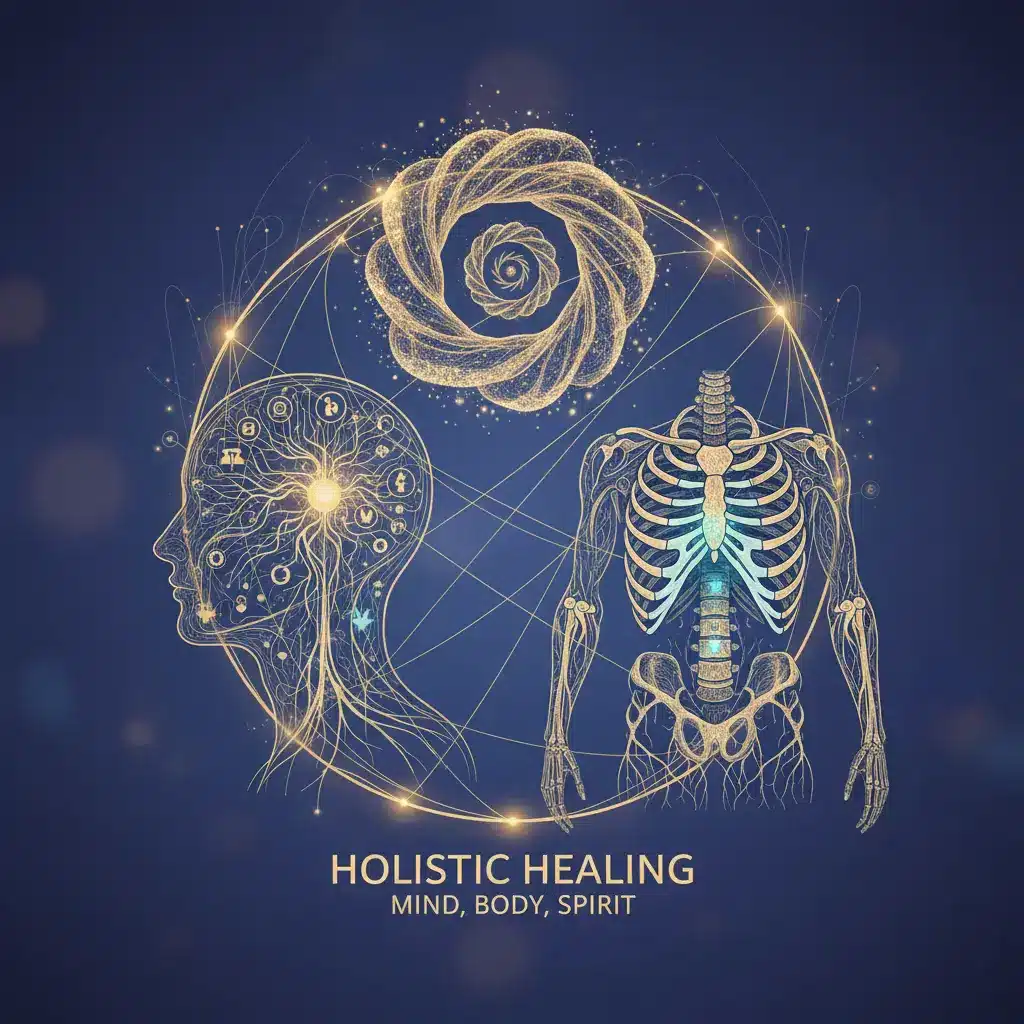
Holistic Addiction Treatment: Healing the Mind, Body, and Spirit
So if the problem is a spiritual deception that hijacks our minds and poisons our bodies, what’s the solution?
It can’t be a partial one. You can’t fix a spiritual wound with just a physical detox. You can’t untangle a psychological deception with just wishful thinking. If pharmakeia is a holistic attack on the human person, then true, lasting healing must also be holistic. It must restore the mind, the body, and the spirit.
This is the entire foundation of our philosophy here at Costa Rica Treatment Center. We believe the only way to effectively heal is to look beyond the obvious symptoms, identify the source of the problem, and focus on the recovery of the whole person.
Healing the Mind: Untangling the Lies
The deception of addiction creates deep grooves in our thinking. It builds a fortress of lies, justifications, and distorted beliefs. The first step in healing is to start dismantling that fortress. This is where evidence-based therapies like Cognitive Behavioral Therapy (CBT) and Rational Emotive Behavior Therapy (REBT) are so vital. They are the practical, powerful tools we use to identify the “spells”—the automatic negative thoughts and core beliefs that keep us trapped—and systematically replace them with truth. It’s the hard, necessary work of learning to see clearly again.
Healing the Body: Rebuilding the Temple
Addiction wages war on the body. It depletes, poisons, and neglects it. You cannot do the deep emotional and spiritual work of recovery if your physical self is in a state of crisis. That’s why healing the body is foundational. It begins with a safe, medically supervised detox to cleanse the body of toxins. But it continues with nutritional therapy to replenish what’s been lost, and practices like yoga and physical exercise to reconnect mind and body, reduce stress, and rediscover physical strength. The body, which was once the vessel for the poison, must be reclaimed as a sacred temple for healing and life.
Healing the Spirit: Filling the Void with Truth
This is the direct answer to the counterfeit spirituality of pharmakeia. True spiritual healing isn’t about a specific religion; it’s about finding what substances only pretend to offer: genuine peace, a sense of purpose, and a connection to something larger than yourself. We foster this through practices that quiet the soul and open the heart. Through spiritual counseling, guided meditation, and mindfulness, you learn to sit with yourself without needing to escape. Through art therapy, you give a voice to feelings that have no words. And through immersion in the profound, healing power of Costa Rica’s natural world—the rainforests, the mountains, the ocean—you experience a connection that is real, grounding, and life-affirming. This is how we fill the spiritual void not with another illusion, but with authentic, lived experience.
How to Start Your Recovery Journey: Finding a New Path to Peace
When you strip it all down, pharmakeia is the timeless, tragic human story of trying to solve a spiritual problem with a material fix. It’s the attempt to heal an inner wound with an outer substance. And it has never, ever worked.
Recovery is the journey of finally giving up that fight. It’s the courageous choice to stop running and start healing—all parts of you. It’s not about becoming perfect. It’s about rediscovering the incredible person who has been buried inside you all along. As J.K. Rowling wrote, “Rock bottom became the solid foundation on which I rebuilt my life”. The past doesn’t have to define you. As another wise voice said, “Though no one can go back and make a brand-new start, anyone can start from now and make a brand-new ending”.
Maybe you’re reading this and that soul-deep exhaustion is all you feel. Maybe the idea of making a phone call or asking for help feels like climbing a mountain.
That’s okay.
Maybe today, the first step isn’t a phone call. Maybe it’s just a quiet moment. A single, honest breath where you finally admit to yourself, or to God, or to the quiet room around you, “I’m tired of this.”
That’s it. That’s the beginning of the end of the deception.
That’s where the healing starts.
You’re not alone. When you’re ready, we’re here to help.
Frequently Asked Questions About Pharmakeia and Addiction
What does the biblical term ‘pharmakeia’ mean? In the Bible, the Greek word pharmakeia is translated as “sorcery” or “witchcraft”. It refers to the practice of using drugs or potions to manipulate reality, create illusions, or engage in pagan rituals. The term carries an exclusively negative meaning in scripture, associated with deception and idolatry.
Does the Bible forbid taking medicine for healing? No. The Bible does not condemn the legitimate use of medicine for healing. The condemnation of pharmakeia targets the deceptive and spiritually harmful use of substances for occult purposes, not proper medical care. The apostle Paul’s own companion, Luke, was a physician, highlighting that medicine itself is not seen as sinful.
How does ‘pharmakeia’ relate to modern drug and alcohol addiction? Pharmakeia relates to modern addiction through the concept of deception. Addiction promises freedom, peace, and control but delivers the opposite: bondage, chaos, and isolation. This cycle mirrors the “sorcery” of pharmakeia—an illusion that convinces a person their own destruction is their only source of relief. It becomes a form of idolatry, where a substance is trusted as a counterfeit savior.
What is a holistic approach to addiction recovery? A holistic approach treats the whole person—mind, body, and spirit—rather than just the physical symptoms of addiction. This integrated model combines evidence-based therapies like CBT to heal the mind, practices like nutritional therapy and exercise to restore the body, and spiritual exploration through meditation, nature, or counseling to address the inner void that often drives addiction.
What are the first steps to take if I’m struggling with addiction? The first step is often the simple, courageous act of admitting you need help. Breaking the cycle of shame and isolation is critical. The next step is to reach out for support, whether it’s to a trusted friend, family member, or a professional treatment center. You don’t have to go through it alone, and help is available.