TL;DR: The short answer is yes, the statistics overwhelmingly show that religion and spirituality can significantly help with addiction recovery. Major studies reveal that for a vast majority of people, faith acts as a powerful protective factor against substance abuse, with nearly three-quarters of U.S. treatment programs incorporating a spiritual element. This isn’t about magic; it’s about tangible benefits like finding a supportive community, a new sense of purpose, and practical coping skills like prayer and meditation. However, “religion” isn’t a one-size-fits-all solution, and for many, a more personal “spirituality” is the key. The goal is to find a path…
TL;DR: The short answer is yes, the statistics overwhelmingly show that religion and spirituality can significantly help with addiction recovery. Major studies reveal that for a vast majority of people, faith acts as a powerful protective factor against substance abuse, with nearly three-quarters of U.S. treatment programs incorporating a spiritual element. This isn’t about magic; it’s about tangible benefits like finding a supportive community, a new sense of purpose, and practical coping skills like prayer and meditation. However, “religion” isn’t a one-size-fits-all solution, and for many, a more personal “spirituality” is the key. The goal is to find a path that works for you, whether it’s faith-based, secular, or something in between.
Finding Your Path: A Quick Look at the Options
The beauty of modern recovery is the understanding that there are many paths to the same destination. The concept of a “Higher Power” in many programs is intentionally left open to interpretation. It’s about finding something—anything—to rely on that is bigger than your own exhausted, addicted self. The goal isn’t to convert you; it’s to connect you. To help you find a source of strength that works for you. To show you the sheer diversity of options available, we’ve put together a simple guide to some of the most common spiritual and secular pathways.
| Path | Core Philosophy | Approach to “Higher Power” | Key Practices |
| Traditional 12-Step (AA/NA) | Surrender and acceptance. Addiction is a disease you are powerless over alone. | A “Higher Power” as you understand them. Spiritually-based but open to personal interpretation. | Steps, sponsorship, meetings, service. |
| Celebrate Recovery | A Christ-centered 12-step program for any “hurt, habit, or hang-up”. | Explicitly names Jesus Christ as the source of healing and recovery. | 8 Principles (from the Beatitudes), Bible study, meetings. |
| Buddhist Recovery (Refuge/Dharma) | Mindfulness and self-awareness. Addiction is a form of suffering caused by craving. | Non-theistic. The “refuge” is found in the teachings (Dharma), the community (Sangha), and inner awakening. | Meditation, mindfulness, inquiry (inventory), community. |
| Secular Programs (SMART Recovery) | Self-empowerment through cognitive tools. Individuals have the power to change their thinking and behaviors. | No “Higher Power.” Focus is on internal strength, rational thinking, and evidence-based techniques. | Cognitive Behavioral Therapy (CBT) tools, group discussion, goal setting. |

Does Religion Really Help with Addiction? Starting with the Honest Question
It’s 3 a.m. The house is dark, the world is quiet, and you’re wide awake. Again.
If you’re reading this, you probably know this moment. It’s the one where the party has ended, the excuses have run out, and all you’re left with is the hollowed-out feeling in your chest. It’s a moment of terrifying clarity. You’re alone with the mess, and you have no idea how to start cleaning it up.
And in that quiet desperation, a thought might flicker across your mind. It might feel foreign, maybe even a little ridiculous.
Should I pray?
For some, that question is a lifeline, a familiar comfort. For others, it’s an eye-roll, a bitter reminder of a faith that let them down or never made sense in the first place. And for many, it’s just… a last resort. The thing you try when you’ve tried everything else and you’re, as one person put it, simply “at your wit’s end”.
Let’s be honest. The idea of praying your way out of something as brutally physical and psychological as addiction can feel a little thin. Can something as intangible as faith really stand up to the raw power of withdrawal, the relentless pull of craving?
I’m not here to preach or give you a Sunday school lesson. I’m here because we see people walk through our doors every day carrying this same question, whether they say it out loud or not. They’re skeptical, hopeful, hurt, and exhausted, all at the same time. One woman, Tabitha, put it this way after finding herself in a jail cell: “I needed Jesus, so I cried out to Him… That is where I found… the healing I have always searched for”. Her cry wasn’t one of pious devotion; it was a cry of pure, unfiltered desperation.
That’s the place we’re going to start from. Not from a place of certainty, but from a place of honest questioning. Because what we’ve learned is that the turn toward something bigger than yourself—whether you call it God, spirituality, or just a last-ditch hope—often begins not with a leap of faith, but with the feeling of a hard landing. It starts when you realize your own power isn’t enough, because you’ve tried it, and it has failed you, spectacularly. So, let’s explore this together. Does faith have a place in recovery? Let’s look at what the evidence, and more importantly, what real human experience, has to say.

When Religion Doesn’t Help with Addiction: A Look at Judgment and Shame
Before we go any further, we have to talk about the elephant in the room. For a lot of people, the word “religion” doesn’t bring to mind comfort and healing. It brings to mind judgment, shame, and guilt.
Maybe you grew up in a church where addiction was seen not as a sickness, but as a sin. A moral failing. A weakness of character. You weren’t sick; you were bad. And when you tried to reach out for help, you were met with pious platitudes or, worse, quiet condemnation. If that’s your experience, it’s no wonder you’d want to run in the opposite direction of anything that smells like organized religion. Some studies even acknowledge that these kinds of negative religious experiences can actually be a contributing factor to substance abuse for some people.
This is where a really important distinction comes in, one that’s at the heart of modern, effective recovery: the difference between religion and spirituality.
Think of it this way:
- Religion is often the institution. It’s the building, the specific set of rules, the dogma, the organized structure. It’s a shared system of belief.
- Spirituality, on the other hand, is the personal experience. It’s your individual connection to something larger than yourself. It’s that sense of meaning, purpose, and awe. It’s the feeling you get watching a sunset over the ocean in Costa Rica, the connection you feel in a yoga class, or the peace you find walking through a forest.
You can be religious without being spiritual, and you can definitely be spiritual without being religious. One study of people with alcohol use disorders found that the single most helpful thing they identified in their recovery was “spirituality (and not religion)”.
The conflict often boils down to two competing ideas about addiction. Some religious frameworks see it through a “moral model”—as a choice, a failure of will. Modern treatment, including the work we do here at Costa Rica Recovery Center, sees it through a “disease model”—as a chronic brain disorder that requires medical and psychological care.
These two ideas seem like they’re at war. But what if they’re not? A truly holistic approach understands that a person can have a brain disease and a wounded spirit. The two aren’t mutually exclusive. Our philosophy is simple: we treat the disease with the best evidence-based science available. And we create a safe, non-judgmental space for you to heal the emotional and spiritual wounds in whatever way feels authentic to you.
So, this conversation isn’t about forcing you into a box. It’s about giving you more tools for your toolbox.

A Look at the Statistics: What the Science Says About Religion and Addiction
Look, I get the skepticism. I’ve been there. But I’m also a big believer in looking at what actually works. So, let’s put feelings aside for a minute and just look at the numbers. Because when researchers have studied this question, the results have been surprisingly consistent and, honestly, pretty powerful.
When Brian and Melissa Grim, two leading researchers, did a massive review of the scientific literature, what they found was stunning. They looked at hundreds of separate, peer-reviewed studies on faith and addiction. The results?
- An incredible 84% of 185 studies on drug use found that faith was a protective factor, helping to prevent and reduce abuse.
- Similarly, 86% of 278 studies on alcohol abuse showed that faith reduced the risks.
Let that sink in. We’re not talking about a handful of studies. We’re talking about hundreds. And the conclusion was overwhelmingly clear: for the vast majority of people, faith and spirituality are a positive force in recovery. In fact, in less than 2% of the studies did faith appear to be a risk factor.
And this isn’t some fringe idea. It’s baked into the recovery landscape in the United States. The same research found that nearly three-quarters—a full 73%—of addiction treatment programs in the U.S. incorporate spirituality, usually through 12-step programs that emphasize reliance on a Higher Power.
Even the big government-funded studies back this up. The National Institute on Drug Abuse (NIDA) conducted a massive project called the Drug Addiction Treatment Outcome Study. They followed thousands of people over time. A key finding was that those with higher levels of spirituality had significantly lower relapse rates. Across the board, for substances like cocaine, heroin, alcohol, and marijuana, the more spiritual participants reported between 7% and 21% less use at the 12-month follow-up.
So, something is clearly going on here. This isn’t just wishful thinking or a placebo effect. The data is too strong and too consistent. It begs the question: why? What is it about this seemingly abstract concept that produces such concrete, measurable results?
It’s not magic. It’s about how we’re wired.
A Look at Why Religion Helps with Addiction: It’s Not Magic, It’s How We’re Wired
The power of spirituality in recovery isn’t some mystical secret. It works by directly addressing the core wounds of addiction—psychologically, socially, and even neurologically. It gives us tangible tools to rebuild what addiction has torn down.
Here’s what we mean.
Finding Your People: A Statistical Look at Community
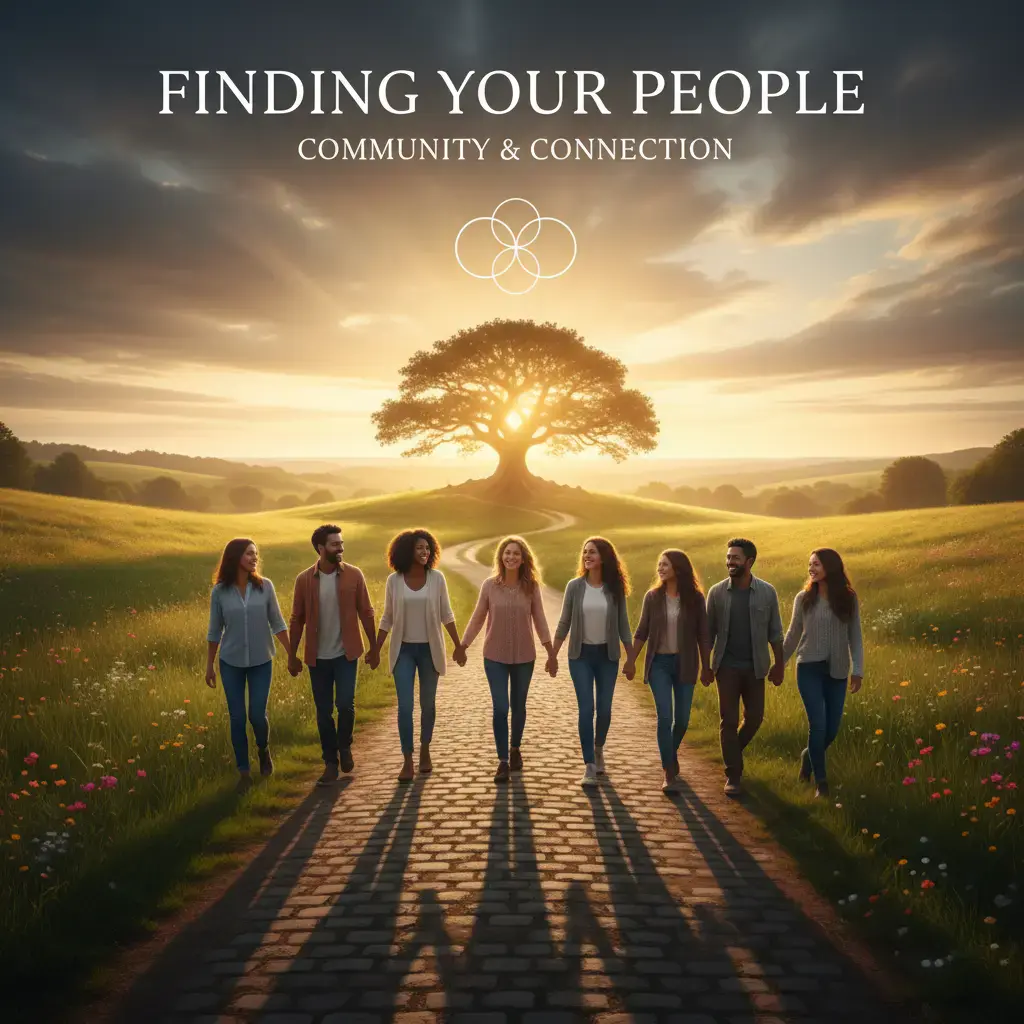
Addiction is, above all else, a disease of isolation. It shrinks your world until the only thing left in it is you and your substance. It whispers that you’re alone, that no one understands, that you’re better off hiding. Spirituality does the exact opposite: it calls you back into community.
Faith-based groups, whether it’s a church, a synagogue, a meditation circle, or a 12-step meeting in a church basement, provide a built-in social network. But it’s a special kind of network. It’s a community of people who get it. They’ve been in that 3 a.m. darkness. You don’t have to explain the shame or the desperation. You just have to show up. This sense of belonging directly fights against what sociologists call “anomie”—a state of normlessness and social disconnection that allows addiction to thrive.
In fact, that big NIDA study we mentioned? It found that the single strongest factor linking spirituality to lower relapse rates was attending weekly religious services—the one marker that involves the most social interaction and bonding. It’s not just about what you believe; it’s about who you believe it with. This community provides support, accountability, and, most importantly, a living, breathing reminder that you are not alone.
Finding a ‘Why’: A Statistical Look at Purpose
From a brain science perspective, addiction is a disease of hijacked motivation. It rewires the brain’s reward system, particularly a circuit involving the basal ganglia and prefrontal cortex. Normally, this system motivates us to pursue things essential for survival, like food and connection, by releasing the neurotransmitter dopamine. But drugs and alcohol flood this system with an unnatural surge of dopamine, tricking the brain into thinking the substance is the most important thing for survival. The drug becomes your “why.” It’s your purpose. It’s the organizing principle of your entire life.
To get well, you need a new “why.” A “why” that’s bigger, more meaningful, and more sustainable than the high.
This is where spirituality provides a powerful neurological competitor to the drug. It offers a transcendent sense of purpose. For some, that purpose comes from a relationship with God and a desire to live according to His will. For others, it comes from a commitment to service—helping the next person who’s struggling. For still others, it’s found in a deep connection to nature, art, or a set of ethical principles.
It doesn’t matter what the specific purpose is. What matters is that it gives your brain a new, healthier job to do. It re-engages those motivation circuits and points them toward something life-affirming. This isn’t just a nice idea; it’s a form of applied neuroplasticity. You are actively giving your brain a new direction, rewiring it for recovery instead of relapse.
Finding Your Footing: A Statistical Look at Coping
Recovery is lived one moment at a time. It’s lived in the flash of anger when someone cuts you off in traffic, the wave of anxiety before a big meeting, or the pang of loneliness on a Saturday night. These are the moments when the old wiring screams for the old solution.
Spiritual practices like prayer, meditation, and mindfulness are, at their core, powerful tools for emotional regulation. They are practical, in-the-moment techniques that help you manage stress and create a crucial space between a trigger and your reaction.
Think about it:
- Prayer can be a way of externalizing your anxieties, handing them over to something bigger than yourself, which can provide immense relief.
- Mindfulness trains you to observe your thoughts and feelings without immediately acting on them. You learn to watch a craving rise and fall like a wave, without getting swept away by it.
- Meditation helps calm the nervous system and strengthens the prefrontal cortex—the part of your brain responsible for impulse control and decision-making, which is often weakened by chronic substance use.
These aren’t passive rituals. They are active mental exercises that build resilience. They are the emotional push-ups that make you stronger. They give you a place to stand when the ground beneath you starts to shake, allowing you to choose a different response instead of automatically reaching for a substance.
The Bottom Line on the Statistics: Does Religion Help with Addiction? It’s About What Helps You.
So, after all this—the stories, the science, the different paths—what’s the bottom line?
It’s this: The data strongly suggests that connecting to something larger than yourself is a powerful, and often essential, part of sustainable recovery.
But the name you give that connection is far less important than the effect it has on your life. One fascinating study looked at people in both 12-step and non-12-step groups and found that the “active ingredients” for success were the same across the board. Things like social support, developing new interests, and a positive change in your sense of self were equally important, regardless of the group’s philosophy.
The label on the bottle doesn’t matter as much as what’s inside.
This is the very heart of our philosophy at Costa Rica Recovery Center. We don’t believe in a one-size-fits-all approach, because we’ve never met a one-size-fits-all person. Our job is not to give you a belief system. Our job is to provide you with world-class clinical care—the evidence-based therapies that heal the brain—in a compassionate, beautiful environment that gives you the space to discover your personal “why.”
We have a multidisciplinary team of psychologists, doctors, occupational therapists, yoga instructors, and even a certified Forest Therapist. We offer these diverse tools because we know that recovery is not just about stopping a behavior. It’s about building a new life. A life that feels so meaningful, so connected, and so authentic that the old way of coping no longer has any power over you.
Beyond the Statistics: How Religion (or Something Like It) Can Help You, Starting Now
You’ve just taken in a lot of information. It might feel overwhelming, and that’s okay. You don’t have to have it all figured out today. The journey of a thousand miles, as they say, begins with a single step.
So before you click away, just take a breath. A real one. Inhale. Exhale.
The only question that matters right now is this: What is one small thing that could bring a little bit of peace or meaning into your life, just for today?
Maybe it’s putting on a piece of music that moves you. Maybe it’s stepping outside and feeling the sun on your face for five minutes. Maybe it’s calling a friend you haven’t spoken to in a while. Maybe it’s just sitting in silence and asking for help, to whatever or whomever you think might be listening.
That’s it. That’s the start of a spiritual practice. That’s the beginning of the path back to yourself.
When you’re ready to talk about what the next steps on your path could look like, we’re here. No judgment, no pressure. Just help.
Frequently Asked Questions (FAQ)
What do the statistics actually say about religion and addiction recovery?
The numbers are quite compelling. A major review of hundreds of scientific studies found that faith is a significant positive factor in recovery. Specifically, 84% of 185 studies on drug use and 86% of 278 studies on alcohol abuse showed that faith helped prevent and reduce substance abuse. This is reflected in treatment practices, as 73% of addiction treatment programs in the U.S. include a spirituality-based element.
Are there any large-scale government studies that support these findings?
Yes. The National Institute on Drug Abuse (NIDA) conducted a major study called the Drug Addiction Treatment Outcome Study (DATOS). It found that individuals with higher levels of spirituality had significantly lower relapse rates. At a 12-month follow-up, more spiritual participants reported between 7% and 21% less use of substances like cocaine, heroin, alcohol, and marijuana compared to less spiritual participants.
How exactly does faith or spirituality help? Is it just about believing in God?
It goes much deeper than just belief. The benefits are tied to tangible psychological and social tools. Spirituality provides a strong sense of community and social support, which combats the isolation of addiction. It also offers a renewed sense of purpose and meaning in life, which can be a powerful motivator for staying sober. Finally, spiritual practices like prayer and meditation are effective coping mechanisms for managing stress and regulating emotions, which are crucial skills for preventing relapse.
Do you have to be religious for treatment to work? What do the stats say about secular programs?
No, you do not have to be religious. While spiritual 12-step programs have been shown to be as effective or slightly more effective than some other therapies, secular programs are also a valid and successful path to recovery. Research shows that the “active ingredients” for success—like social support, developing new interests, and a positive change in your sense of self—are often the same for both 12-step and non-12-step groups. The most important factor is finding a program that aligns with your personal values and needs.
Can religion ever be unhelpful for addiction?
Yes, in some cases. For individuals who have had negative experiences with religion, such as judgment or shame, it can sometimes be a contributing factor to substance abuse. This is why the distinction between rigid, institutional religion and personal, authentic spirituality is so important. A healthy spiritual path should foster healing and acceptance, not guilt.