
The Recovery Mandala: Finding Wholeness Through Recovery, Unity, and Service Life in active addiction often feels like living among shattered fragments. It’s a state of internal chaos, a disorienting whirlwind where the center cannot hold. You may know this feeling intimately: a sense of being scattered, disconnected from yourself, from others, and from any sense of purpose or peace. It is the “spiritual malady” so many have described, a feeling of being fundamentally off-kilter, lost without a map or a compass. The pieces of your life—your relationships, your health, your spirit—lie strewn about, and the path to putting them back…
The Recovery Mandala: Finding Wholeness Through Recovery, Unity, and Service
Life in active addiction often feels like living among shattered fragments. It’s a state of internal chaos, a disorienting whirlwind where the center cannot hold. You may know this feeling intimately: a sense of being scattered, disconnected from yourself, from others, and from any sense of purpose or peace. It is the “spiritual malady” so many have described, a feeling of being fundamentally off-kilter, lost without a map or a compass. The pieces of your life—your relationships, your health, your spirit—lie strewn about, and the path to putting them back together seems impossibly obscure.
In this place of profound disorientation, ancient wisdom offers a powerful symbol of hope: the mandala. In Sanskrit, the word mandala means “circle,” and for thousands of years, across cultures from Tibetan Buddhism to Native American healing traditions, it has served as a sacred map of the cosmos and the self. A mandala is a representation of wholeness, a visual tool for establishing a sacred space, focusing the mind, and guiding a journey of transformation from chaos back to a stable, integrated center. It is a compass for the soul.

This ancient symbol finds a potent, modern echo in the heart of 12-step philosophy. The emblem of Alcoholics Anonymous is itself a simple, powerful mandala: a circle enclosing an equilateral triangle. The circle represents the entire, inclusive world of the fellowship, a boundless space of belonging. The triangle’s three equal sides stand for the Three Legacies that form the foundation of a new life: Recovery, Unity, and Service. This is no accident. As the founders of AA noted, seers of antiquity saw the circle enclosing a triangle as a means of warding off evil; for those in recovery, it has come to mean freedom from a fatal obsession.
Here at the Costa Rica Treatment Center, we see this living metaphor reflected all around us. The lush, vibrant ecosystem of our home is a magnificent, breathing mandala. The interconnected roots of the rainforest, the rhythmic cycles of the ocean tides, and the intricate web of life where every creature plays a vital role all speak to a profound, natural harmony. This tranquil and supportive environment becomes the canvas upon which you can begin to draw your own design for a new life. Your healing journey is supported not just by philosophy, but by the serene, restorative power of the natural world itself—a core belief in our holistic approach to wellness.
This journey is not about erasing the broken pieces of your past. It is about learning the sacred art of gathering them, understanding them, and integrating them into a new, more beautiful, and stronger whole. It is the art of creating your own recovery mandala. As Mahatma Gandhi wisely said, “As human beings, our greatness lies not so much in being able to remake the world as in being able to remake ourselves”.
The Center Point (Bindu) – The Courage of RECOVERY
Every mandala begins with a single point. In Hindu and Buddhist traditions, this center is called the bindu—a Sanskrit term for a dot or point that is considered the origin of all creation. It is the dimensionless seed from which the entire intricate, symmetrical cosmos of the mandala expands. It is the beginning of contemplation, the first mark of intention on a blank canvas.
The first legacy, Recovery, is the courageous act of creating this center point. It is the profound, internal work of healing that forms the core of your new life. The 12 Steps of recovery are not a rigid checklist to be completed, but rather the patient, mindful, and deeply spiritual process of drawing the innermost patterns of your true self.
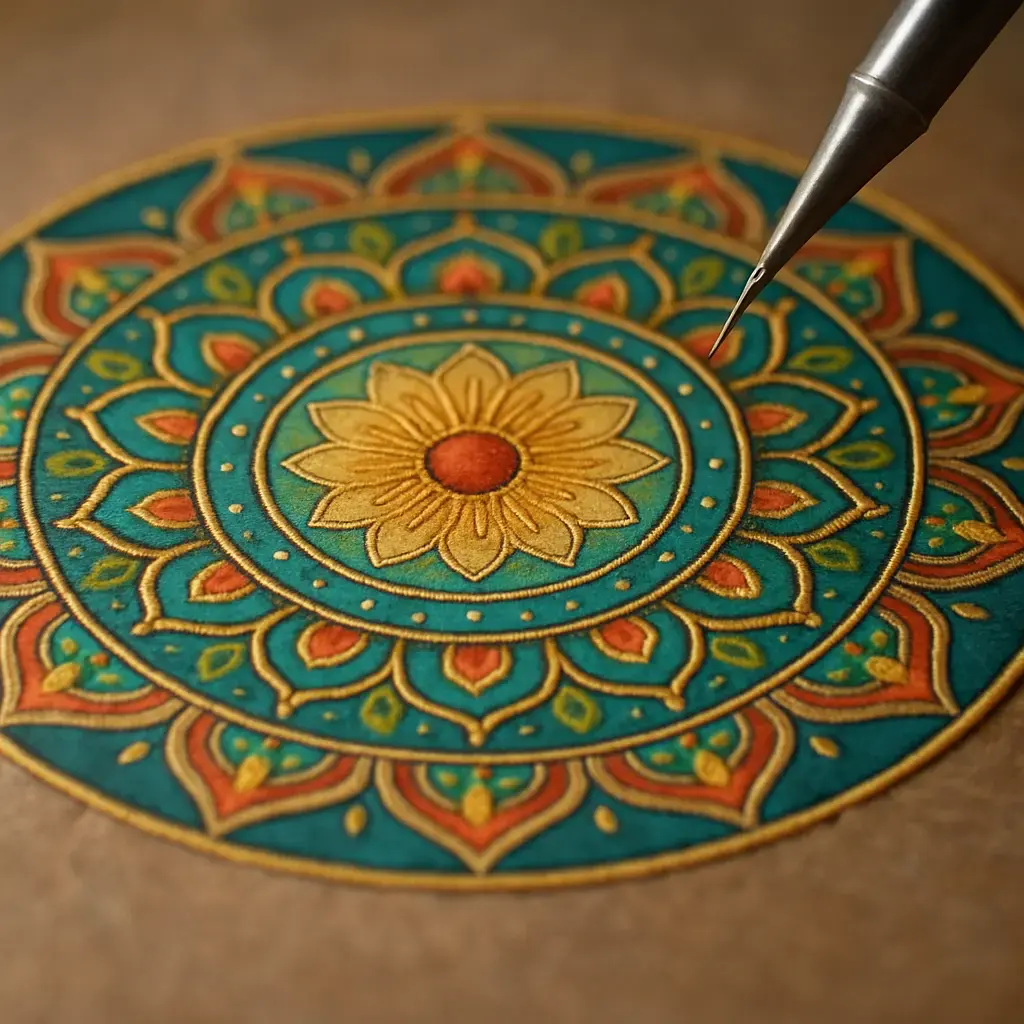
The 12 Steps as Mindful Artistry
Think of the 12 Steps as the sacred geometry of the soul. Each step is a deliberate stroke, a mindful choice that brings order and beauty out of the chaos of addiction.
Step 1: The First Mark on the Canvas. The journey begins with the words, “We admitted we were powerless… that our lives had become unmanageable”. This is the bravest mark an artist can make: the first dot on an empty page. It is an act of profound honesty, an admission that the old design of your life is broken and a new one must be created. It is here, in this moment of surrender, that the bindu of your recovery is born.
This concept of “powerlessness” is often misunderstood. It is not an admission of failure or a declaration of permanent defeat. Rather, it is a profound act of creative surrender. In active addiction, the ego’s frantic attempts to control an unmanageable life only lead to more fragmentation and chaos. The mandala, by contrast, is a symbol of order, balance, and a stable center, created through a meditative process that brings harmony out of disarray. Admitting powerlessness is the essential first step in this creative process. It is the honest acknowledgment that you, the artist, cannot create a beautiful new design using the old, broken tools of ego and self-will. This surrender is not to hopelessness, but to a “Power greater than ourselves”. In the language of psychology, this can be understood as the Self—the psyche’s deep, organizing principle that constantly strives for wholeness and integration. Therefore, Step 1 is the most crucial creative act of all: clearing the canvas to allow a truer, more beautiful pattern to emerge from the center.
Steps 4 & 5: Sketching the Inner Landscape. The work continues with making a “searching and fearless moral inventory” and admitting “the exact nature of our wrongs”. This is the intricate process of sketching the patterns of your inner world with unflinching honesty. It is about mapping your own psyche, bringing hidden emotions, conflicts, and desires into the light of conscious awareness. Like an artist studying their subject from every angle, you begin to see the complex, sometimes shadowy, and beautiful truth of who you are.
Steps 6-11: Applying Color and Form. The subsequent steps—from becoming ready to have defects of character removed, to making amends, to seeking conscious contact through prayer and meditation—are the acts of applying color, texture, and intentional form to your mandala. This is where you begin to transform the “shadows in the pattern” into integrated, essential parts of a new whole. This process is beautifully mirrored in the Japanese art of
Kintsugi, the practice of repairing broken pottery with lacquer mixed with powdered gold. Instead of hiding the cracks,
Kintsugi highlights them, celebrating the object’s history and making it more beautiful and resilient than before. Your past harms, your character defects, your struggles—these are not blemishes to be hidden in shame. Through the work of these steps, they become the golden seams that give your recovery mandala its unique strength, depth, and beauty.
The ultimate goal of this legacy, as AA co-founder Bill W. stated, is to expel the obsession and “enable the sufferer to become happily and usefully whole”. This journey of recovery is a profound psychological integration. The renowned Swiss psychiatrist Carl Jung, who was instrumental in bringing the mandala to Western psychology, saw it as a spontaneous expression of the Self. He believed that creating mandalas was a powerful therapeutic tool for achieving
individuation—the lifelong process of integrating the conscious and unconscious aspects of our psyche into a unified, balanced whole. The 12 Steps of Recovery provide a practical, spiritual framework for this very same psychological journey.
This intense, sacred inner work requires a sanctuary. Here in Costa Rica, the tranquility of nature provides the “sacred space” needed for this deep self-reflection to unfold safely. Our holistic approach is designed to support you as you begin to draw your center, nurturing the physical, mental, and spiritual dimensions of your healing so that a strong, vibrant bindu can form—the foundation for a lifetime of recovery.
The Expanding Symmetries – The Strength of UNITY
A mandala does not end at its center point. From the bindu, the design expands outward in concentric layers of stunning, interconnected patterns. It is this radial balance and symmetry that gives the mandala its visual harmony and structural integrity. This outward expansion perfectly symbolizes the second great legacy of recovery:
Unity. This is the journey from solitary, internal work to the healing power of external connection.
If Recovery is the center point, Unity is the sacred geometry that radiates from it. The fellowship of 12-step programs is the living embodiment of these repeating, harmonious patterns. When you enter a meeting, you are no longer an isolated point. You become part of a larger design. Each person is a vital part of the circle, and the shared stories, mutual support, and common purpose—the simple, profound principle of “one alcoholic helping another”—create a design of immense strength and beauty. The 12 Traditions are the geometric principles that ensure this life-saving pattern remains balanced, cohesive, and strong for generations to come.

Unity is not merely a source of emotional comfort; it is the spiritual and structural architecture that makes individual recovery sustainable. The AA symbol itself places the triangle of the legacies inside the circle of the worldwide fellowship, visually demonstrating that the whole is the container for the individual’s journey. This is powerfully affirmed in the First Tradition: “Our common welfare should come first; personal recovery depends upon A.A. unity”. The principle is clear: the health of the community directly enables the healing of the individual.
In a mandala, a single, isolated dot is fragile. Its strength is derived from its relationship to all the other points and its place within the larger, symmetrical pattern. The repetition and balance create unshakable stability. Likewise, a person in early recovery is vulnerable. When you connect with the fellowship, you become part of this larger, stronger structure. You draw strength from the shared experience, the collective wisdom, and the loving accountability of others who have walked the same path. You realize you are not alone in your struggles. Unity transforms a solitary, fragile point into a resilient, interconnected, and beautiful pattern.
This profound connection can be understood through many powerful metaphors. The community is a tapestry, where thousands of individual threads, each with its own color and texture, are woven together to create a magnificent and resilient whole. It is a
garden, where different plants, with different needs and blooming seasons, grow alongside one another, their roots intertwined, each contributing to the health of the entire ecosystem. It is a
muscle, as community builder Ants Cabraal suggests, that grows stronger, more capable, and more intuitive with every shared practice and ritual. As the poet and philosopher Herman Melville wrote, “We cannot live only for ourselves. A thousand fibers connect us”.
At the Costa Rica Treatment Center, we live this principle every day. Our group therapy sessions, shared meals, and nature-filled adventure trips are all practical applications of building Unity. Being removed from old, isolating environments allows for the formation of deep, authentic bonds with the “we” of recovery. The very environment of Costa Rica—a land of astonishing biodiversity where every plant and animal is interdependent—serves as a constant, living reminder of this truth. Just as the towering ceiba tree is supported by a complex network of roots and fungi, your recovery is supported by the network of peers who understand your journey. You are part of something much larger than yourself, and in that connection, you will find a strength you never thought possible.
The Radiant Whole – The Purpose of SERVICE
A mandala is rarely created to be hidden away. Its ultimate purpose is to radiate energy, to serve as a focal point for meditation, a tool for healing, and a source of spiritual inspiration for all who see it. The completed, vibrant mandala, shining with color and balanced form, represents the third and final legacy:
Service. This is the outward expression of the inner wholeness you have cultivated through Recovery and Unity. It is the moment your healing becomes a beacon for others.
The culmination of the personal journey through the 12 Steps is found in the twelfth and final step: “Having had a spiritual awakening as the result of these Steps, we tried to carry this message to alcoholics, and to practice these principles in all our affairs”. This is the ultimate purpose of the integrated Self. Having created a design of inner peace through Recovery and built a structure of support through Unity, you are now able to offer the light of your experience to others who are still lost in the darkness.
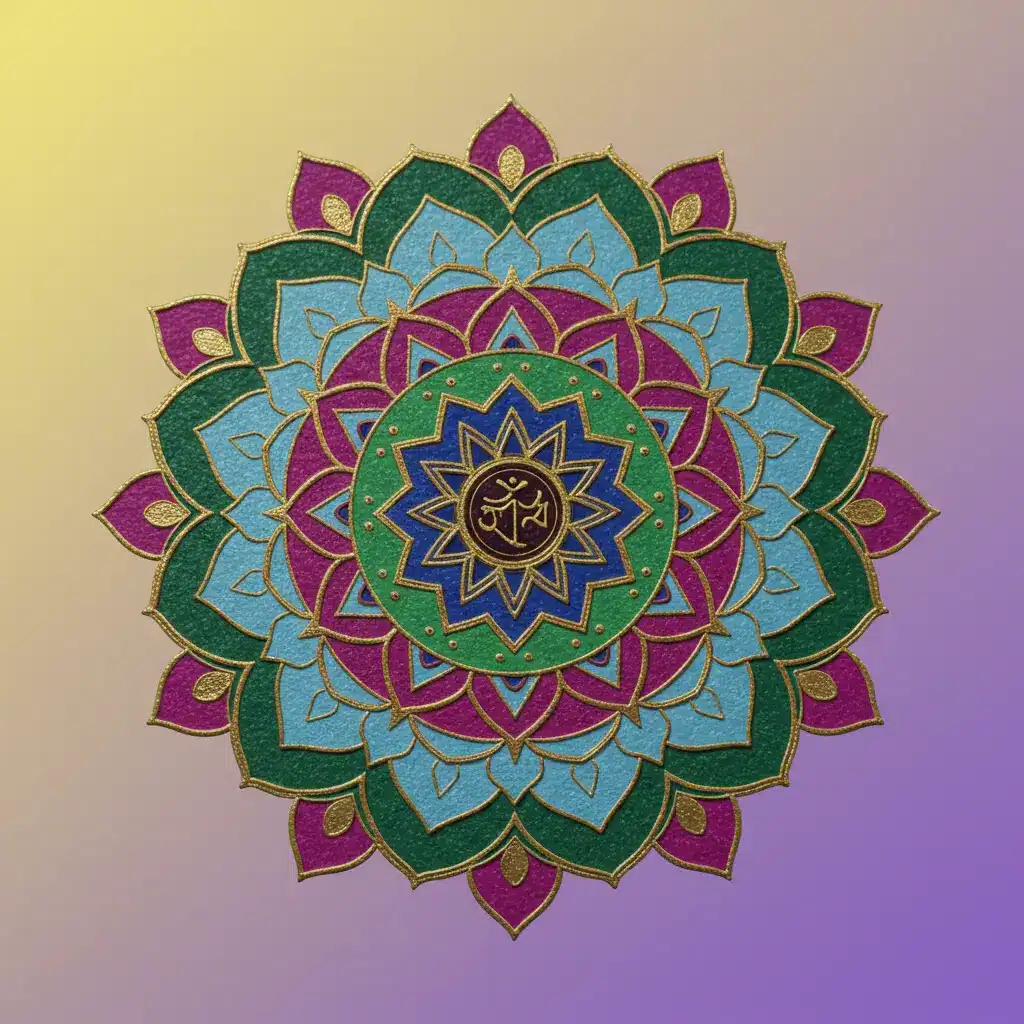
Service is far more than just “giving back”; it is the vital, active principle that solidifies and perpetuates your own recovery. It is the engine of long-term sobriety. In Jungian psychology, the “transcendent function” is the psychological process that arises from holding the tension between opposites (like the addicted self and the sober self), leading to a new, more integrated level of consciousness. Service is this transcendent function in action. By looking outward to help another, you transcend your own internal struggles. The focus shifts from “How do I stay sober?” to “How can I help someone else get sober?”—a transformation that gives your life profound meaning and purpose.
The AA service manual states this truth with stark clarity: “Our Twelfth Step – carrying the message – is the basic service that the AA Fellowship gives… We must carry the message, else we ourselves can wither, and those who haven’t been given the truth may die”. This is not a suggestion; it is a spiritual law of cause and effect. A recovery that is not shared, that is not put into service, risks becoming stagnant and withering away. A mandala that is never seen loses its primary function as a tool for spiritual guidance; its energy becomes static. Service is the dynamic process that keeps your recovery mandala vibrant, growing, and alive. It is the ultimate form of relapse prevention because it prevents you from turning back inward and becoming lost in self-absorption, which is so often a trigger for relapse.
It is crucial to understand that service takes many forms, most of them humble and simple. It is not reserved for old-timers or spiritual gurus. Service is making the coffee before a meeting. It is setting up chairs and putting them away. It is greeting a newcomer at the door with a warm smile. It is sharing your experience, strength, and hope with honesty in a meeting. It is sponsoring another person, guiding them through the steps that saved your own life. It is simply being a living, breathing example that recovery is possible. Each small act of giving reinforces your own commitment, boosts your self-esteem, and reminds you of the progress you have made. As Muhammad Ali famously said, “Service to others is the rent you pay for your room here on Earth”.
Here at our center, our entire philosophy is aimed at preparing you for this life of purpose. When we help you develop tools for emotional regulation, healthy communication, and self-compassion, we are giving you the skills you will need to effectively and lovingly carry the message. Our goal is not just to help you get sober, but to help you build a life so rich and meaningful in sobriety that you are eager to share it. We are here to help you create a mandala so full of light that it naturally illuminates the path for others.
Your Life as a Living Mandala – A Practice of Patience and Self-Compassion
As you trace the connections between these three powerful legacies, you begin to see that they are not separate, sequential stages. Recovery, Unity, and Service are not a ladder you climb, but three sides of a perfectly balanced triangle. They are three interwoven threads in a single, dynamic, and lifelong process. Recovery is the “what,” Unity is the “how,” and Service is the “why.” Each is essential, and each reinforces the others in a continuous, beautiful cycle.
This leads to one of the most profound and freeing understandings in recovery, one that is perfectly captured by the most sacred of all mandala practices: the creation of a Tibetan sand mandala. For days or even weeks, Buddhist monks painstakingly labor to create breathtakingly intricate mandalas from millions of grains of colored sand. They pour their entire focus, patience, and devotion into the design. Then, upon its completion, they perform a ceremony and sweep the sand away, pouring it into a nearby river to spread its blessings to the world. This act symbolizes the profound truth of impermanence and the importance of non-attachment.
The journey of recovery is the practice of creating your own sand mandala, day by day. So many of us in recovery struggle with perfectionism, with frustration over slow progress, and with the daunting idea of a “lifelong” process. The sand mandala offers a powerful antidote. It teaches us that the goal is not to create a single, perfect, unchanging “sober self”—a finished product to be framed and put on a wall. The true healing, the true art, is found in the continuous, mindful practice of creating it.
This reframes the entire journey. Setbacks are not failures; they are simply grains of sand that have been misplaced and can be gently brushed back into place. The need for ongoing work is not a burden; it is the sacred, meditative practice itself. This is the deep wisdom behind slogans like “One day at a time” and the constant reminders to choose “progression, not perfection”. The value is not in the static final image, but in the patient, focused, and loving act of its creation. The ceremonial destruction of the sand mandala teaches non-attachment—to a specific outcome, to a rigid timeline, to a flawless past. It is about being fully present in the sacred work of today. Your life becomes a living mandala, a daily practice of mindfully placing the sands of Recovery, Unity, and Service, knowing that the beauty lies in the act itself.
Actionable Reflection: Mapping Your Own Mandala
To help you bring this metaphor into your own life, we invite you to take a few quiet moments for reflection. Use a journal to explore the design of your own recovery mandala. This is not a test; it is a gentle tool for self-discovery. There are no right or wrong answers, only your truth.
| Journaling Prompts for Your Recovery Mandala |
| The Center: Reflecting on RECOVERY (Your Inner World) |
| * The First Dot: If you were to place a single, honest dot at the center of your being today, what truth would it represent? (e.g., “I am worthy of recovery,” “I need help,” “I am stronger than I think.”) |
| * Mapping the Patterns: What is a pattern from your past that you are learning to see with compassion rather than judgment? How can you redraw it with the “gold” of what you’ve learned? |
| * Adding Color: What is one small, intentional act of self-care or spiritual practice (prayer, meditation, a walk in nature) you can do today to add a vibrant color to your inner design? |
| The Connections: Reflecting on UNITY (Your Outer World) |
| * The Symmetrical Points: Who are the people in your life that form your circle of support? Write their names around your center. How does their presence create balance and strength in your design? |
| * The Shared Tapestry: Reflect on a time you felt truly seen and heard by another person in recovery. What did that connection feel like? How did it strengthen your own resolve? |
| * Nature’s Web: Spend a few moments outside. What interconnected patterns do you see in nature? How does observing this remind you that you are not alone, but part of a much larger whole? |
| The Radiance: Reflecting on SERVICE (Your Purpose) |
| * Sharing Your Light: What is one piece of your experience, strength, or hope that you could share with someone else today, even in a small way? |
| * A Simple Act: Service can be as simple as making coffee or offering a smile. What is one simple act of service you can commit to this week? How does this act give your recovery a deeper sense of purpose? |
| * The Ripple Effect: “The life I touch for good or ill will touch another life…” (Frederick Buechner). How does the health of your own mandala ripple outward to affect your family, friends, and community? |
A New Design for Living
The journey of recovery is the sacred art of creating a new design for living. The shattered, scattered fragments of a life lived in addiction do not need to be discarded in shame. They are the raw materials—the colored sand, the broken pottery, the rich soil—from which you can create something new, beautiful, and whole. Your life can become a living mandala, a testament to the transformative power of healing.
This path requires immense courage. It asks you to look inward with honesty, connect outward with vulnerability, and give back with humility. It is a journey into the deepest parts of yourself to find the treasures that lie waiting. As the great mythologist Joseph Campbell wrote, “It is by going down into the abyss that we recover the treasures of life. Where you stumble, there lies your treasure”.
At the Costa Rica Treatment Center, we are honored to be a sanctuary for this sacred work. Think of our center as a master artist’s studio, a tranquil space where you can learn the tools and techniques of this profound craft. Here, surrounded by the harmony of the natural world and guided by compassionate experts who understand the path, you can find the support, the safety, and the inspiration to begin the healing work of creating your own unique and beautiful recovery mandala. A life of wholeness, purpose, and connection is waiting for you. It is time to begin.
Frequently Asked Questions: The Recovery Mandala
1. What is a mandala and why is it used as a metaphor for recovery?
A mandala is a geometric design, typically circular, whose name comes from the Sanskrit word for “circle”. For thousands of years, it has been used in spiritual traditions like Hinduism and Buddhism as a sacred map of the universe and a symbol of wholeness, balance, and transformation.
It serves as a powerful metaphor for recovery because the journey of healing is a process of moving from a state of inner chaos and fragmentation back to a stable, integrated center. The act of creating a mandala is itself a meditative practice that helps focus the mind, mirroring the intentional, step-by-step work of recovery. The renowned psychiatrist Carl Jung, who introduced the mandala to Western psychology, viewed it as a symbolic representation of the Self—the psyche’s organizing principle that strives for wholeness.
2. What are the “Three Legacies” of 12-step programs?
The Three Legacies are the three foundational pillars of Alcoholics Anonymous and similar fellowships: Recovery, Unity, and Service.
- Recovery: This is the legacy of personal healing, primarily achieved through working the Twelve Steps. The Steps offer a spiritual framework for overcoming addiction and becoming “happily and usefully whole”.
- Unity: This legacy is the principle of fellowship and is maintained by the Twelve Traditions. The Traditions are guidelines that ensure the group remains cohesive, supportive, and focused on its primary purpose, providing the strong community needed for individual recovery to flourish.
- Service: This is the legacy of giving back and is guided by the Twelve Concepts for World Service. Its main purpose is to “carry the message to the alcoholic who still suffers,” which is the fundamental action that keeps the fellowship alive and growing.
The iconic AA symbol—a triangle inside a circle—is a visual representation of these three legacies being held within the supportive, worldwide fellowship.
3. How are Recovery, Unity, and Service connected?
Recovery, Unity, and Service are not separate stages but are deeply interconnected, like the three equal sides of a triangle. Each one reinforces the others in a continuous, life-sustaining cycle.
Personal Recovery is the essential starting point, but it is incredibly difficult to sustain in isolation. It depends on the strength and support found in Unity with others. This is why the First Tradition states, “Our common welfare should come first; personal recovery depends upon A.A. unity”. In turn, both individual recovery and the unity of the group are strengthened and given a profound sense of purpose through
Service—the act of helping others. By carrying the message, members solidify their own sobriety, which in turn strengthens the community that makes recovery possible for everyone.
4. What does “admitting powerlessness” in Step 1 really mean? Am I just giving up?
Admitting powerlessness is one of the most misunderstood but crucial concepts in recovery. It is not an admission of personal failure or a declaration of defeat. Rather, it is a courageous act of profound honesty. It means acknowledging the truth that, when it comes to addiction, your own willpower has not been enough to solve the problem and that your life has become unmanageable as a result.
This is an act of creative surrender. You are not surrendering to hopelessness; you are surrendering the old, broken tools of ego and self-will that have kept you trapped. This surrender opens the door to accepting help from a “Power greater than ourselves,” whatever that may mean to you, which can restore you to sanity. It is the essential first step that makes all other steps possible.
5. How does helping others (Service) actually help my own sobriety?
Service is a cornerstone of long-term recovery because it fundamentally shifts your focus from your own internal struggles to the needs of others. This act of “carrying the message” is described as the primary purpose and main reason for the fellowship’s existence.
Engaging in service—whether by sponsoring someone, setting up chairs, making coffee, or simply sharing your experience in a meeting—reinforces your own commitment to recovery principles. It provides a deep sense of purpose, boosts self-esteem, and serves as a powerful reminder of the progress you have made. This outward focus helps protect against the self-absorption and isolation that are so often triggers for relapse.
6. I’m not artistic. Can I still benefit from the mandala metaphor?
Absolutely. The healing power of a mandala does not depend on artistic skill or experience; it lies in the process of its creation. The practice is about self-expression and giving form to your inner world using colors, shapes, and symbols that feel meaningful to you.
The goal is not to create a perfect piece of art, but to engage in a simple, focused activity that quiets the mind and allows for reflection. You can benefit from the metaphor simply by thinking about your life in this way or by using journaling prompts to explore the different layers of your “recovery mandala” without ever picking up a crayon.
7. What does the phrase “progression, not perfection” mean in recovery?
“Progression, not perfection” is a guiding principle that encourages patience, self-compassion, and a realistic perspective on the healing journey. It acknowledges that recovery is a long-term process, not a single event, and it will not always be a straight line. There will be good days and hard days, and setbacks are a normal part of the path.
This saying reminds you to focus on the positive direction you are moving and to celebrate the small, consistent efforts you make each day. It frees you from the paralyzing pressure of trying to be flawless and instead encourages you to value your continued growth, one day at a time. Sources and related content