The Bridge to Lasting Sobriety: Navigating Life After Treatment Completing an addiction treatment program is a monumental achievement, a testament to courage and a profound commitment to a new way of life. It marks the end of one critical chapter and the beginning of another: the journey of long-term, sustained recovery. This transition, while filled with hope, is often one of the most vulnerable periods for an individual. The highly structured, supportive environment of an inpatient facility is replaced by the full autonomy and myriad pressures of daily life, a shift that can be both liberating and overwhelming. The environment…
The Bridge to Lasting Sobriety: Navigating Life After Treatment
Completing an addiction treatment program is a monumental achievement, a testament to courage and a profound commitment to a new way of life. It marks the end of one critical chapter and the beginning of another: the journey of long-term, sustained recovery. This transition, while filled with hope, is often one of the most vulnerable periods for an individual. The highly structured, supportive environment of an inpatient facility is replaced by the full autonomy and myriad pressures of daily life, a shift that can be both liberating and overwhelming.
The environment a person returns to is one of the most significant factors influencing their ability to maintain sobriety. A home that is not safe, secure, and free of substances can quickly derail the progress made during treatment, regardless of an individual’s motivation. This is where the concept of a transitional environment becomes crucial. Sober living homes (SLHs) are designed to serve this exact purpose. They are not an extension of rehab, but rather a vital bridge between the intensive care of a treatment program and a fully independent, sober life.
The transition from the protective “bubble” of rehab back to the complexities of the outside world is not merely a change of address; it is a fundamental shift in structure, accountability, and support. Inpatient treatment provides a 24/7 framework where every aspect of the day is geared toward recovery. Returning home can abruptly remove this framework, exposing an individual to unstructured time, old environmental triggers, and potentially unsupportive relationships that can increase the risk of relapse. A sober living home acts as a crucial intermediary, a sort of “decompression chamber” that allows a person to gradually acclimate to freedom and responsibility. It maintains key structural elements while reintroducing independence, creating a controlled practice environment where the skills learned in treatment can be applied and solidified in real-world scenarios.
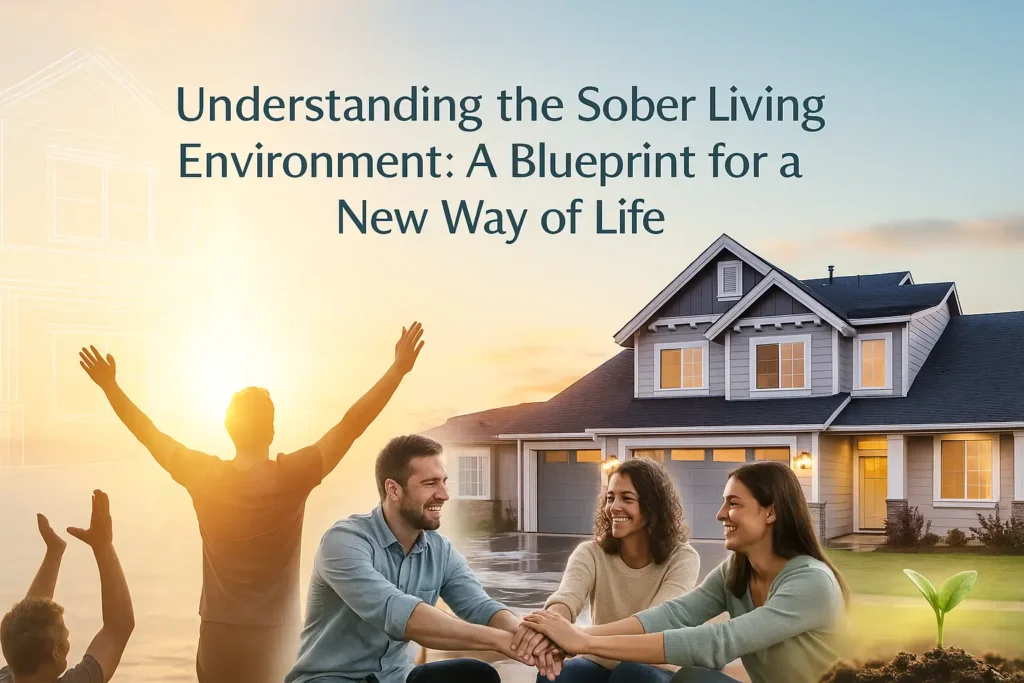
Understanding the Sober Living Environment: A Blueprint for a New Way of Life
To make an informed decision, it is essential to first demystify the sober living home, understanding its core purpose and the internal mechanics that make it an effective tool for recovery. Every element of a well-run sober living environment is intentionally designed to reinforce sobriety and foster personal growth.
What Exactly is a Sober Living Home?
At its core, a sober living home is an alcohol- and drug-free living environment that provides safe, stable housing and supportive, structured conditions for individuals seeking to maintain abstinence. Also referred to as sober homes, sober living environments, or recovery residences, these facilities serve as a transitional step for people who have completed an inpatient rehabilitation program. However, they also provide a crucial resource for individuals enrolled in outpatient programs or anyone who simply needs a substance-free environment to build a strong foundation in recovery.
The fundamental purpose of a sober living home is to help residents develop new, healthy habits and routines. It is a space where the theoretical knowledge and coping strategies gained in rehab are put into practice in daily life. This is where, as many in recovery note, “the rubber meets the road”. Residents live among a community of peers facing similar challenges, creating a powerful network of mutual support as they navigate the tough spots and triggers that inevitably arise in early sobriety.
The Pillars of Sober Living: Structure, Support, and Accountability
The effectiveness of a sober living home rests on a foundation of clear rules and shared expectations. These pillars are not designed to be punitive but to create a predictable, stable, and recovery-focused atmosphere where residents can thrive.
- Absolute Sobriety: The most sacred rule in any sober living home is the zero-tolerance policy for drug and alcohol use. This is non-negotiable and is strictly enforced through regular and often random drug and alcohol screenings to ensure a safe environment for all residents. A relapse, or any violation of this core rule, typically results in immediate removal from the home to protect the sobriety of the entire community. While this consequence is firm, many homes will work to refer the individual back to a higher level of care, framing it not as a punishment but as a necessary step to protect everyone’s recovery journey.
- Structured Routines: Life in a sober living home is defined by structure. This includes rules such as established curfews, mandatory weekly house meetings where residents discuss issues and support one another, and participation in a rotating schedule of household chores. This structure is a form of practical therapy. Active addiction often damages the brain’s executive functions—the skills related to impulse control, time management, planning, and responsibility. The consistent adherence to external rules like curfews and chore wheels provides daily practice in rebuilding these essential life skills. In this way, the structure itself helps residents internalize the self-regulation necessary for long-term independence.
- Active Recovery Engagement: Residents are not passive tenants; they are active participants in their own recovery. This typically involves a requirement to attend a minimum number of 12-step meetings, such as Alcoholics Anonymous (AA) or Narcotics Anonymous (NA), or other approved recovery support groups each week. This ensures that residents remain connected to a broader recovery community and continue to work on the spiritual and psychological aspects of their healing.
- Community Contribution and Financial Responsibility: Sober living homes expect residents to be productive members of society. This means they must be actively engaged in work, school, or volunteer activities during the day. Furthermore, residents are financially responsible for their own rent, groceries, and personal expenses. This requirement is crucial for fostering independence, accountability, and the self-esteem that comes from being self-sufficient.
- Peer Support: Perhaps the most powerful therapeutic element of a sober living home is the built-in community. Living with a group of like-minded individuals who are all committed to sobriety creates an environment of mutual support and encouragement. This peer network helps to combat the intense feelings of isolation and loneliness that can be major triggers for relapse, reminding residents that they are not alone in their struggles or their triumphs.
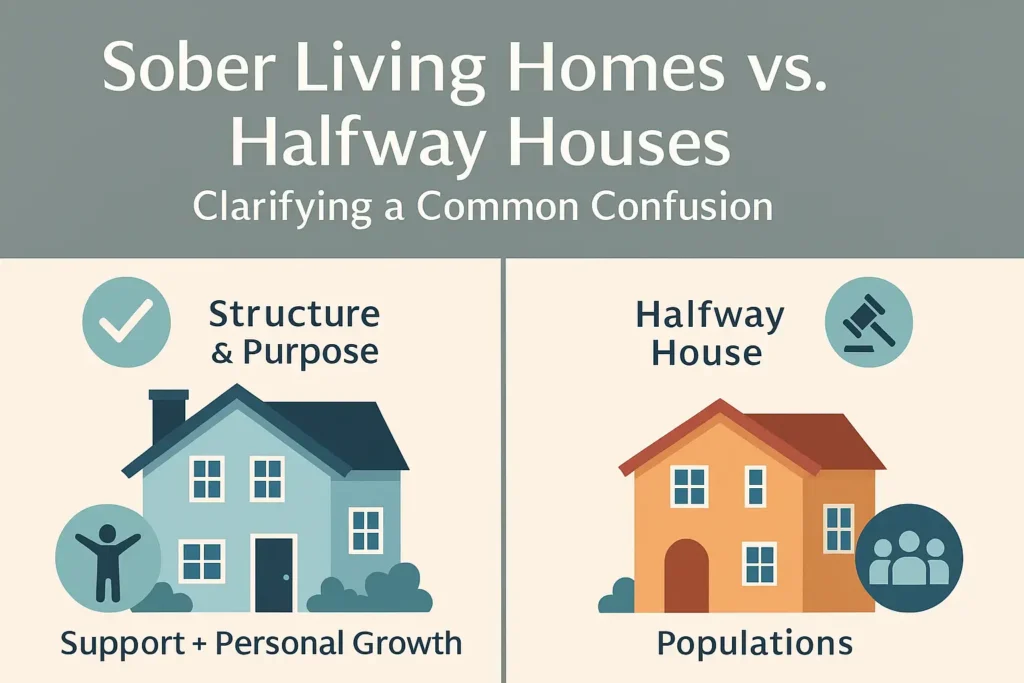
Sober Living Homes vs. Halfway Houses: Clarifying a Common Confusion
The terms “sober living home” and “halfway house” are often used interchangeably, leading to significant confusion for those seeking post-treatment options. While both provide substance-free living environments, they are fundamentally different in their primary purpose, structure, and the populations they serve. Understanding these distinctions is critical for choosing the right path.
The primary difference lies in their origins and resident populations. Sober living homes are typically occupied by individuals who have voluntarily chosen to live in a supportive environment after completing an addiction treatment program. Their residency is a proactive step in their recovery journey. Halfway houses, on the other hand, were historically and are still often designated for individuals transitioning out of the criminal justice system. Their residents may be mandated by a court to live there as a condition of parole or as part of their sentence for a drug- or alcohol-related offense.
This core difference in population leads to other key distinctions in governance, funding, and environment. Sober living homes are almost always privately owned and operated, with funding coming directly from the rent paid by residents. This private model often allows for a more comfortable, home-like atmosphere with more amenities and privacy. In contrast, halfway houses are frequently funded by the state or other government entities, which can result in a more institutional, dorm-like setting with less privacy and stricter, less flexible rules tied to legal and state requirements.
Finally, the duration of stay often differs. Sober living homes generally do not impose a strict limit on how long a resident can stay, offering the flexibility to remain for as long as the individual feels they need the support, provided they follow the house rules. Halfway houses typically have a predetermined time limit for residency, serving as a more temporary, structured bridge to societal reintegration.
The following table provides a clear, at-a-glance comparison of these two distinct models of recovery housing.
| Feature | Sober Living Home (SLH) | Halfway House |
| Primary Residents | Individuals voluntarily seeking support post-rehab | Often individuals transitioning from incarceration; residency may be court-mandated |
| Funding Source | Primarily private; funded by resident rent | Often state-funded or government-sponsored |
| Length of Stay | Flexible; often no maximum limit | Typically has a set time limit (e.g., a few months) |
| Admission | Often requires completion of a treatment program | May require recent completion of treatment or be part of sentencing |
| Environment | Resembles a private home; focus on peer-led support and community | Can be more institutional or dorm-like; structure may be tied to legal requirements |
The Spectrum of Support: Not All Sober Homes Are Created Equal
Just as addiction treatment exists on a continuum of care, so too does sober living. The term “sober living home” is not a monolithic category but rather an umbrella that covers a wide spectrum of facilities offering varying levels of structure and support. Recognizing this is key to finding an environment that precisely matches an individual’s current needs in their recovery journey.
The National Alliance for Recovery Residences (NARR), a leading authority in the field, has established a widely recognized framework that classifies recovery residences into four distinct levels of support. This system provides a valuable standard for consumers to evaluate and compare different homes.
- Level 1: Peer-Run: These homes are the most independent and are often democratically run by the residents themselves. Typically located in single-family homes, they emphasize peer accountability, self-monitoring, and mutual support. There are no paid staff members within the home. This level is best suited for individuals who have a strong foundation in their recovery, have developed solid life skills, and primarily need a safe, substance-free environment with a supportive peer community.
- Level 2: Monitored: Level 2 residences are similar to peer-run homes but add a layer of oversight in the form of at least one compensated staff member, such as a house manager or a senior resident. This individual ensures the house rules are followed and provides a point of contact for residents. Drug screenings and house meetings are standard, and peer-run support groups are common.
- Level 3: Supervised: At this level, the structure and support become more formalized. These residences are typically licensed and have a more defined organizational hierarchy, with certified staff and administrative oversight. They place a strong emphasis on life skills development and often require residents to participate in outpatient clinical services from a collaborative treatment provider. This level offers a more rehabilitative approach for those who need more structure and professional guidance.
- Level 4: Integrated (Service Provider): This is the highest and most intensive level of support. Level 4 residences often operate in a more institutional environment and provide clinical services directly in-house. They are staffed by credentialed professionals, may offer 24-hour supervision, and have a strong focus on life skills and comprehensive care. This level is ideal for individuals transitioning directly from an inpatient program, those with co-occurring mental health disorders, or anyone who requires significant clinical and structural support to maintain their sobriety.
This tiered system reflects a modern, sophisticated understanding of recovery as a developmental process. It moves away from a one-size-fits-all model and toward a personalized continuum of care. An individual’s journey through recovery involves building skills, confidence, and what is known as “recovery capital”—the internal and external resources that support sobriety. The NARR levels allow housing to adapt to this growth. A person might start in a highly structured Level 4 home and, as they become more stable and self-sufficient, “step down” to a Level 3 or 2 home, which offers more autonomy. This progression represents a gradual and intentional transfer of responsibility from the support system to the individual, preparing them for the ultimate goal of successful, independent living.
The Critical Question: Is a Sober Living Home Right for Me?
After understanding what a sober living home is and the different forms it can take, the next step is a personal one. The decision to enter a sober living home is deeply individual and depends on a careful and honest assessment of one’s own circumstances, support systems, and internal readiness for the challenges of life after treatment.
Key Indicators You Would Benefit from a Sober Living Home
Certain situations and risk factors strongly indicate that a transitional living environment could be a critical component of a successful recovery plan. An individual is likely to benefit significantly from a sober living home if they identify with one or more of the following scenarios:
- An Unsupportive or Risky Home Environment: This is arguably the most compelling reason to choose a sober living home. If returning home means being exposed to family members or roommates who use drugs or alcohol, or to an environment filled with high stress, conflict, or chaos, the risk of relapse is dramatically elevated. A sober living home provides a necessary sanctuary, a safe harbor from these powerful environmental triggers.
- Lack of a Strong Sober Support Network: Recovery is incredibly difficult to sustain in isolation. If an individual’s primary social circle before treatment was centered on substance use, returning to that same network can be perilous. A sober living home immediately provides a new, positive peer group—a community of individuals who are all committed to the same goal of sobriety and can offer understanding and encouragement.
- A History of Relapse: For those who have attended treatment in the past but struggled to maintain sobriety afterward, a sober living home can provide the missing piece of the puzzle. The added layer of structure, daily accountability, and peer support can make a significant difference for individuals who need extra reinforcement to navigate early recovery.
- Co-occurring Mental Health Conditions: Managing a mental health condition such as depression, anxiety, or PTSD alongside a substance use disorder adds a layer of complexity to recovery. The predictable routines, peer support, and safe environment of a sober living home can be incredibly stabilizing for individuals navigating these dual challenges.
- Anxiety or Feeling Unprepared for Full Independence: It is completely normal to feel a sense of apprehension or to be overwhelmed by the prospect of suddenly managing all of life’s responsibilities—work, finances, relationships, and recovery—all at once. A sober living home offers a “scaffolded” approach to independence, allowing a person to practice these life skills with the safety net of a supportive community, gradually building the confidence needed to stand on their own.
A Personal Inventory: Questions for Reflection
To help clarify the decision, it can be useful for an individual to engage in a personal inventory by reflecting on a series of honest questions. These questions, adapted from various self-assessment tools, are designed to evaluate one’s external environment and internal state as they relate to the need for continued support.
- Regarding the Home Environment:
- “When I honestly picture myself at home, do I feel safe and supported in my sobriety, or do I feel anxious and tempted?”
- “Are there people living in my home who currently use drugs or drink alcohol in a way that could trigger me?”
- “Is my home environment stable and predictable, or is it chaotic and stressful?”
- Regarding the Support System:
- “Who are the first five people I would call if I were struggling with a craving at 3 a.m.? Are they supportive of my recovery?”
- “Do I have a reliable network of sober friends or family members I can spend time with?”
- “Have I established a connection with a sponsor or a home group in a 12-step program?”
- Regarding the Internal State:
- “On a scale of 1 to 10, how confident do I feel in my ability to manage stress, boredom, and unstructured time on my own right now?”
- “Does the thought of managing a job, paying bills, and maintaining my recovery all at once feel empowering or overwhelming?”.
- “Am I prepared to apply the coping skills I learned in treatment when faced with real-world triggers?”
- Regarding Past Experiences:
- “If I have relapsed in the past, what were the specific circumstances that led to it?”
- “Does a sober living home offer a solution or a safeguard against any of those specific factors?”
The decision to enter a sober living home should not be viewed as a remedial step or a sign that treatment was insufficient. Instead, it is a proactive and strategic investment in one’s “recovery capital.” It is a conscious choice to build a stronger, more resilient foundation for long-term sobriety. Just as an athlete undergoes rigorous physical therapy after surgery to ensure a full and lasting return to their sport, an individual choosing a sober living home is taking a wise, forward-thinking step to protect the immense investment of time, money, and emotional energy they have already made in their recovery.
How to Choose a High-Quality Sober Living Home: Your Due Diligence Checklist
The field of sober living is not uniformly regulated, which means the quality, safety, and effectiveness of homes can vary dramatically. This places the responsibility on the consumer to conduct thorough due diligence. Choosing the right home is a critical decision, and being armed with the right questions and an awareness of potential red flags is essential.
The process of vetting a sober living home is, in itself, a recovery-promoting activity. It requires an individual to practice critical thinking, advocate for their own needs, engage in financial planning, and make a responsible, life-affirming decision—the very skills that are foundational to a healthy, sober life. This “shopping” process is not just a prelude to support; it is the beginning of it.
Essential Questions to Ask Any Potential Provider
When evaluating a potential sober living home, it is important to ask specific, detailed questions. A reputable provider will be transparent and willing to provide clear answers.
- Regarding Rules, Structure, and Policies:
- “May I have a written copy of the house rules and resident expectations?”
- “What is the policy and procedure if a resident relapses?”
- “What does a typical day and week look like for residents? Is there a mandatory schedule?”
- “What are the drug and alcohol testing protocols (frequency, method, randomness)?”
- Regarding Staffing and Support:
- “What are the qualifications, certifications, and training of the house manager and other staff?”
- “Is there staff on-site 24/7? If not, what is the level of supervision?”
- “What specific recovery support services are offered or required (e.g., 12-step, SMART Recovery, group therapy)?”
- Regarding Cost and Finances:
- “What is the total monthly cost, and what exactly does it include (rent, utilities, food, drug testing, transportation)?”
- “Are there any additional fees, deposits, or administrative charges?”
- “What is the payment schedule, and what is the refund policy if a resident leaves or is asked to leave?”
- Regarding the Living Environment:
- “How many residents live in the home, and how many share a bedroom?”
- “May I schedule a tour of the facility before making a commitment?”
- “What amenities are provided (e.g., Wi-Fi, cable, laundry facilities, gym access)?”
- “What is the policy on visitors, overnight passes, cell phones, and personal vehicles?”.
- Regarding Program Philosophy and Outcomes:
- “What is the home’s core philosophy on addiction and recovery?”
- “What is the average and recommended length of stay for residents?”
- “Does the home track the success of past residents? If so, how is ‘success’ measured?”
Red Flags: Warning Signs of a Poorly Run or Predatory Home
While most sober living homes are run by dedicated individuals committed to helping others, some poorly managed or even predatory operations exist. It is vital to be aware of the warning signs.
- Lack of Structure and Accountability: A home with no clear rules, no enforced curfews, no mandatory house meetings, or a failure to conduct regular drug testing is not a recovery environment; it is just a rooming house.
- Vague or Suspicious Financial Practices: Be wary of homes that are not transparent about costs, have hidden fees, or make claims of being “free.” Some predatory operations engage in insurance fraud by paying residents “kickbacks” to attend certain treatment programs.
- Unprofessional or Unqualified Staff: Staff should be professional, respectful, and ideally have training or certification in addiction recovery. A home where staff members are not abstinent themselves is a major red flag.
- Poor and Unsafe Living Conditions: A tour of the facility is non-negotiable. Avoid any home that is dirty, in disrepair, overcrowded, or shows signs of being unsafe. The physical environment is a metaphor for the quality of care.
- Absence of Clear Policies: A legitimate home will have written documentation for everything from admission requirements and resident rights to privacy provisions and a code of ethics. A lack of such paperwork indicates a poorly run operation.
Conclusion: Building Your Future on a Foundation of Sobriety
The period immediately following addiction treatment is a time of immense challenge, but also of incredible opportunity. It is the moment when the hard work of recovery begins to translate into a new, tangible reality. The decision of where to live during this critical phase can set the course for the future. A sober living home provides a structured, supportive, and substance-free environment designed specifically to bridge the gap between the protective world of rehab and the full responsibilities of independent life.
Choosing to enter a sober living home is not a step backward; it is a powerful and proactive investment in one’s well-being. It is an acknowledgment that recovery is a long-term process and that utilizing all the available tools is a sign of wisdom, strength, and unwavering commitment to a better future. By providing accountability, peer support, and a safe space to practice sober life skills, these homes help individuals build a solid foundation upon which a fulfilling, joyful, and lasting sobriety can be built.A successful recovery journey is built on a continuum of care that extends far beyond the initial, intensive phase of treatment. Understanding that healing is a process with distinct stages is fundamental. At facilities like the Costa Rica Treatment Center, the entire program is designed around this principle, guiding individuals through phases from ‘Stabilization’ to a ‘Clean Living Experience’. This philosophy acknowledges that true recovery involves not just stopping substance use, but learning to live a new life. Thoughtfully planning for crucial next steps, such as choosing a supportive sober living environment, is a cornerstone of this holistic approach to healing and a powerful investment in one’s future.